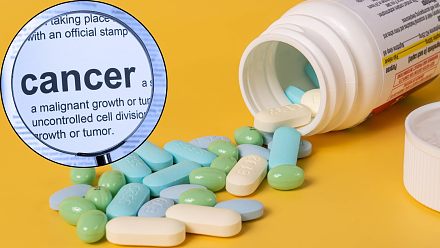
Cancer Drug Prices May Get 70% Cheaper In India: What This Could Mean For Patients And Treatment Costs
Cancer treatment already places enormous financial pressure on patients and families. Medicines form a major part of that cost, and for years the gap between what retailers pay and the final price on the packet has been
Ni Tanya Dutt··21K nabasa
Cancer Drug Prices May Get 70% Cheaper In India: What This Could Mean For Patients And Treatment Costs
Cancer treatment already places enormous financial pressure on patients and families. Medicines form a major part of that cost, and for years the gap between what retailers pay and the final price on the packet has been strikingly large.
For families paying thousands of rupees every month for cancer medicines, even a modest reduction in the price of one drug can make a significant difference to the overall cost of treatment. Now, the Centre has approved a move to cap trade margins on non-scheduled anti-cancer medicines, with the government estimating that the maximum retail price (MRP) of some medicines could fall by as much as 70%.
The move is expected to save cancer patients around ₹2,500 crore every year and reduce the amount they pay out of pocket for treatment. However, the 70% figure is a maximum estimate, not a flat reduction applicable to every cancer drug.
Why Could Cancer Medicine Prices Fall By Up To 70%?
The new measure targets non-scheduled anti-cancer medicines, which are outside the government’s existing list of drugs with fixed ceiling prices.
Under the new framework, trade margins on these medicines will be limited to 30% of the MRP. The government says this will extend price protection to medicines that previously had substantially higher mark-ups in the supply chain.
An analysis by the National Pharmaceutical Pricing Authority (NPPA) found that non-scheduled anti-cancer medicines had an average price mark-up of around 170%, with some cases reportedly showing mark-ups of 700% or more. Prices could also vary depending on whether a medicine was purchased through a retail pharmacy, hospital pharmacy or online pharmacy.
The Supreme Court recently highlighted the scale of the problem. In one example discussed in court, a cancer drug with a price to retailer of around Rs 2,700–3,000 carried an MRP of Rs 27,000. The court described the mark-up as “sheer loot and daylight robbery of patients” and questioned why such differences were allowed for essential, life-saving medicines.
The new margin cap is a direct response to those concerns and builds on an earlier 2019 intervention that limited margins on 42 selected anti-cancer drugs, reportedly saving patients about Rs 984 crore a year across 526 brands.
Which Cancer Medicines Will Come Under the New Rule?
The government has said the measure will cover non-scheduled anti-cancer medicines across categories, including branded and generic drugs, patented and non-patented medicines, and imported as well as domestically manufactured medicines.
Reports indicate that around 110 anti-cancer medicines could be covered, including several patented medicines. However, the final list has not been decided yet. An expert committee under the Directorate General of Health Services (DGHS) will finalise the medicines to be brought under the price-control mechanism, after which the NPPA will issue the implementation notification.
This is important to note because patients should not assume that every cancer medicine available in India will immediately become 70% cheaper.
What Does this Man for Patients Already Undergoing Cancer Treatment?
Cancer treatment can involve much more than the cost of surgery, chemotherapy or radiation. Patients may also need targeted therapies, immunotherapy, supportive medicines and long-term oral drugs, some of which can be expensive and may need to be taken for months or years.
For a family already dealing with hospital bills, travel, diagnostic tests and lost income during treatment, medicine costs can add another layer of financial pressure.
The government’s estimated annual saving of ₹2,500 crore therefore has significance beyond simply reducing the MRP of medicines. It could potentially make continuing treatment more financially manageable for thousands of households.
What This Means for Patients and Families
For many households, cancer care stretches over months or years. Repeated cycles of chemotherapy, targeted therapy or supportive medicines can force families to dig into savings, take loans or cut other essential spending.
Lower medicine prices will not eliminate the full cost of treatment — hospitalisation, diagnostics and supportive care remain expensive but they can meaningfully reduce one of the largest recurring expenses. Patients whose prescriptions include the affected drugs should see the difference most clearly on their monthly bills.
Patients should also wait for the final list of covered medicines and the NPPA notification before assuming that the price of a particular prescription has changed.
For patients and caregivers, the takeaway is simple: do not change or stop any prescribed cancer medicine based on the announcement alone. Once the final list and revised prices are notified, patients can check whether their medicines are covered and discuss lower-cost options with their oncologist or pharmacist.