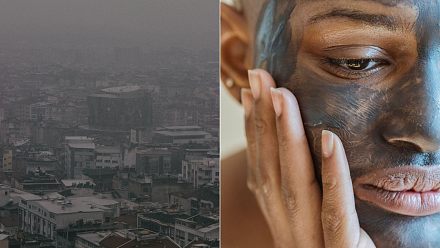
Can Pollution Make You Look Older? Doctors Explain The Link Between Smog And Skin Ageing
As air pollution levels rise across parts of India, the health conversation around smog extends beyond respiratory problems. The skin, which is directly exposed to the environment, can also bear the effects of prolonged
Ni Mallika Bhagat··23K nabasa
Can Pollution Make You Look Older? Doctors Explain The Link Between Smog And Skin Ageing
As air pollution levels rise across parts of India, the health conversation around smog extends beyond respiratory problems. The skin, which is directly exposed to the environment, can also bear the effects of prolonged exposure to polluted air. From dryness and irritation to uneven skin tone, pigmentation and premature ageing, the consequences may become increasingly visible over time.
Delhi’s air quality entered the poor category on October 21, with the Air Quality Index (AQI) reaching 244, prompting the implementation of Stage I of the Graded Response Action Plan (GRAP) across Delhi-NCR. Forecasts indicated that poor air quality was likely to persist over the following days. Other Indian cities, including parts of Uttar Pradesh and Haryana, have also reported elevated pollution levels.
While the immediate concern during the smog season is often its impact on breathing, dermatologists warn that the skin is also vulnerable to environmental pollutants. Fine particulate matter, particularly PM2.5 and PM10, can contribute to oxidative stress, damage the skin’s protective barrier and affect the proteins responsible for maintaining its firmness and elasticity.
While the immediate concern during the smog season is often its impact on breathing, dermatologists warn that the skin is also vulnerable to environmental pollutants.
How does air pollution damage the skin?
“Pollution is often associated with impact on lungs, but the skin is our most exposed organ, and it takes the first hit,” says Dr Monica Bambroo, dermatologist, Director, Anugraha Urology and Skin Clinic, Noida and Indirapuram, and Head of Department, Dermatology and Cosmetology, Artemis Hospital, Gurugram.
She explains how fine particles affect the skin: “Fine particles like PM2.5 are so tiny that they settle on the skin and can even slip into the pores. There they trigger oxidative stress, which is basically a flood of free radicals that break down collagen and elastin, the proteins that keep skin firm and youthful.”
Collagen and elastin play an important role in maintaining the skin’s structure, firmness and flexibility. When these proteins are damaged, the skin may begin to lose elasticity, with fine lines and wrinkles becoming more noticeable. Oxidative stress can also contribute to dullness and uneven skin tone.
Dr Pravin Banodkar, MBBS, DNB (Dermatology), co-founder of Skin Beyond Borders (SkinBB), explains that the effects depend on the duration of exposure and the size of the particles present in the air. “Pollutants such as PM2.5 and PM10, commonly released by vehicles, traffic and industries, can affect skin health over time. When combined with sunlight and certain chemicals present in the air, these pollutants can damage the skin and speed up the appearance of ageing,” he says.
According to Dr Banodkar, pollution-related damage can occur at both the cellular and DNA levels, gradually affecting the skin’s ability to repair itself.
From pigmentation to fine lines: What changes can you notice?
Pollution-related skin damage may not always be immediately apparent. Over time, people may notice dullness, uneven pigmentation, dark spots, dryness and an increase in fine lines. “In Indian skin types, pollution can also contribute to pigmentation concerns. People may notice darker patches, dark spots and uneven skin tone,” Dr Banodkar says.
He adds that prolonged exposure can weaken the skin’s natural protective barrier, which helps retain moisture and protect against external irritants. When this barrier is compromised, the skin may become more sensitive, dry and irritated. Existing conditions, including atopic dermatitis, can also worsen.
Dr Bambroo points to the range of concerns that can accompany pollution exposure. “What we see is dullness, uneven tone, stubborn pigmentation and fine lines appearing much earlier than they should. Pollution also weakens the skin’s natural barrier, so people notice more dryness, sensitivity, breakouts and flare-ups of eczema.”
The combination of pollution, sunlight and inadequate skincare can further aggravate existing concerns. Dr Aditya Nag, Assistant Professor, Department of Respiratory Medicine, NIIMS Medical College and Hospital, Greater Noida, explains that exposure to pollution may worsen pre-existing skin problems when combined with damage caused by sun rays and poor skin care.
Why repeated exposure is a concern
The effects of pollution on the skin are not limited to temporary irritation. According to Dr Bambroo, repeated exposure may contribute to cumulative damage over the years.
“The real worry is the long-term damage. Year after year of exposure keeps the skin in a constant state of low-grade inflammation, and that quietly speeds up ageing,” she says. She adds that collagen loss can accumulate over time, potentially contributing to deeper wrinkles, sagging and persistent pigmentation. A weakened skin barrier can also leave the skin more vulnerable to chronic conditions and recurring flare-ups. “Most of this damage is gradual and invisible at first, which is why people ignore it until it is hard to reverse,” Dr Bambroo says.
Dr Banodkar similarly emphasises that regular exposure to pollution can affect the skin’s structure and repair mechanisms, making consistent protection important.
How to protect your skin during smog season
Although avoiding air pollution entirely may not be possible, dermatologists recommend maintaining a consistent skincare routine to help minimise its effects.
Dr Banodkar recommends broad-spectrum sunscreen, gentle cleansing and suitable skincare products. “Using a broad-spectrum sunscreen is essential, as it helps protect the skin from the harmful effects of the sun,” he says. He also recommends gentle body washes and cleansers to remove dirt and pollutants without stripping the skin of its natural moisture. Antioxidants, meanwhile, can help the body counter the harmful effects of substances that damage skin cells. A balanced diet containing fruits and vegetables can support overall skin health.
Dr Nag also stresses the importance of daily moisturising and sun protection. “Daily moisturising is also very important, as it helps in building up your skin’s defensive barrier,” he says. He adds that antioxidant-containing skincare products, a healthy lifestyle and reducing exposure to polluted areas can help support skin protection.
For people whose skin becomes increasingly dry, sensitive or irritated during periods of poor air quality, paying attention to the skin barrier is particularly important. Gentle cleansing, regular moisturising and sunscreen are practical steps to maintain skin health, although they cannot eliminate the effects of polluted air.