Bangladesh’s Deadliest Measles Outbreak Claims Over 1,100 Lives: Could Immunity Gaps Leave India Vulnerable?
Bangladesh is facing its worst measles outbreak in decades. As of 30 September 2026, the death toll from measles and measles-like symptoms has crossed 1,100, according to the Directorate General of Health Services (DGHS)
Ni Tanya Dutt··26K nabasa
Bangladesh’s Deadliest Measles Outbreak Claims Over 1,100 Lives: Could Immunity Gaps Leave India Vulnerable?
Bangladesh is facing its worst measles outbreak in decades. As of 30 September 2026, the death toll from measles and measles-like symptoms has crossed 1,100, according to the Directorate General of Health Services (DGHS).
Of these, 101 deaths have been laboratory-confirmed as measles, while the remainder are classified as suspected cases.
The outbreak, which has continued since March, has also placed a major burden on hospitals. More than 2.11 lakh measles and measles-like cases have been recorded since March 15, while 1,68,655 patients have been hospitalised.
Image: AFP
How Severe is Bangladesh’s Measles Outbreak?
Measles is among the most contagious human diseases. It spreads through respiratory droplets and airborne particles when an infected person coughs, sneezes or breathes.
Daily reports continue to show hundreds of new suspected cases and fresh fatalities. In a single 24-hour period ending 30 September, five more deaths and over 1,300 new diagnoses were recorded. Hospitals have faced sustained pressure, with cumulative admissions exceeding 168,000 since the outbreak began. Although the majority of patients have been discharged, the volume of severe cases especially among young children, has stretched paediatric wards.
Most confirmed infections have occurred in unvaccinated children. The World Health Organization notes that about 83% of laboratory-confirmed cases involve those without prior measles vaccination, while infants under six months remain highly vulnerable. Malnutrition further increases the risk of complications and death.
Why Did Measles Outbreak Escalate Despite Vaccination Campaigns?
Bangladesh had made substantial progress toward measles elimination before 2020. However, routine immunisation was disrupted during the COVID-19 pandemic, leaving immunity gaps. An emergency measles-rubella vaccination campaign was launched in April–May 2026, followed by a mop-up round in late July. More than 19 million children were reached, yet transmission chains that formed early in the outbreak have proved difficult to interrupt completely.
Public-health experts have pointed to incomplete coverage in some areas, delayed responses in the earliest phase, and residual pockets of unvaccinated children. Political and administrative challenges in 2024–2025 also affected vaccine supply chains, according to reports citing UNICEF concerns.
Can Small Immunity Gaps Trigger Big Outbreaks?
Measles can spread rapidly when clusters of susceptible people develop.
WHO says the South-East Asia Region continues to face measles outbreaks because of persistent immunity gaps among children and adolescents, despite having the highest overall childhood immunisation coverage among WHO regions. The agency has specifically warned countries not to rely only on national averages and to identify underserved and hard-to-reach communities where vaccination gaps may persist.
Globally, WHO and UNICEF estimate that 95% coverage with two measles-containing vaccine doses is needed to prevent outbreaks. In 2025, global coverage was only 84% for the first dose and 77% for the second dose.
Image: AFP
Should India Be Worried?
India has made substantial progress on routine childhood vaccination. UNICEF and WHO reported in July 2026 that India reduced the number of zero-dose children from 909,000 in 2024 to 679,000 in 2025, and that around 95% of children were fully protected against measles with two doses according to the country data highlighted in the release.
Yet a high national figure does not mean every locality has the same level of protection.
WHO reported measles outbreaks in India during 2026 and has documented localised vulnerability linked to factors including migration, vaccine hesitancy and missed children. In Delhi’s Kailash Nagar, for instance, an outbreak investigation identified pockets of unvaccinated children, while intensified outreach increased vaccination coverage during the response from 8% to 51%.
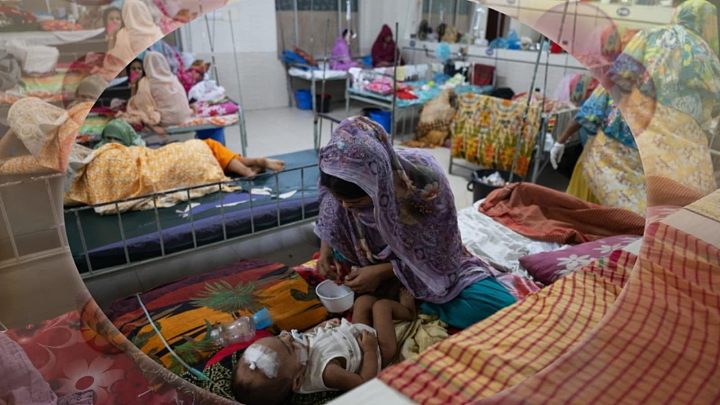
A woman holds a child diagnosed with measles inside a paediatric ward at the Bangladesh Shishu Hospital and Institute in Dhaka on May 6, 2026. (Image credits: AFP)
WHO’s regional experts have also listed Bangladesh, India, Nepal, Thailand and the Maldives among countries reporting measles outbreaks or increases in cases in 2026, underscoring the importance of sustained surveillance and equitable vaccination coverage.
What Protective Measures Remain Essential Against Measles?
Measles usually begins with high fever, cough, a runny nose and red eyes, followed by a characteristic rash. Although many children recover, complications can include pneumonia, severe diarrhoea, encephalitis and, in serious cases, death.
There is no specific antiviral treatment that cures measles. Vaccination remains the most effective way to prevent infection and transmission.
Image: AFP
Timely administration of two doses of measles-containing vaccine, rapid outbreak response immunisation, vitamin A supplementation for affected children, and robust surveillance form the backbone of control. Community trust and access are equally critical: vaccine hesitancy or logistical barriers can leave clusters unprotected even when national coverage appears adequate.
Bangladesh’s crisis highlights how quickly measles can spread when pockets of children remain unvaccinated. For India, the focus remains on closing these immunity gaps, strengthening routine immunisation and ensuring that children who are missed by vaccination programmes are brought into the fold.