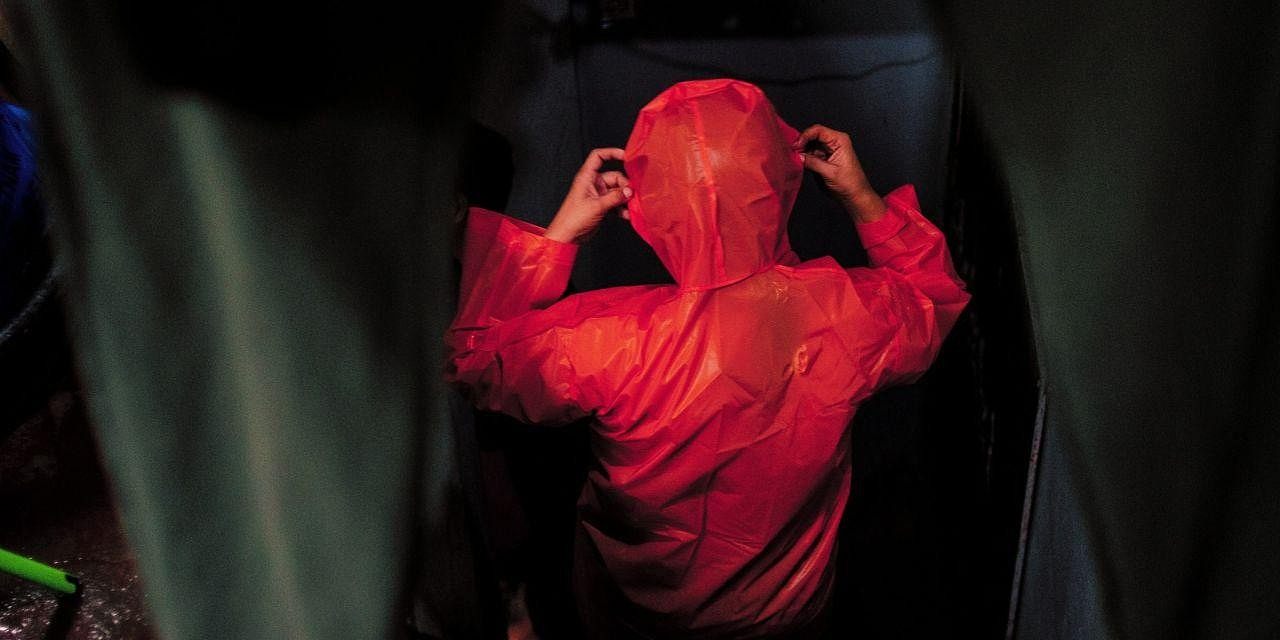
iza Aquino woke up to the sound of raindrops pattering on their tin roof. It was around 5:30 a.m. on an August Saturday. She turned on the gas stove in the corner, put a filled kettle on top, and waited for it to whistle. Now it’s time for some coffee.
Before she could finish her drink, she is interrupted by the sound of her youngest’s cries from the bedroom. Her daughter comes out and walks over to her, demanding for attention. Soon, her other kids would wake up and they would eat breakfast together.
This is her usual routine: coffee, breakfast, then bath, before heading out with her eldest to their family’s humble shoe repair stall in a small town north of Quezon City. Today, they leave home a little later than usual because of the downpour. Water was already rapidly gushing through the alleys near their home.
Aiza changes her daughter's diaper.
Once at their shop, she immediately set up their merchandise, wet from the rain, wiping down each shoe and then placing them on display.
The weather, however, would not let up. And by late afternoon, she and her son would eventually put back the shoes in storage and go home earlier than usual.
Aiza, who recently turned 37, recalls experiencing floods in their area.
“I was working as a househelp when Ondoy happened. It flooded up to the third floor; we got stuck and couldn’t go anywhere,” she said in Filipino.
Nowadays, their neighborhood does not flood that much and the nearby creek no longer overflows anymore. But still, she worries about the water returning because of all the garbage she sees near drainages and on the streets.
“[There’s so much trash]. There’s plastic, there are cartons,” she says. “Where would they put all of those?”
W
orld Bank data from 2026 shows the Philippines generates around 61,000 metric tons of solid waste daily. “In a year, it’s more or less 22 million tons,” Maria Delia Valdez said. She is the chief of the Solid Waste Management Division of the Environmental Management Bureau or EMB, under the DENR. Metro Manila alone has around 10,400 metric tons of solid waste daily.
According to Valdez, among the most visible types of solid waste are single-use plastics: sachets, plastic bags, food packaging, to name a few.
Ubiquitous among these single-use plastics are disposable napkins women use for menstruation. Aiza is among 94% of Filipino women who use them because they are inexpensive yet do the job.
Aiza pulls out a small pack of disposable napkins from her bag. It is the first day of her period,and she is about to change her pad.
“You don’t need to spend a lot; the number of pads are sufficient, and it’s just the same as what the others are using.” Ultimately, “they’re still [sanitary] napkins.”
She adds, “Prices have soared lately. That’s why I choose the cheap ones. You’ll just end up adding more to your expenses.”
She has not always used them in the past. As a teenager in the province, she had to make do with clean pieces of cloth — a pasador — to catch her menstruation, as was the practice of older Filipino women.
Since Aiza's flow is weaker this month, she was only able to change her pads twice.
A
iza was already 18 when she began using napkins, living in Manila, far away from her hometown in Bicol. She did not want her menstrual blood soaking through to her shorts while working as a househelp, which would have happened had she used something else.
Nowadays, she uses a combination of disposables for when she has to go out, and a pasador for when she stays at home and when she sleeps. She does not dare try other products, like menstrual cups or discs, because she believes that her period will stop flowing.
Besides, they cost a lot. Prices can range from P300 to P2,000 for a single product, which is sometimes more than what Aiza’s family makes in a day selling shoes. That’s why she chooses to purchase the cheaper napkin brands, which are around PHP19 per pack.
Gender and development or GAD practitioner Gichelle Cruz notes that menstrual products are a recurring, monthly expense.
“For low-income families, what are the trade offs? Should [the women] buy napkins or food? Transportation fare? Medicines?” she said. “It’s not just about having money to buy napkins. It’s about the bigger [reality of inequality].”
The consumption of sanitary pads is a continuous, recurring process, since most menstruators get their period every month, with some even consuming more than one pack per cycle.
These napkins take more than a human lifetime to deteriorate; but to sound the alarm on menstrual waste might be difficult. National government data on this is hard to come by, since waste analysis is done at the LGU level, according to Miss Valdez of the EMB.
“We cannot manage what we cannot measure,” she said.
An empty, discarded pack of branded disposable napkins lays flat on the ground.
W
hat the EMB can say with finality is that the Philippines has a serious problem with plastic waste, but refuses to call it a crisis.
“To call it a crisis means nothing is happening, as if there are no LGUs that are implementing waste management. Many LGUs excel in waste management, many LGUs have 10-year solid waste management plans.”
Among these is San Carlos City in Negros Occidental, which Miss Valdez says is a consistent EMB awardee for its good environmental practices.
Ochie Tolentino, Zero Waste campaigner for EcoWaste Coalition — a nationwide coalition of organizations aiming for a zero waste and toxic-free future — and an environmental advocate for three decades now, begs to differ.
Three pieces of disposable napkins are laid out on a table. These napkins take more than a lifetime to deteriorate.
The Philippines already has a plastic and solid waste crisis, she said. And it continues to worsen.
The country has had a law to mitigate solid waste since 2001: Republic Act 9003 or the Ecological Solid Waste Management Act of 2000. It states that LGUs have the primary responsibility to provide services on solid waste management. Its amendment in 2022, the Extended Producer Responsibility or EPR Law, holds plastic manufacturers accountable for their products through the adoption of EPR programs like packaging redesign.
Tolentino continued: “If, after five years of its implementation, segregation at the household level happened, and with collaboration from the barangay and LGU, we would not have a waste crisis now. It got worse because in [25] years, RA 9003 [was not implemented] at a hundred percent.”
Discarded plastic packaging from parcels, styrofoam containers, and food wrappers mix together in one big pile. Plastic waste remains to be a pressing concern for the Philippines.
DENR Secretary Juan Miguel Cuna did say in a July 20 Senate hearing that the department faces challenges in implementing RA 9003 due to agency and local government-dedicated funds, and insufficient solid waste management infrastructure.
In the same hearing, he called for the reinforcement of the implementation of the EPR Act, and strengthening circular economy initiatives, as plastic waste remains “one of the country’s most pressing environmental concerns.”
A path along Smokey Mountain is lined with garbage and solid waste. But vines are already beginning to take over.
O
ne month after that stormy day, Aiza has her period again.
She often changes her sanitary napkin three to four times on her second day, when her menses are at its strongest; but this month is a bit different.
The flow is weaker than last time, requiring her to change napkins only twice in a shared toilet near their shoe stand. Once full, she wrapped each pad in a small “plastic labo”, then puts them in an even bigger plastic bag. She does this every time she has her period, so that stray animals will not be able to get to her used napkins.
“My elders said it’s bad for animals to lick your menstrual blood. I believe them,” she said in Filipino.
But despite the many layers of plastic in her practice, Aiza says, “I do not think I consume a lot, since I just reuse most of it.”
Aiza and her youngest child talk to her husband, who was away on vacation, through video call.
I
n the fight against climate change, many have called for lifestyle changes.
Some Filipino small business owners have already shifted to using more sustainable materials in their products, like biodegradable containers, to selling reusable items, like washable pads.
Miss Valdez of the EMB also says that managing waste should be a shared responsibility between the government and the people.
But there are also voices that call for something much bigger than just reducing one’s personal plastic use.
“People wouldn't really care or think about climate change anymore when they have to think about their everyday living. And for them, it’s easier [to buy] a PHP5, PHP10, max PHP20, napkin at the sari-sari store, versus availing a PHP200 to PHP600 menstrual cup.
“It’s really a systemic and institutional change, and we really have to work with cross-movements and cross-sectors,” Celeste Barroso from the Women’s Global Network for Reproductive Rights said.
For Miss Cruz, the GAD practitioner, “We should not shame a person for using a product that is safest, most practical, and affordable to them.”
“That’s why what we need is a system — how will we have a disposable product design, affordable alternatives, adequate waste collection, and strong disposal infrastructure?”
Plastic waste has already mixed with a pile of dead leaves.
Miss Tolentino of EcoWaste Coalition says there is still hope to turn our crisis around.
“We just need to go back to the law. Implement it 100%. [And through] the DILG and DENR, they must give barangays an ultimatum that they will ensure that segregation is done at the household level. This is the genuine way, [we just need] to take action.”
She leaves a parting message for fellow Filipinos:
“It is our duty to take care of [our world]. We have no other home, that’s why we need to think of how to take care of it [for the next generation] to continue.” —LA GMA News
This story was produced under Oxfam Pilipinas's Patas na Bukas Media Fellowship.
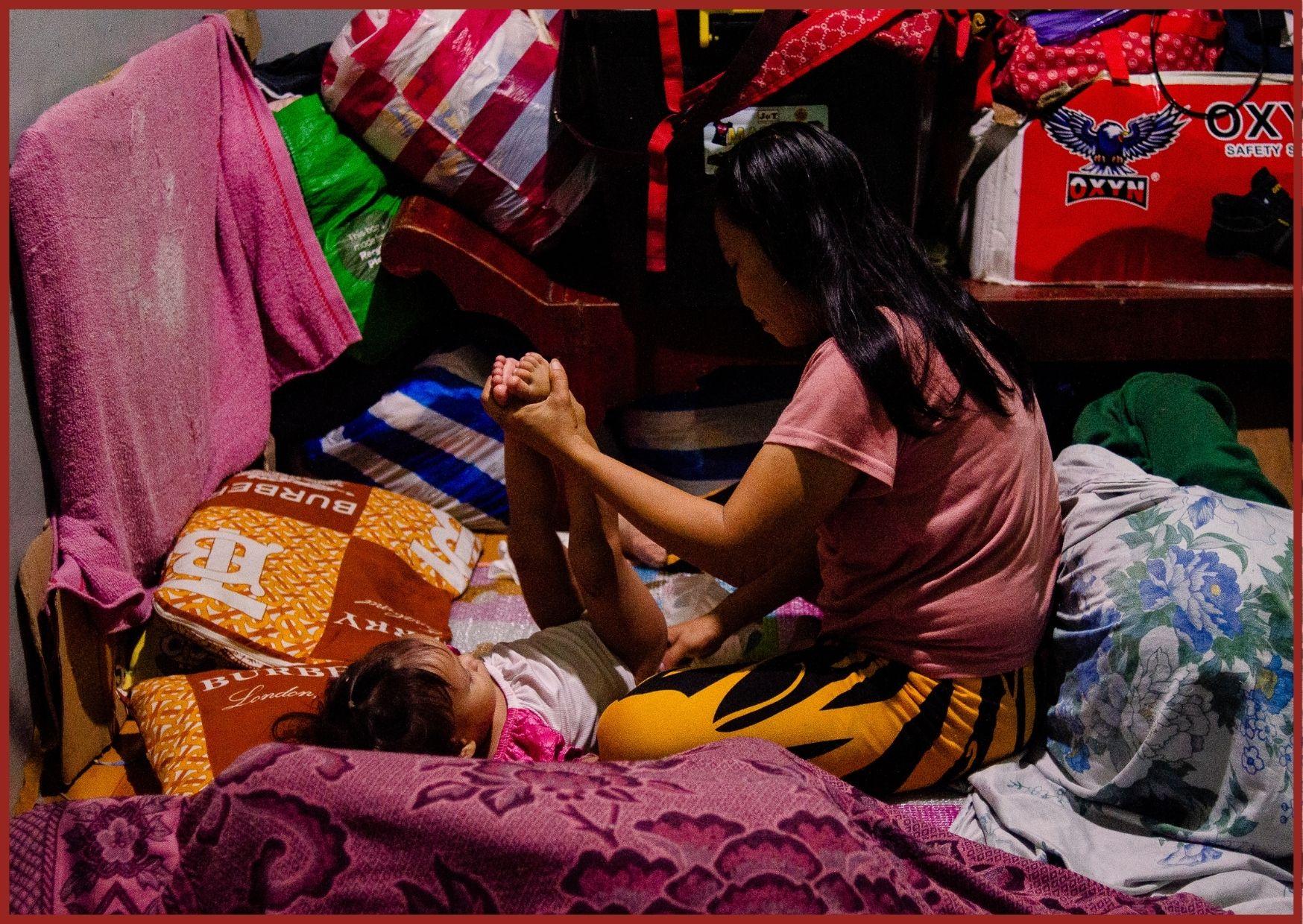 Aiza changes her daughter's diaper.
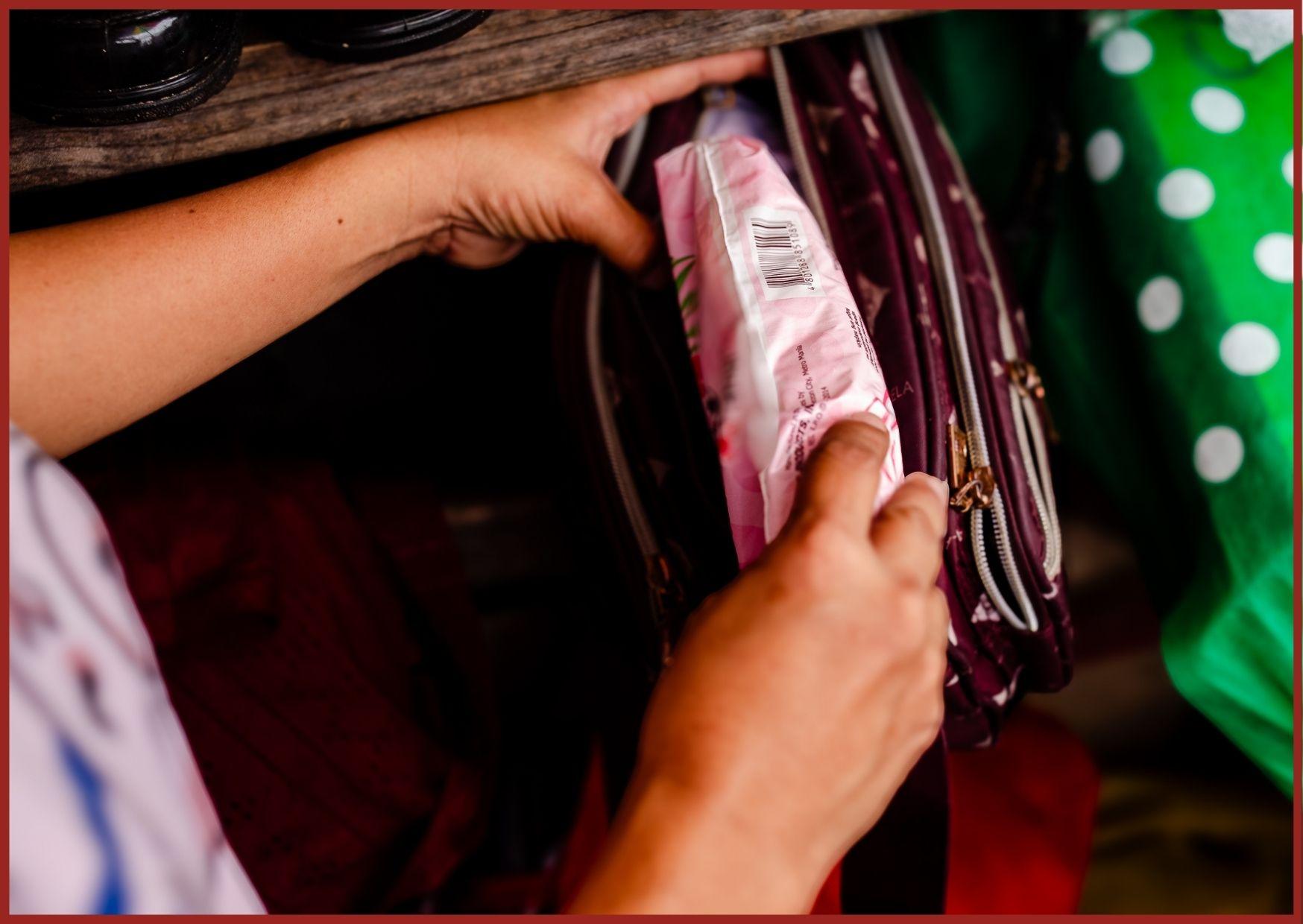 Aiza pulls out a small pack of disposable napkins from her bag. It is the first day of her period,and she is about to change her pad.
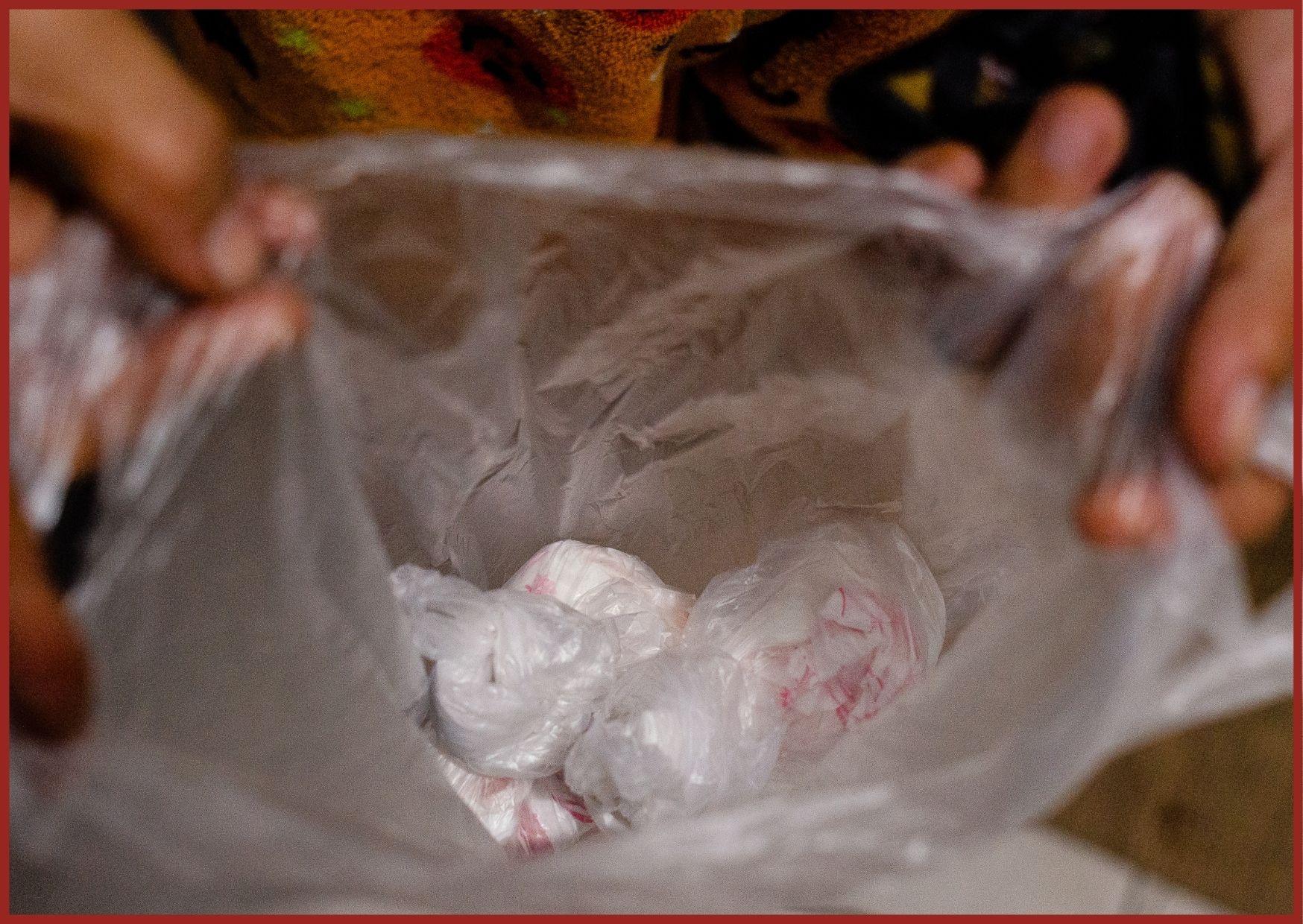 Since Aiza's flow is weaker this month, she was only able to change her pads twice.
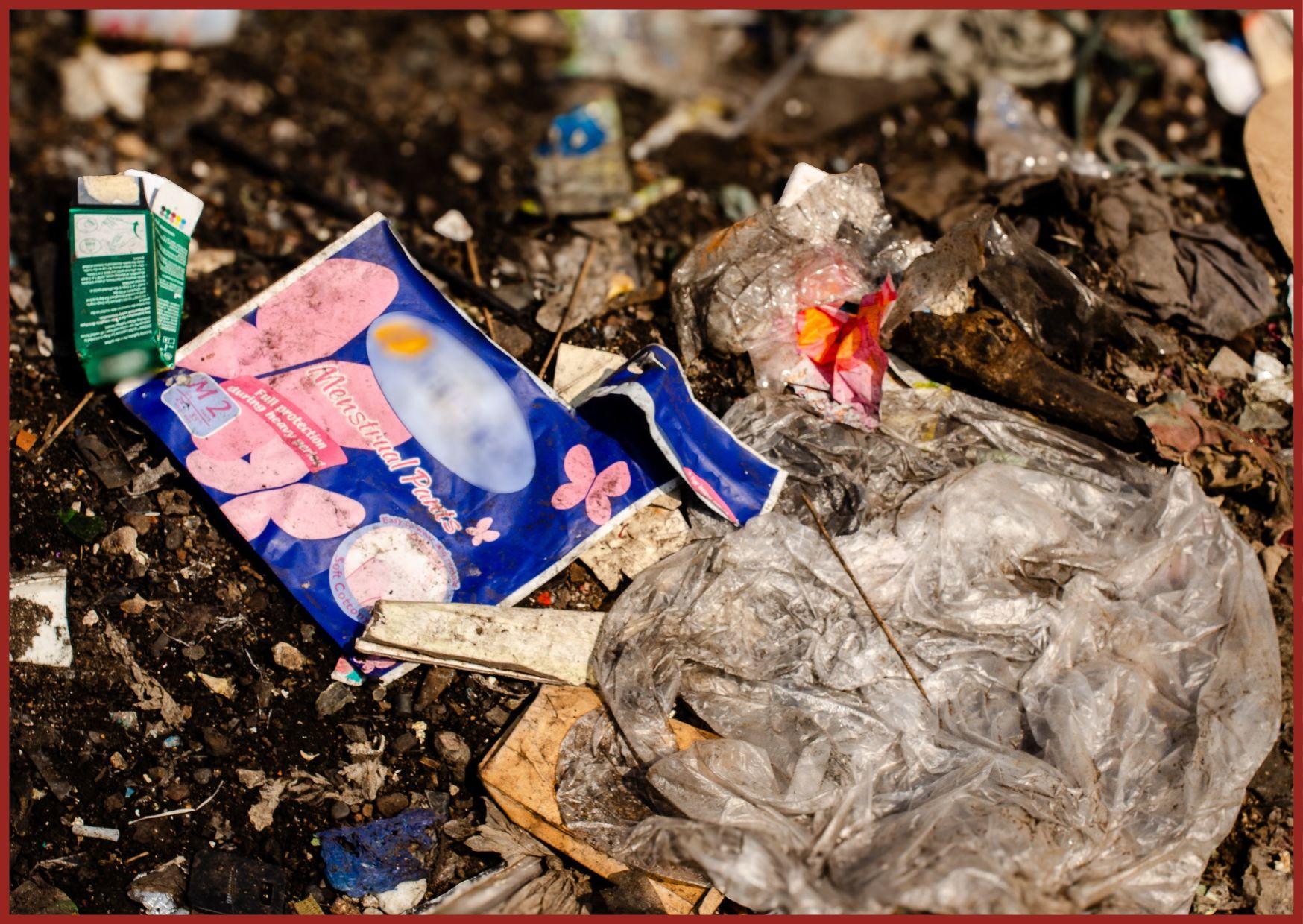 An empty, discarded pack of branded disposable napkins lays flat on the ground.
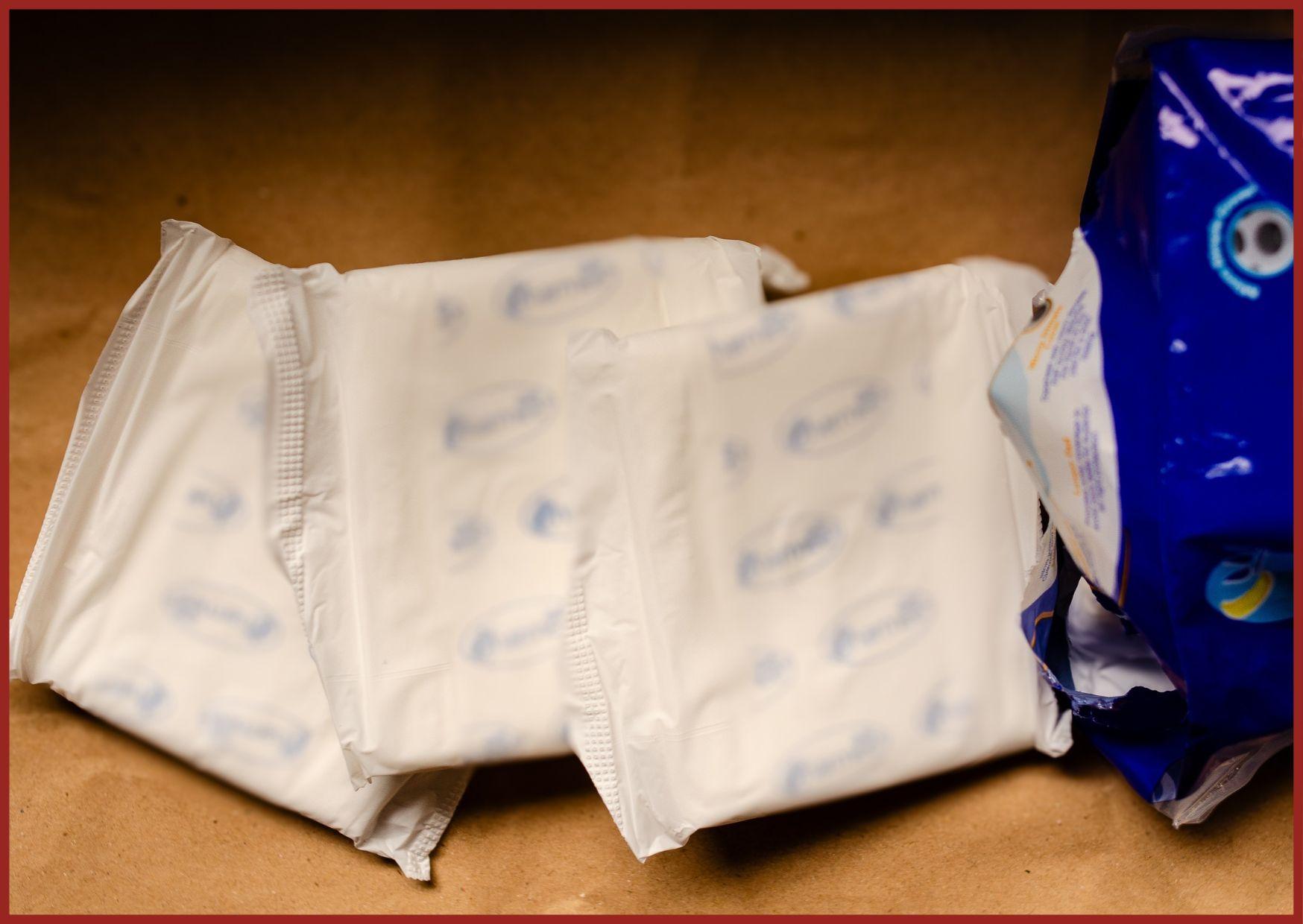 Three pieces of disposable napkins are laid out on a table. These napkins take more than a lifetime to deteriorate.
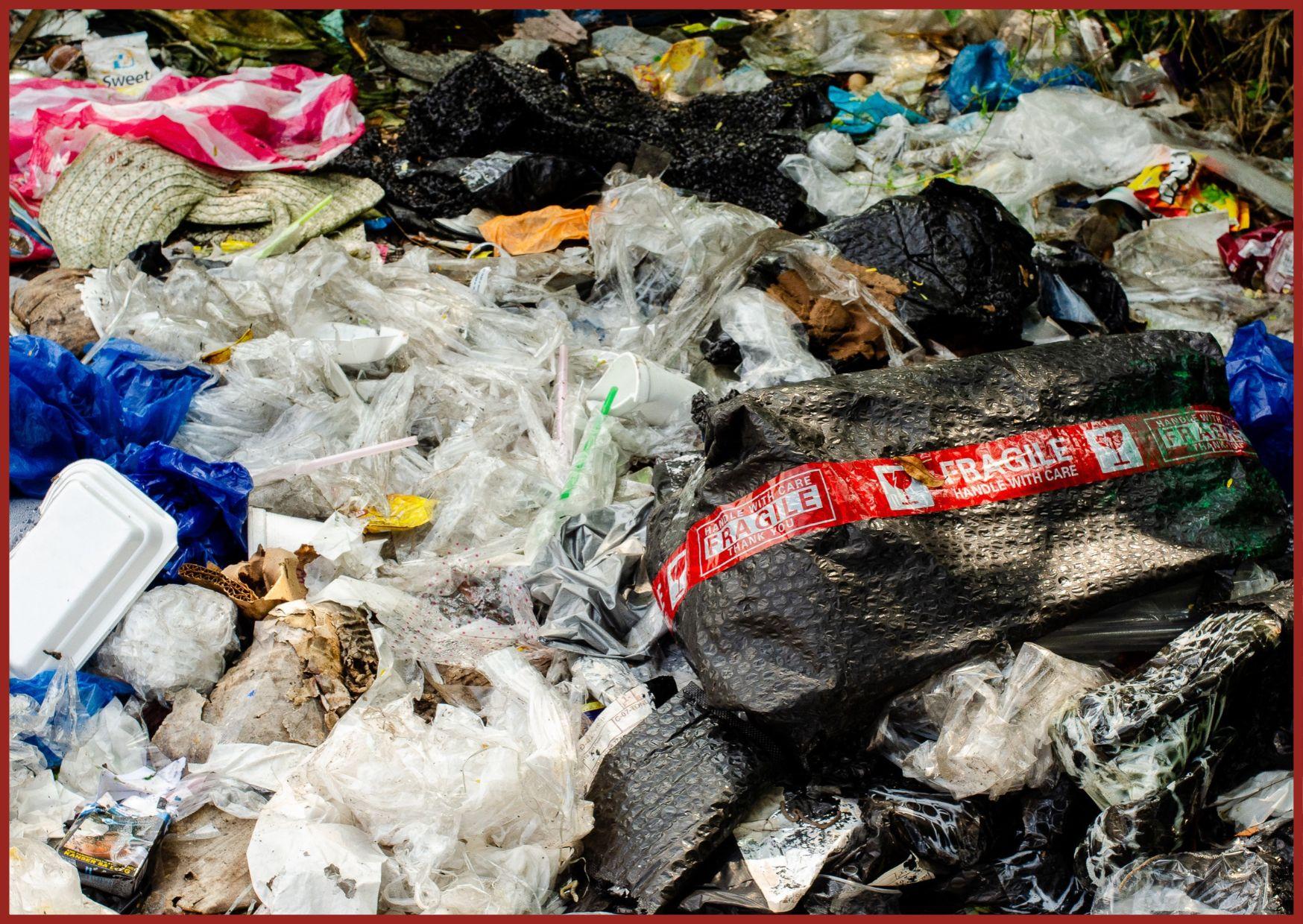 Discarded plastic packaging from parcels, styrofoam containers, and food wrappers mix together in one big pile. Plastic waste remains to be a pressing concern for the Philippines.
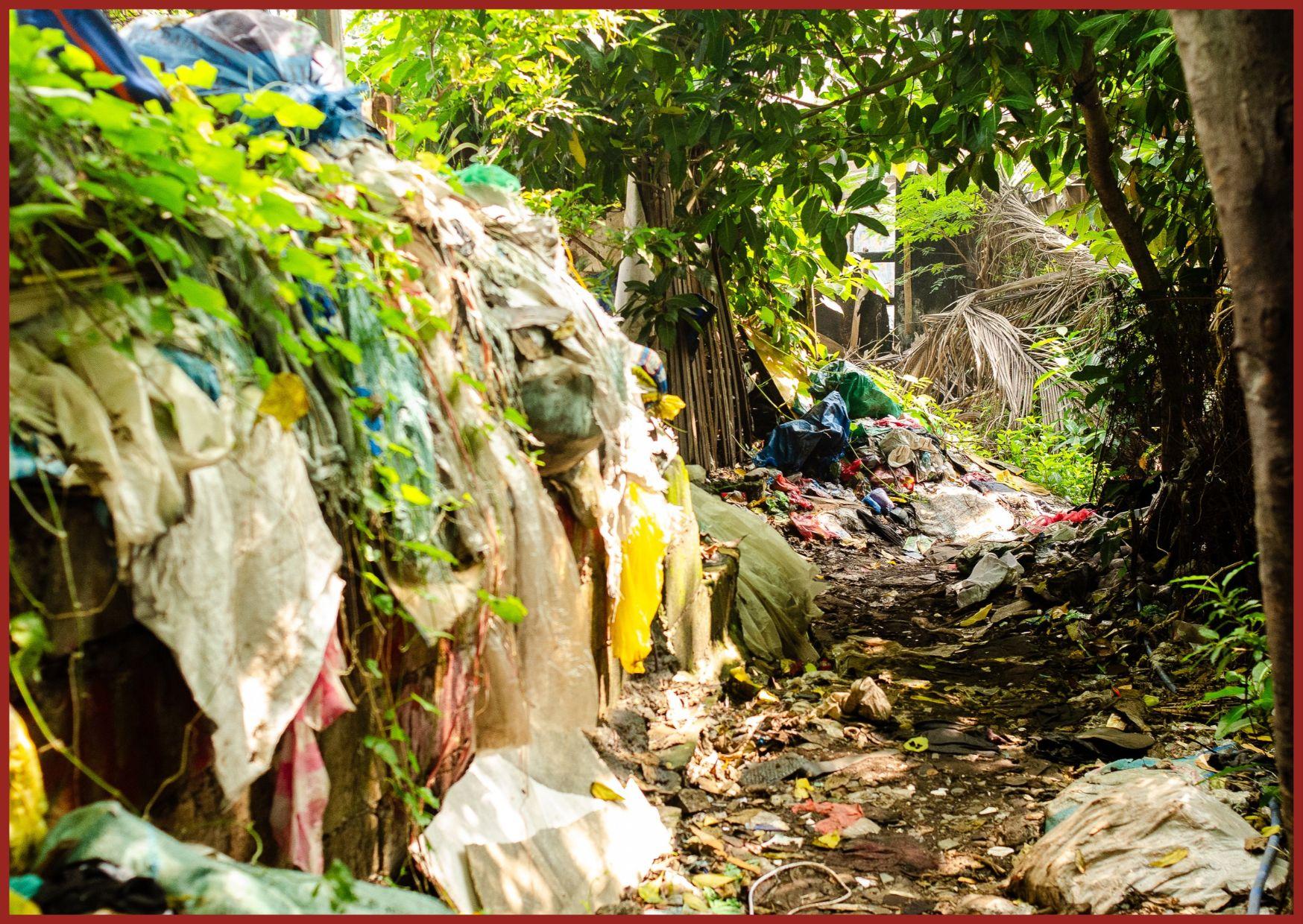 A path along Smokey Mountain is lined with garbage and solid waste. But vines are already beginning to take over.
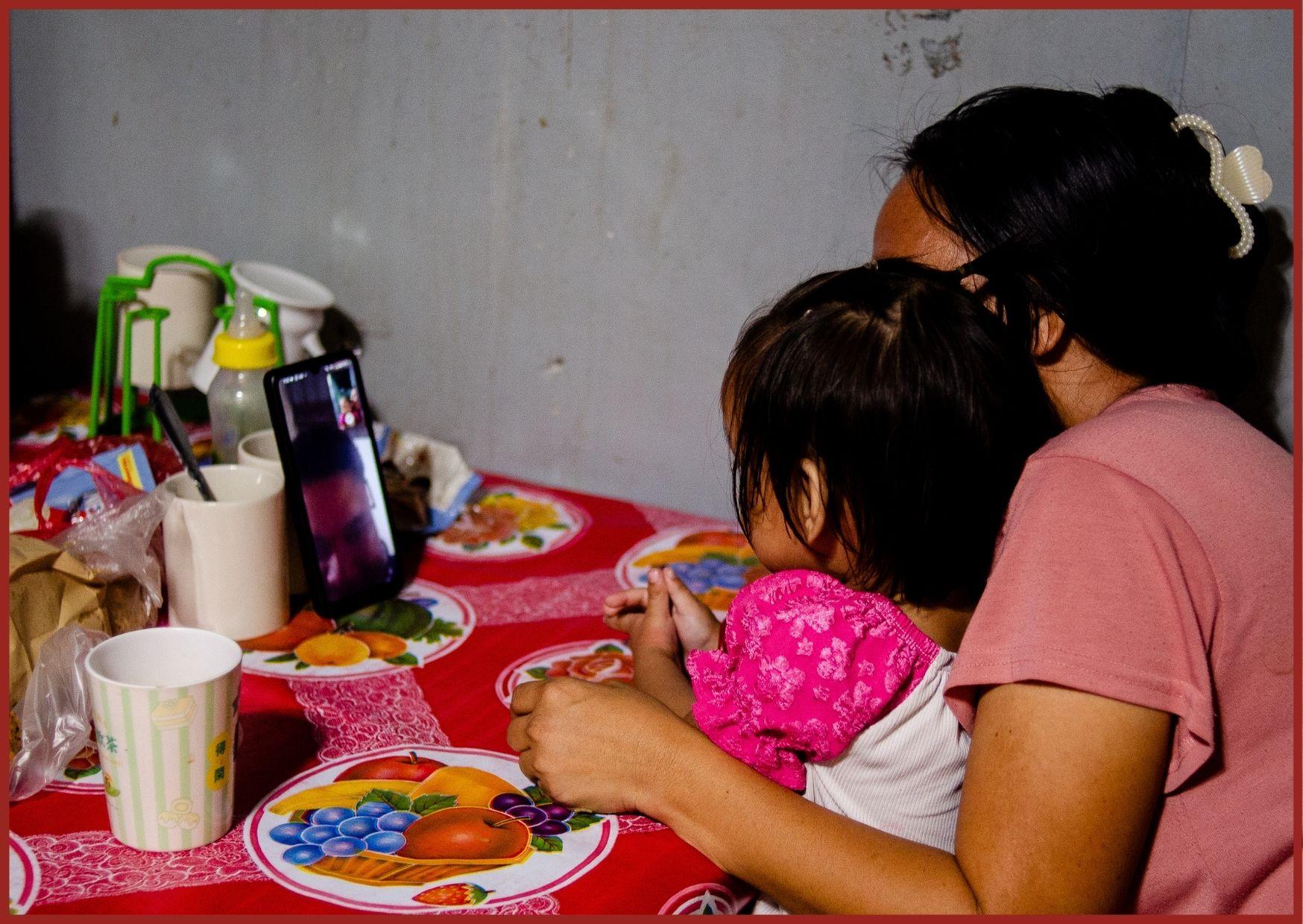 Aiza and her youngest child talk to her husband, who was away on vacation, through video call.
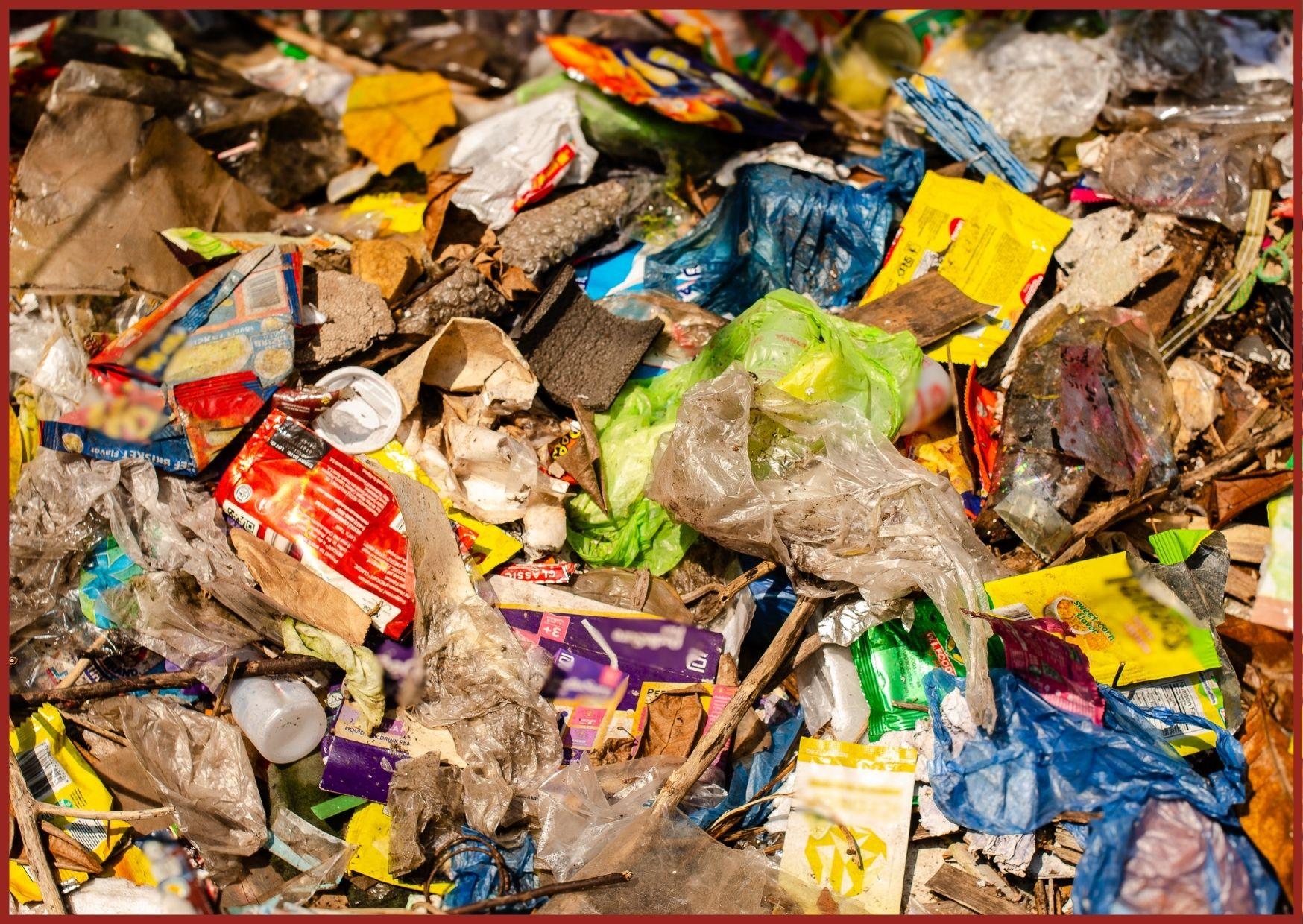 Plastic waste has already mixed with a pile of dead leaves.