Reel Deal | Opinion: Can Kaleen Bhaiya, Munna And Guddu Fill Theatres?
Mirzapur Takes Leap From Small Screen To Big. Will Its Fandom Create Box-Office Magic?
Ni Tavishi Paitandy··128K nabasa
Reel Deal | Opinion: Can Kaleen Bhaiya, Munna And Guddu Fill Theatres?
Mirzapur Takes Leap From Small Screen To Big. Will Its Fandom Create Box-Office Magic?
For the better part of the last decade, Bollywood worried that OTT would empty its theatres. Why get dressed, get into a car, pay for parking and a ticket, when the latest release was waiting at home? The sofa had become the new premium seat. Now, it’s time for audiences to get back into theatre recliners!
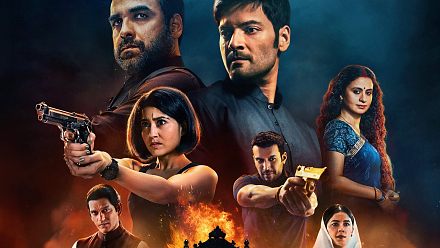
Mirzapur: The Movie has taken a world born on OTT and put it on the big screen. Kaleen Bhaiya, Guddu Pandit and Munna Bhaiya — characters millions first met at home — are now asking those same viewers to leave the sofa and come see them.
That is quite a reversal.
And it raises a question Bollywood can no longer afford to ignore…
Can An OTT Hit Sell A Cinema Ticket?
On paper, Mirzapur has a head start most films would envy. Since the show arrived in 2018 on Prime Video, its characters have escaped the screen and become pop-culture fixtures. Their faces, lines and mannerisms have found lives of their own in memes, jokes and social media.
Most films would kill for that kind of recall before release.
And Mirzapur isn’t the first to make this journey. Hollywood has been doing it for years: The Simpsons Movie, Sex and the Cityand Downton Abbey all took television favourites into cinemas. More recently, Disney has been moving streaming characters towards the big screen, including The Mandalorian.
India has had smaller examples too, including the Punjabi YouTube series Yaar Jigree Kasooti Degree, which made the jump to cinema this year.
But Mirzapur is the one Bollywood will be watching closely. Not because it is technically the first Indian web series to become a film, but because it is a major Hindi streaming franchise attempting the jump at a scale that could set a precedent.
The early numbers are encouraging. More than lakh tickets were reportedly sold in advance.
That is not a hit. It is simply a sign that people are curious enough to show up.
They Didn’t Ask For Another Show. They Asked For These People.
And they had been asking for them for years. Farhan Akhtar, one of the film’s producers, has spoken about the questions he kept getting after the first season. At first: when is the next season coming? Eventually: when are we getting the movie?
That distinction matters. The audience wasn’t asking for just more Mirzapur. It wanted Kaleen Bhaiya, Guddu Pandit, Munna Bhaiya and the rest of that world back.
Pankaj Tripathi put it rather nicely when he described watching Mirzapur on OTT as a “leave me alone” experience, while the cinema version becomes “party mode”.
That may be the simplest way to describe the challenge. The show has already earned the audience’s attention. The movie has to turn that attention into an outing.
And that brings us to the actors.
When The Character Becomes Bigger Than The Role
Bollywood has traditionally worked on a fairly straightforward equation: the star brings the audience. OTT has complicated that. Sometimes the character gets there first.
Munna Bhaiya is a perfect example. Divyenndu played him, but Munna became a phenomenon in his own right. Kaleen Bhaiya did something similar for Pankaj Tripathi. Guddu Pandit became inseparable from Ali Fazal.
These are no longer just parts on a résumé. They are characters with their own fan bases. For years, Bollywood stars built franchises.
Streaming may have found another route -franchises can build stars. That could matter well beyond Mirzapur. An actor who might once have needed a hit film to establish a following can now arrive in cinema with one already waiting for them.
For producers, that is a tempting proposition. The world exists. The characters have been tried and tested. The audience has already told you whom it likes.
But, there is a catch.
A Hit Show Does Not Automatically Make A Hit Movie
A series has one enormous advantage over a film: time. Three seasons can turn a character into someone audiences feel they know. A filmmaker coming from that world isn’t starting from scratch.
But familiarity only gets you to the cinema door. The film still has to make people walk through it.
Someone can love Mirzapur and still decide to wait for the Prime Video release. And if every successful streaming show is suddenly given a theatrical spin-off, audiences will get wise to the game very quickly.
The bigger risk is that popularity becomes an excuse for repetition. A character people love is not enough. There has to be a story worth telling. That is where Mirzapur has something to prove. The series has already built the world and the following. The movie has to make the big screen feel like the natural next stop, not simply the next place the franchise has been sent.
If it manages that, Bollywood may have found a new way of building theatrical franchises.
A show creates the world. The characters become stars. The stars carry the world into cinema. And suddenly the journey to the big screen doesn’t have to start there. It can start on a sofa!
There is a delicious irony in that. For years, Bollywood worried that OTT would take audiences away from theatres. Now the industry may discover that the same platforms it once feared can also help bring audiences back.
Mirzapur won’t settle the question on its own. But it is asking the right one. Can something born for the sofa become something worth leaving it for?