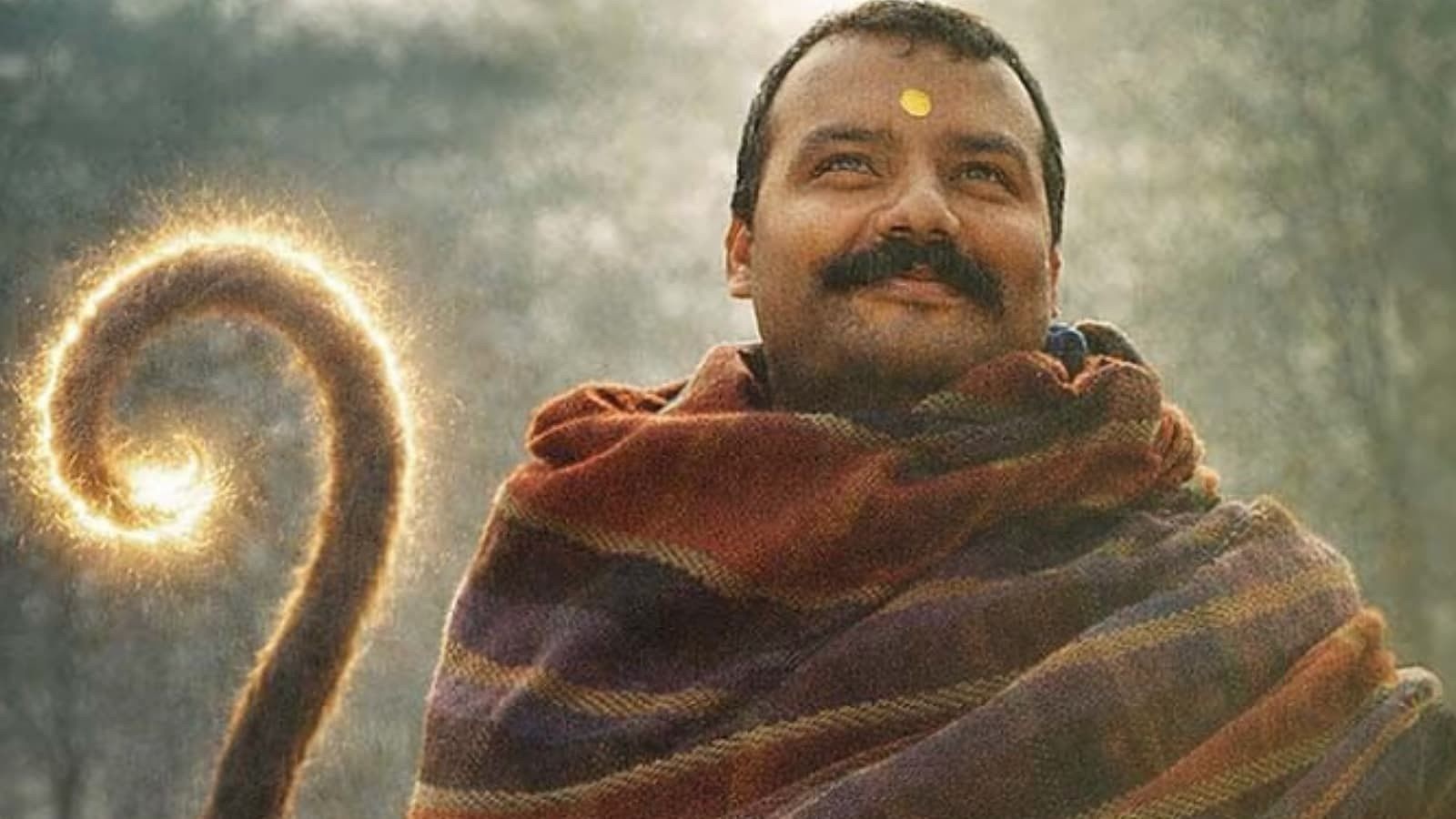
Hanuman Ansh: Why Neem Karoli Baba Might Be The Guru Gen Z Didn’t Know It Was Looking For
There are films. And then there are experiences that arrive in the guise of films.
Ni Yuvraj Pokharna··89K nabasa
Hanuman Ansh: Why Neem Karoli Baba Might Be The Guru Gen Z Didn’t Know It Was Looking For
There are films. And then there are experiences that arrive in the guise of films.
Hanuman Ansh—directed by Vishal Chaturvedi and released in the summer of 2026—belongs firmly in the second category. It is not a big-budget spectacle. It carries no A-lister names on its poster. It will not trend because a star promoted it in a sequinned outfit on a chat show. And yet, it is perhaps the most important film a young Indian could watch right now. Not because it is preachy. Precisely because it is not.
The film opens with a child undone by grief. A boy who has lost his mother, and who sets out—with the stubborn, illogical faith that only children and saints possess—to find Bhagwan Ram. Perhaps, to ask Him why or may be to reunite with his deceased mother. What unfolds is the story of how that boy becomes Neeb Karoli Baba. How Laxmi Narayan becomes Maharaj-ji. How a wandering, barefoot seeker -laughing, feeding, blessing, vanishing- becomes the most quietly consequential spiritual figure of the twentieth century. And I use the word ‘consequential’ deliberately.
Here is a name Gen Z recognises without context: Steve Jobs. The man who built Apple in a garage and changed the way the world held technology in its hands. Jobs flew to India in 1974—broke, searching for something he could not name—specifically to find Neem Karoli Baba at Kainchi Dham in the Kumaon hills. Maharaj-ji had already left his physical body by then. Jobs stayed anyway. Spent months in India. Came back and built a company on intuition over intellect, on simplicity over spectacle, on the deeply Indic conviction that the rational mind is only one tool among many.
Another name Gen Z knows well, verily, is Mark Zuckerberg. Facebook was on the verge of collapse in 2008. Under pressure to sell. Losing ground. It was Jobs who told him to go to that temple in India that hewent to. A desperate Zuckerberg complied by visiting Kainchi Dham, the ashram of a saint who had been physically gone for decades. He came back and astonishingly did not sell Facebook. He stayed the course. The rest is the kind of history that now runs on the very phones Gen Z cannot put down. Let that land for a moment.
The saint who inspired the founder of Apple and the founder of Facebook—two platforms that between them have rewired human attention, human commerce, and human identity—never held a press conference. Never launched a course. Never had a personal brand. He sat under a blanket. He offered chai. He fed people. He loved everyone: unconditionally, indiscriminately, without a strategy. Neeb Karoli Baba was the O.G. no strings attached. Gen Z coudl call it ghosting with grace. He would arrive in your life, upend everything you thought you knew, and disappear, leaving only the transformation behind.
Hanuman Ansh captures this raw emotion with an honesty that bigger productions would have sanitised into spectacle. Vishal Chaturvedi does not portray Maharaj-ji as a self-proclaimed godman performing miracles for applause. The miracles are present—you cannot tell this story without them—but they are never the point. The point is always the love. The seva. The radical, almost unreasonable warmth with which this man held everyone who came to him. He followed no rigid ritual. He imposed no doctrine. The guru-shishya parampara he embodied was not transactional but transformational. He did not demand adherence. He simply loved, and love—as it turns out—is the most disruptive force in the universe.
That is precisely the guru Gen Z needs. Not one who sells a ₹999 masterclass with a motivational PDF attached. Not one whose spiritual authority is measured in followers and verified ticks. A guru who asks for nothing, gives everything, and disappears before you can thank him. If alive today, Maharaj-ji would have been terrible at personal branding. Believe me! He would have been extraordinary at everything that actually matters.
In a hyper-digital age where as a prominent media figure rightly warned, that algorithms have become teachers, reels have become textbooks, and virality has become truth, a film like Hanuman Ansh is an act of quiet resistance. It asks its audience to sit still. To feel something slowly. To follow a story that does not resolve in sixty seconds. Now, a word about the cast. You will recognise no one. These are not faces from film posters or brand endorsements or celebrity reels. They are ordinary faces. And that—precisely that—is what makes them extraordinary. Because Maharaj-ji’s world was never about the famous. It was about the sincere. Some scenes these actors pull will stay with you for days. A few may quietly change something in you. But almost all of them will stir a nostalgia—that particular, untranslatable ache—for a guru you once had, a guru who was also your sakha, your friend. Or they will compel you to go and se one. Either way, you will not leave the theatre the same.
Because here is the truth about Maharaj-ji that no algorithm can package and no influencer can replicate. He did not let anyone in his exposure wither. Not the saddened. Not the impoverished. Not the starving. He met each one where they stood and ignited something. Hope where there was resignation. Laughter where there was grief. A reason to rise where there had only been reasons to give up. He fed ideas and musings—with equal generosity, equal attention, equal love—to peasants and revolutionaries, to wandering poets and searching scientists. His blanket was the great equaliser. His chai, the most democratic institution this country has ever putatively produced.
Who better, then, to idolise as a Gen Z guru?
A generation that is tired of being sold to. Tired of godmen with one-to-one counselling packages and discount codes. Tired of wisdom that arrives with a #ad tag and disappears with the next brand cycle. Maharaj-ji asked for nothing. Gave everything. And left behind a fragrance—in Kainchi’s pine air, in Jobs’ minimalism, in Zuckerberg’s stubbornness, in the quiet dignity of every life he touched—that five decades have not faded.
Though lagging in technalities in the film-making arena, Hanuman Ansh, a movie made with a frugal budget, this movie packages a multitude of social, cultural, psychological, devotional and spiritual heft. Audiences should not ascribe a discernment here between devotees and critics but as one demography of a young Indian who deserves to know who inspired the men who built the world they live in and why that man wore no shoes, carried no phone, and never once asked to be remembered. He didn’t need to. That is the whole point.