'They call us liars': The struggle to reapply for a blue badge
An amputee told the BBC this week how he was shocked and "disheartened" to discover he needed more than photographic evidence of his missing leg to renew his blue badge.
Por Katy Prickett··82K lecturas
'They call us liars': The struggle to reapply for a blue badge
An amputee told the BBC this week how he was shocked and "disheartened" to discover he needed more than photographic evidence of his missing leg to renew his blue badge.
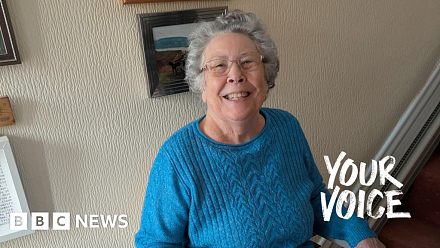
After Nigel Ward, 71, from King's Lynn, went public with the story, Lindsey Chant, from Northampton, and Julie, from Southend-on-Sea, Essex, used Your Voice to get in touch with the BBC about similar struggles.
Blue badges are disabled parking cards issued by local authorities to help people with mobility issues park closer to the goods and services they need to use.
So why are people, some of whose conditions have worsened over time, struggling to reapply for their blue badges - and who is eligible?
"I can understand they've got to be rigorous, but if you're renewing because your symptoms are the same or worse, the process should be a lot simpler," said Lindsey Chant.
Her 81-year-old mother Valerie's mobility has deteriorated since she received her first blue badge three years ago.
Valerie is waiting for two operations, one a hip replacement and the other for a hernia, and now uses a stair lift, zimmer frames and a wheelchair when going out.
She first applied for the new blue badge in March, but keeps being told she needs "more proof of hospital appointment letters, it's just an unending saga and disheartening", her daughter, 56, explained.
Valerie and her husband Keith, 86, liked to take small trips out, but relied on accessible parking so that they could get her wheelchair out of the car.
Lindsey said: "Without a blue badge, mum will be housebound and will eventually give up on trying to enjoy what time she has left."
West Northamptonshire Council has been approached for comment.
Ward was told he needed further medical evidence of his limited mobility and was worried the loss of the permit would affect his independence.
But Norfolk County Council insists it has been following the correct procedures, laid down by the government.
That guidance is based on mobility not disability, so someone applying for the permit needs to be assessed on how far they can walk, if they have breathing problems when they walk, or chest pain.
"The guidance explicitly states that if a person can walk relatively normally with the use of an artificial leg or walking stick, then they are not eligible to receive a blue badge," a council spokesperson said.
They give disabled people access to specially adapted designated bays and users need to reapply for a new one every three years.
Badge holders are allowed to park for free in on-street pay-and-display bays and for up to three hours on yellow lines - except where there are loading restrictions.
Applicants are expected to provide evidence of relevant medication that is taken, relevant treatments that applicants receive or are due to receive - and healthcare or associated professionals that have been involved with treatment.
Supporting documents could be prescriptions, diagnosis letters or correspondence between professionals who treat the condition, according to the DfT.
A spokesperson said: "The blue badge scheme is a vital lifeline for many disabled people, and we are committed to ensuring it reaches those who genuinely need it.
"Decisions on individual cases are a matter for local authorities and we expect councils to assess applications fairly."
Julie, from Southend-on-Sea, Essex, also believes the system should be easier for people like her, whose condition has worsened.
"What they do is they send you down a rabbit hole, they say your diagnosis is three years old and you could have got better - but you can't get better from osteoarthritis," she said about reapplying for her blue badge.
The 70-year-old was diagnosed with severe osteoarthritis in her knee in 2023 and is waiting for a knee replacement.
Despite being on the "maximum painkillers", Julie said she is in permanent pain, sometimes so intense she cannot leave the house.
As part of her application, her GP sent a letter outlining her deterioration to Southend City Council, but this was rejected with a request for a letter from a consultant.
She also attended an in-person assessment, where she told the assessor "several times I was in great pain, but he still insisted I carry on walking" - and her application was rejected again.
A council spokesperson said: "All blue badge applications are made through the national government process and are assessed against Department for Transport eligibility criteria, using the evidence provided and, where required, information from an independent mobility assessment.
"Applicants who disagree with a decision can request a review and provide additional supporting information for consideration."
Julie feels she has exhausted the council's review processes, so has complained to the Local Government Ombudsman.
"They're calling the doctor a liar, as well as me, and I'm not sure how you can get a blue badge in this system," she said, adding she was now waiting for a consultant's appointment to get the necessary letter.
Do you have a story suggestion for Essex? Contact us below.