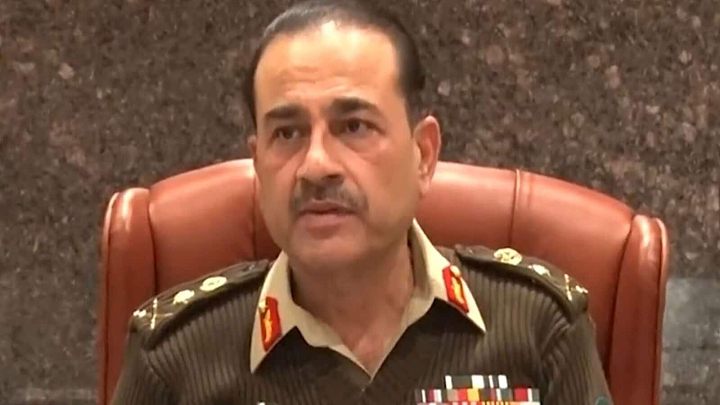
Pakistan's New Provinces Plan: Is Asim Munir Eyeing More Power, Money And Control? Exclusive
Pakistan’s debate over creating new provinces is no longer just about administrative efficiency or bringing governance closer to the people. It has become entangled with questions about military influence, the distributi
Por Manoj Gupta··41K lecturas
Pakistan's New Provinces Plan: Is Asim Munir Eyeing More Power, Money And Control? Exclusive
Pakistan’s debate over creating new provinces is no longer just about administrative efficiency or bringing governance closer to the people. It has become entangled with questions about military influence, the distribution of national wealth and the future of provincial autonomy.
The timing has drawn particular attention. On Sunday, Pakistan imposed emergency rule in Khyber Pakhtunkhwa (KP), suspending the elected provincial government led by Imran Khan’s Pakistan Tehreek-e-Insaf (PTI). The federal government cited deteriorating security and the provincial administration’s handling of militancy, while PTI denounced the move as an attempt to undermine its elected mandate.
Against this backdrop, the renewed discussion around creating new provinces and administrative units has prompted concerns about whether Pakistan could be heading towards a broader restructuring of its federal system.
News18 had reported earlier citing government and security sources that constitutional amendments, changes to the National Finance Commission (NFC) Award and a possible reversal of some provisions of the 18th Amendment are under consideration. The claims suggest that the proposed changes could alter the balance of power between Islamabad and the provinces.
The allegations go further, suggesting that military chief Field Marshal Asim Munir could benefit from a reorganisation that weakens established political parties and increases federal control over strategically important resources.
So, why has the question of new provinces become so politically sensitive in Pakistan? The answer lies in the relationship between provincial boundaries, political strongholds, constitutional autonomy and the money distributed by the federal government.
What Is The Plan For New Provinces In Pakistan?
Pakistan currently has four provinces: Punjab, Sindh, Khyber Pakhtunkhwa and Balochistan. Islamabad is a federal territory, while Gilgit-Baltistan and Pakistan-occupied Kashmir have separate administrative arrangements.
The proposal to create additional provinces is not new. Demands for a separate South Punjab province, for instance, have existed for years, with supporters arguing that the region does not receive adequate political representation, public investment or administrative attention from Lahore.
Similar debates have emerged around the division of Sindh, particularly demands for greater autonomy or a separate administrative arrangement for Karachi. However, the issue is especially contentious because of Sindh’s political identity and the Pakistan Peoples Party’s (PPP) longstanding dominance in the province.
The latest debate has acquired a different dimension amid allegations that the military establishment favours a wider reorganisation of Pakistan’s provincial structure. Some reports have discussed the possibility of breaking the existing provinces into smaller administrative units.
Supporters of creating smaller provinces could argue that they would make governance more accessible, improve service delivery and reduce the concentration of power in provincial capitals. Critics, however, fear that redrawing boundaries without political consensus could weaken existing political bases and increase the federal establishment’s influence.
The central question is whether restructuring would genuinely devolve power to local communities or instead change the political and financial arrangements through which power is exercised.
Why The 18th Amendment Matters In The New Provinces Debate
The 18th Amendment to Pakistan’s Constitution, passed in 2010, is central to understanding the controversy.
The amendment significantly expanded provincial autonomy by transferring several legislative and administrative responsibilities from the federal government to the provinces. It was a major part of the constitutional settlement intended to rebalance the relationship between Islamabad and Pakistan’s federating units.
The amendment also strengthened the constitutional protection of the provinces’ share in revenue distribution through the NFC Award. Article 160(3A) provides that the share of the provinces in each NFC Award cannot be lower than the share they received in the previous award.
This matters because provincial autonomy is not simply about who administers a territory. It also determines who controls public services, exercises authority over particular subjects and receives the money needed to govern.
What Is The NFC Award And Why Is It Important?
The National Finance Commission Award determines how specified federal tax revenues are distributed between Pakistan’s federal government and its provinces.
Under Article 160 of the Constitution, the NFC makes recommendations on the distribution of revenue, grants to provinces and borrowing arrangements. The President then specifies the distribution through an order in accordance with the constitutional framework.
The NFC is important because provinces depend on these transfers to finance public services, development projects and administrative expenditure. The distribution of funds is therefore a major source of bargaining between Islamabad and the provincial governments.
Pakistan’s seventh NFC Award, implemented in 2010, increased the provinces’ share of divisible-pool revenues and became an important component of the post-18th Amendment settlement.
The creation of new provinces could reopen questions about how money is distributed. Would each new province receive a separate share? Would the existing formula be revised? How would population, development needs and revenue contributions be weighed? And would the federal government’s share change?
These are not merely technical questions. They determine which governments have the resources to fund public services and exercise political authority.
A new province would not automatically increase the federal government’s share of revenue. Any change would depend on the constitutional and financial arrangements adopted, including the treatment of existing provincial shares.
However, a restructuring of the NFC framework could have significant consequences for the balance of fiscal power between Islamabad and the provinces.
This is why the new-provinces debate and the NFC Award have increasingly been discussed together.
Is The Military Trying To Weaken The PPP And PML-N?
One of the principal concerns raised by critics is that dividing the existing provinces could dilute the influence of established political parties.
The PPP has governed Sindh continuously since 2008, while the Pakistan Muslim League-Nawaz (PML-N) has traditionally drawn much of its political strength from Punjab. Both parties have deep organisational networks and electoral bases in their respective strongholds.
A division of Punjab could alter the political landscape for the PML-N, while dividing Sindh could affect the PPP’s electoral dominance and control over provincial institutions.
The impact would depend on the boundaries of any new provinces, their population, electoral composition, representation and the distribution of administrative and financial powers. A division would not automatically weaken either party, but it could change the constituencies and institutions through which they exercise influence.
The possibility has prompted accusations that provincial restructuring could become a means of political engineering rather than a genuine effort to improve governance.
PPP leader and former senator Farhatullah Babar raised similar concerns in September. Speaking about the campaign for new provinces, he argued that the debate reflected opposition to the existing framework of provincial autonomy. “Those who built and defended a centralised system are now talking about creating new provinces. This is not genuine devolution. It reflects a mindset that has historically opposed the NFC Award and the 18th Amendment,” Babar said, according to Dawn.
Babar’s remarks reflect the concerns of a political leader; they do not establish that the military establishment is directing the proposed restructuring.
The PPP has also argued that creating new provinces must follow the constitutional process and that genuine devolution requires stronger local governments rather than simply redrawing administrative boundaries.
For the PML-N, the question is more complicated. The creation of South Punjab as a separate province has been a longstanding demand, but any proposal would have implications for the party’s political base and the administrative structure of Punjab.
Both parties could therefore face a difficult choice between supporting a longstanding demand for better regional representation and opposing a process they believe could undermine their political influence.
Why Sindh And South Punjab Are At The Centre Of The Debate
The political stakes differ across Pakistan’s provinces.
In Punjab, the demand for a separate South Punjab province is linked to complaints that the southern region has not received a proportionate share of development, administrative attention and political representation.
Supporters argue that a separate province would allow the region to set its own priorities and bring the government closer to residents. The PML-N and other political parties would have to contend with those demands while considering the implications of dividing Pakistan’s most populous province.
In Sindh, the debate is even more sensitive because provincial identity is closely linked to the region’s political history.
Karachi is Pakistan’s largest city and a major economic centre. Its population, economic contribution and longstanding governance challenges have fuelled arguments for a more effective administrative arrangement. However, proposals to divide Sindh have faced strong resistance from the PPP and others who see the province’s territorial integrity as a political and constitutional issue.
The Sindh Assembly has explicitly rejected proposals to divide the province and cited Article 239(4) of the Constitution, which requires the approval of the relevant provincial assembly by at least two-thirds of its total membership for a constitutional amendment altering the province’s boundaries.
This provision is a major obstacle to any attempt to redraw provincial boundaries without the support of the affected province’s elected representatives.
Could Pakistan’s Mineral Wealth Be Another Factor?
The debate has also acquired an economic and strategic dimension because Pakistan possesses valuable mineral resources, including deposits in Balochistan and other regions.
News18’s reporting, citing a senior security source, alleges that Asim Munir has promised access to mineral sites in Balochistan, Khyber Pakhtunkhwa and Gilgit-Baltistan to the United States. The source suggests that efforts to increase federal control over mineral resources could be linked to the reported push to revisit the 18th Amendment.
The underlying constitutional issue is nevertheless important. Pakistan’s federal structure distributes authority over natural resources through a combination of constitutional provisions and other legal arrangements. Changes to provincial powers could affect the relationship between resource-producing regions and the federal government.
If Islamabad sought greater authority over minerals, it could trigger disputes over ownership, licensing, revenue and the share of resource-rich provinces in the benefits generated by extraction.
For Balochistan in particular, questions about resource control are politically sensitive because disputes over natural wealth, local representation and the distribution of economic benefits have long featured in relations between the province and the federal government.
A restructuring of provincial boundaries would not, by itself, transfer ownership of all mineral resources to the federal government. That would depend on the specific legal and constitutional changes proposed.
The distinction is crucial: the strategic value of mineral resources provides a reason to examine the issue, but it does not independently establish the motives attributed to Munir.
Is The KP Emergency A Prelude To A Bigger Political Plan?
The imposition of emergency rule in Khyber Pakhtunkhwa has intensified the debate because the province is governed by PTI, the party of jailed former prime minister Imran Khan.
The federal government has justified its action by pointing to security concerns and the provincial administration’s handling of militant violence. PTI, however, has rejected the move, arguing that it undermines the province’s elected government.
The emergency and the debate over new provinces are distinct developments. There is no established evidence that the emergency was imposed specifically to facilitate a redrawing of provincial boundaries.
However, the episode has heightened concerns about the balance between federal authority and provincial autonomy. If the federal government assumes greater control over a province, questions naturally arise about the safeguards protecting elected provincial administrations and the circumstances in which those safeguards can be overridden.
The broader concern is that emergency powers, constitutional amendments and administrative restructuring could collectively change the relationship between the centre and the provinces.
Whether that is the intention behind the current developments remains unproven. The immediate political significance of the KP emergency is that it has brought the conflict over provincial authority into sharper focus at a time when proposals for wider restructuring are also being discussed.
Can Asim Munir Redraw Pakistan’s Provincial Boundaries?
Pakistan’s constitutional framework does not allow the army chief to create provinces by executive order.
Article 239(4) stipulates that a constitutional amendment altering a province’s boundaries cannot be presented to the President for assent unless the relevant provincial assembly has passed it with the votes of at least two-thirds of its total membership. The constitutional amendment process also requires parliamentary approval.
This means that any genuine attempt to divide Punjab, Sindh, Khyber Pakhtunkhwa or Balochistan would face significant constitutional and political hurdles.
A proposal would need to navigate parliamentary politics, provincial consent and the distribution of power and resources. Opposition from a provincial assembly could prevent a boundary change from proceeding under the constitutional provision.
Changes to the NFC framework would also have to be considered within the applicable constitutional process. The protections surrounding provincial revenue shares are particularly important because the existing arrangement was designed to prevent a province’s share from falling below its previous level.
Consequently, even if elements of the military establishment favour restructuring, the outcome would depend on the constitutional process and the willingness of elected institutions to support it.
The distinction between political influence and formal constitutional authority is important. Allegations that Munir is driving the initiative should not be confused with evidence that he can unilaterally implement it.
New Provinces Or A New Balance Of Power?
The debate over new provinces brings together several issues that Pakistan has struggled to resolve: uneven regional development, demands for greater representation, the distribution of national revenue and the relationship between the military and elected governments.
Supporters of new provinces can make a case for more accessible administration and greater attention to underserved regions. But the effectiveness of such a move would depend on whether new administrative structures were accompanied by adequate funding, functioning local governments and accountable elected institutions.
Critics, meanwhile, argue that restructuring could be used to weaken established political parties, alter the distribution of resources and reduce the autonomy secured by the 18th Amendment.
The NFC Award is central to this dispute because changing how revenue is allocated could reshape the financial relationship between Islamabad and the provinces. Mineral resources add another dimension, particularly where regional governments are concerned about retaining authority over resources within their territories.
The latest developments do not establish that Pakistan has committed to a nationwide redrawing of provincial boundaries or that the reported allegations about Munir’s motives have been proven. But they have made the constitutional and financial stakes of the debate harder to ignore.
Ultimately, the question is not simply whether Pakistan needs more provinces. It is whether any restructuring would bring government closer to the people or shift more political and financial authority towards the centre and whether such a change could command the constitutional consent and democratic legitimacy required to endure.