From Texas To Maine: Why Midterm 'Bluenami' Is A Red Alert For Donald Trump
From Texas and Iowa to Kansas, Ohio, North Carolina and South Carolina, Democrats overturned Republican advantages in Senate races that had appeared difficult to win. In Maine, Democrat Troy Jackson defeated longtime Rep
Por Shankhyaneel Sarkar··64K lecturas
From Texas To Maine: Why Midterm 'Bluenami' Is A Red Alert For Donald Trump
From Texas and Iowa to Kansas, Ohio, North Carolina and South Carolina, Democrats overturned Republican advantages in Senate races that had appeared difficult to win. In Maine, Democrat Troy Jackson defeated longtime Republican Senator Susan Collins, adding another significant pickup to the party’s gains. The Tuesday night (local time) results mark a dramatic reversal of the political map Republicans hoped to defend, with the Associated Press reporting that Democrats had secured at least seven Senate seats through Republican-held states.
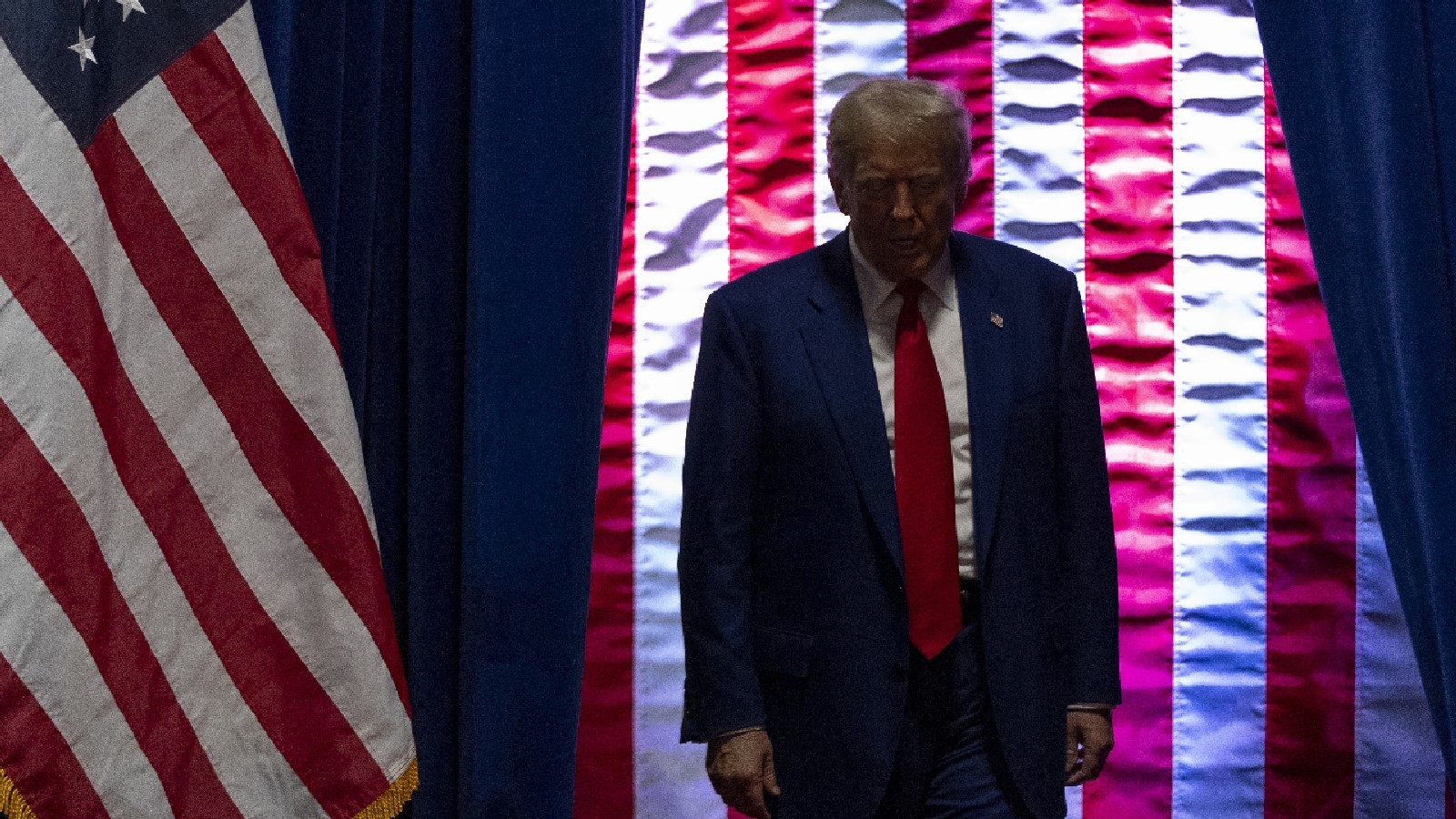
The victories also helped Democrats reclaim the Senate and, subsequently, the House of Representatives, giving the party control of Congress for the first time since Republicans took power in 2024. The outcome leaves President Donald Trump facing a Democratic-controlled legislature during the final two years of his presidency, potentially turning the remainder of his term into a battle over his legislative agenda, administration and executive actions.
But the Democratic gains are about more than the arithmetic of congressional control. They point to a growing vulnerability in the Republican coalition: economic discontent, frustration with the administration’s priorities and the political cost of a foreign conflict that has fed into household expenses.
From Texas To Maine: The Republican Seats That Turned Blue
The scale of the Democratic advance is particularly striking because several of the states that changed hands have long been difficult territory for the party.
In Texas, Democrat James Talarico defeated Republican Ken Paxton, ending a 38-year Democratic drought in US Senate elections in the state. Talarico’s victory was accompanied by another major upset in the governor’s race, where Democrat Gina Hinojosa defeated Republican incumbent Greg Abbott.
In Iowa, Democrat Josh Turek defeated Republican Ashley Hinson, winning a Senate seat in a state Trump carried by more than 13 percentage points in 2024. Kansas, Ohio, North Carolina and South Carolina also delivered Senate victories for Democrats.
US Midterm Elections 2026 LIVE Updates
In Ohio, former Democratic Senator Sherrod Brown returned to the upper chamber after defeating Republican Jon Husted. North Carolina Democrat Roy Cooper defeated Republican Michael Whatley, while South Carolina’s Annie Andrews defeated Darline Graham, giving Democrats their first Senate victory in the state since 1998.
Maine delivered another setback for Republicans, with Troy Jackson defeating Susan Collins. First elected in 1996, Collins had repeatedly survived in a state that has not backed a Republican presidential candidate since 1988.
The Democratic gains were not confined to the Senate. The party also made significant advances in gubernatorial contests, including Texas, Ohio and Georgia. In Georgia, Keisha Lance Bottoms became the first Black woman elected governor in US history, while Democrats also secured victories in Iowa and Minnesota, according to the Associated Press.
Iran War, Fuel Prices And Inflation: The Economic Backlash
One of the clearest threads running through the Republican defeats is the cost of living. The Iran war, in particular, appears to have created an economic vulnerability for the Trump administration by pushing up energy costs at a time when households were already concerned about inflation.
The impact was particularly visible in Maine, where higher fuel and home-heating oil prices became a major concern. The state has a large rural population and harsh winters, making heating costs a significant household expense. The Iran war pushed up fuel and heating oil prices, adding to the economic pressures facing Collins, Reuters reported.
The war’s economic consequences were also felt in Alaska, where the cost of fuel is especially high in remote communities that depend on shipments over long distances. Reports from the state highlighted petrol prices reaching $10 a gallon in Bethel, illustrating how an international conflict can translate into an immediate financial burden for households far from Washington.
These examples do not establish that fuel prices alone determined either election. But they show how the consequences of the Iran war became a domestic political issue, with voters experiencing the conflict not just through headlines but through the cost of keeping their homes warm and their vehicles running.
The pressure was compounded by Trump’s trade policies. In Maine, the president’s trade dispute with Canada weighed on tourism, lobstering, logging and other important sectors of the state’s economy, Reuters reported.
Nationally, the Associated Press voter survey found that roughly two-thirds of voters believed Trump’s policies had worsened economic conditions. About eight in 10 said inflation had caused moderate or severe financial hardship for their households.
The political significance of the fuel-price issue became particularly clear when Trump himself addressed the Republican losses in an interview with Fox News.
“People agree with what I am doing on Iran but they probably weren’t willing to do the short-term consequence of paying more for gasoline. I understand that, I don’t agree with that,” Trump said.
The president also sought to distance himself from the electoral setback, saying: “But I don’t view it as a hit on me.”
Trump acknowledged that he was surprised by the scale of the losses, saying he had expected Republicans to perform better despite holding large rallies during the campaign.
His remarks offered an unusually direct acknowledgement of the political cost of the war, even as he defended his decision to pursue military action against Iran. The president’s argument was that voters understood the importance of his actions but were unwilling to absorb the immediate economic consequences.
Trump’s Personal Involvement Made The Results Harder To Distance From Him
Trump did not remain on the sidelines during the campaign. He personally campaigned for Republican candidates, backed controversial nominees and urged voters to treat the election as a test of his administration.
That involvement raised the stakes. When candidates he had endorsed lost in states he had carried comfortably in 2024, the results became a measure of the limits of his political influence.
The defeats of Ken Paxton in Texas and Darline Graham in South Carolina were particularly damaging. Both had received Trump’s backing, and their losses handed Democrats Senate victories in states where the party had struggled for decades.
Republicans also faced questions over candidate selection. In Texas, Trump’s backing helped Paxton secure the Republican nomination, despite the controversies surrounding the attorney general. In North Carolina, the retirement of Republican Senator Thom Tillis and the selection of Trump-backed candidate Michael Whatley left the party facing a difficult contest against former governor Roy Cooper.
Trump has sought to blame Republican candidates rather than himself. In a Truth Social post, he claimed that had he been on the ballot, Republicans would have won “IN A LANDSLIDE!”
But the results leave little doubt that his administration’s record was central to the election debate.
What The Blue Wave Means For Republicans
The immediate consequence is a major shift in Washington. With Democrats controlling both the House and Senate, Trump will face a much more difficult final two years in office.
A Democratic Senate majority can block presidential nominees and control the legislative agenda in the chamber. Control of the House also gives Democrats the power to launch investigations, issue subpoenas through congressional committees and scrutinise the administration’s policies and conduct.
Trump has already signalled that he will use his veto power against legislation he opposes. In an interview with CBS News before the election, he described it as his “ultimate power”, adding that he was prepared to use it if Democrats took control of Congress.
But perhaps the more worrying message for Republicans lies in the electoral map itself. Democrats have demonstrated that they can compete in states that Trump won comfortably in 2024. Texas, Iowa, Kansas and South Carolina are not conventional Democratic targets, and victories there suggest that Republican advantages are not immune to a wider political backlash.
The results also raise questions about the party’s appeal to working-class voters, particularly in states where energy costs, trade and industrial livelihoods are central to the local economy.
The Democratic victories also came with a clear economic message. In North Carolina, Cooper used his victory speech to argue that voters had rejected the political and economic direction of the country.
“We knew that for too many people in North Carolina, the middle class was feeling like a distant dream. We knew that the Washington, D.C. insiders and the richest Americans were getting unimaginable wealth at our expense. We knew that the chaos and corruption in Washington were hurting our people. Today, you said this has to stop,” Cooper said.
He added that he was ready to take that message to Washington.
A New Opening For The Democratic Party’s Progressive Wing?
The Democratic victories could also reshape the internal debate within the party as it looks towards the 2028 presidential election.
A strong performance by candidates in Republican-leaning states gives Democrats fresh evidence that the party can expand its electoral coalition. It may also strengthen the argument that progressive candidates can win beyond traditionally liberal constituencies.
Maine’s Jackson, a former state Senate president and fifth-generation logger, campaigned on universal healthcare and other populist policies, drawing support from prominent progressives such as Senator Bernie Sanders. In his victory speech, Jackson sought to capture the anger that had driven voters to the polls.
“There was a lot of anger about what’s going on in this country. I felt that anger, too. But there was also so much joy … joy because they know this government is broken and the only ones who are going to fix it is us,” he said.
Michigan’s Senate contest involving progressive Democrat Abdul El-Sayed is another important test of that argument. A confirmed victory for El-Sayed would give the party’s left wing a particularly significant example to cite in the debate over whether Democrats need to move towards the political centre to win competitive states.
The victories could also elevate a new generation of Democratic politicians, including successful senators and governors, as potential contenders for the party’s 2028 presidential nomination. A strong midterm performance offers them a national platform and an opportunity to argue that their political approach can defeat Republicans.
Former President Barack Obama also weighed in on the Democratic victories, saying the American people had “sent a clear message”. He credited the success to candidates willing to contest races even in places considered long shots, and urged Democrats to organise and use the next two years to push for change.
For Trump, however, the immediate warning is more pressing. The midterms have shown that the Republican Party can lose ground even in states it had considered safe, particularly when national political decisions begin to affect voters’ everyday finances.