'Don't Repeat Fall Of Dhaka': Fazlur Rehman Warns Asim Munir, Says 'Pakistan Not Your Family Property'
Pakistan’s senior opposition leader Maulana Fazlur Rehman has warned the country’s military leadership against concentrating excessive power in its hands, invoking the 1971 Fall of Dhaka as a cautionary tale while accusi
Por Manoj Gupta··27K lecturas
'Don't Repeat Fall Of Dhaka': Fazlur Rehman Warns Asim Munir, Says 'Pakistan Not Your Family Property'
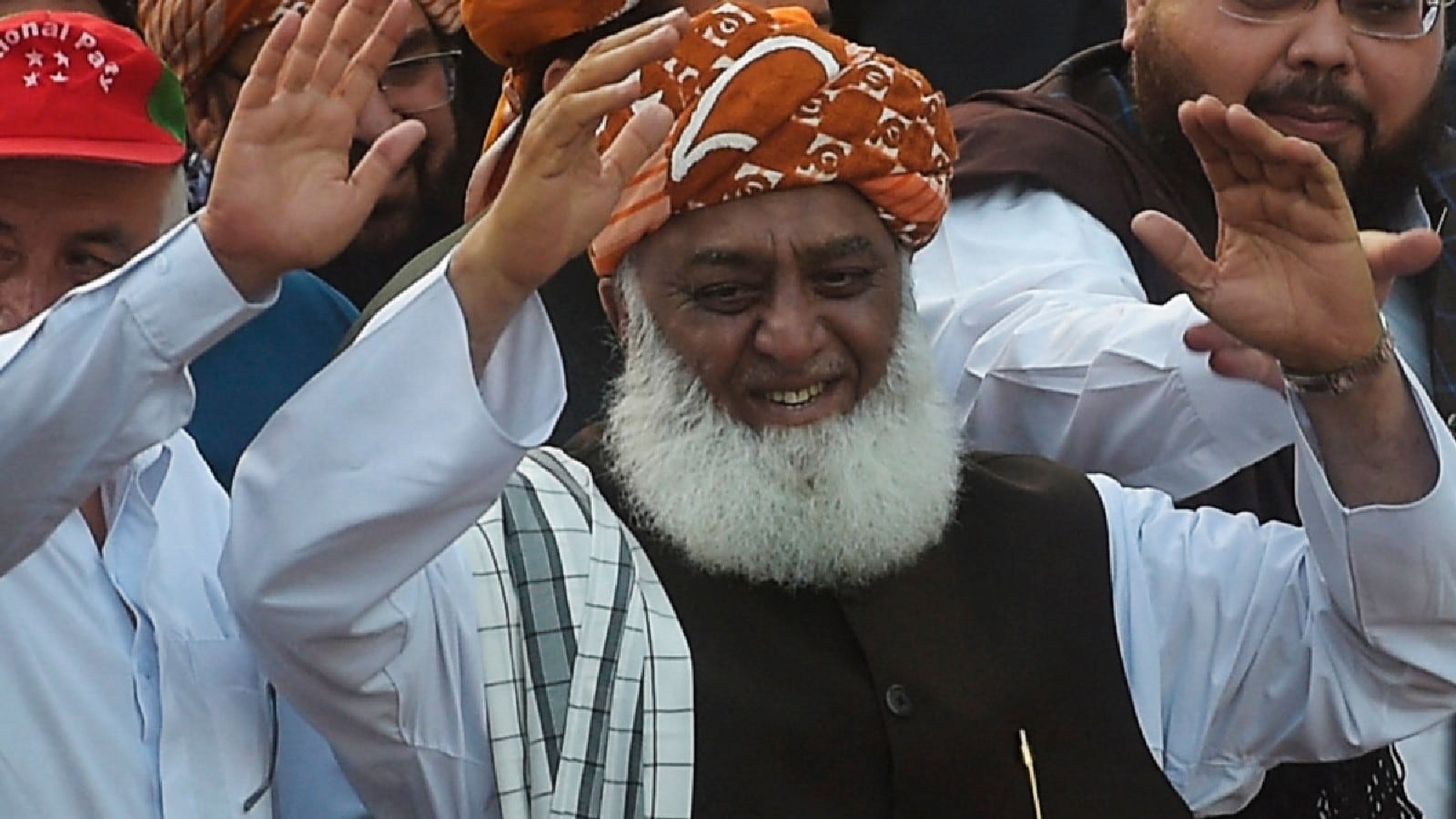
Pakistan’s senior opposition leader Maulana Fazlur Rehman has warned the country’s military leadership against concentrating excessive power in its hands, invoking the 1971 Fall of Dhaka as a cautionary tale while accusing the state of undermining provincial autonomy and democratic rights.
The chief of Jamiat Ulema-e-Islam (F), known for his criticism of Pakistan’s military establishment and the Shehbaz Sharif government, has questioned the growing concentration of authority around Army Chief Field Marshal Asim Munir. Fazlur Rehman has warned that the burden of excessive power could ultimately overwhelm those who wield it.
Recalling December 1971, when Pakistani forces surrendered in Dhaka after the war that led to the creation of Bangladesh, Fazlur Rehman drew a comparison between the military leadership’s declarations of strength before the surrender and its present-day assertions of authority.
He recalled that General Yahya Khan had promised to continue fighting across streets, fields, factories and mountains shortly before Pakistani forces laid down their arms. The warning, he suggested, was that military might and public declarations of strength could not substitute for political legitimacy.
His criticism comes amid a fresh confrontation over the federal government’s decision to impose emergency rule and suspend the Pakistan Tehreek-e-Insaf (PTI)-led government in Khyber Pakhtunkhwa (KP), the province governed by jailed former prime minister Imran Khan’s party.
‘Pakistan Is Not Your Family’s Property’
Fazlur Rehman has accused the powerful military establishment and the ruling coalition of treating Pakistan as their personal estate rather than a country whose resources and institutions belong to its people.
He has questioned the concentration of civilian and institutional powers in the hands of the military leadership, warning that the state cannot expect cooperation from political parties and citizens while denying them a meaningful role in decision-making.
“Pakistan is not your family’s property,” he said, accusing those in power of acting as though they could decide the country’s future without consulting its people.
The JUI-F chief has also questioned the treatment of his party’s workers and the use of state force against political opponents. “I weep when soldiers are martyred, but you smile when my workers are killed,” he said, contrasting the sacrifices made by security personnel with the treatment of political activists.
He argued that cooperation between political parties and state institutions could not be one-sided, insisting that the authorities must also respect the rights of citizens and political workers.
Emergency In KP: Fazlur Rehman Questions Government’s Intentions
Fazlur Rehman has strongly opposed the imposition of emergency and governor’s rule in Khyber Pakhtunkhwa, accusing the federal government of abandoning a possible political settlement with the PTI.
According to his account, negotiations had been progressing over the PTI’s proposed march to Islamabad. The party was seeking a meeting with Imran Khan in prison and implementation of arrangements for his medical treatment, while the government wanted the march called off first.
Fazlur Rehman said he had attempted to mediate between the two sides and believed a way forward was possible before the government announced the emergency. He accused the Centre of reneging on its commitments and questioned why such measures were being imposed in KP when other provinces also faced security challenges.
The federal government, meanwhile, has justified the emergency by citing rising militant attacks and the deteriorating law-and-order situation. President Asif Ali Zardari’s October 11 declaration suspended the PTI-led provincial administration and placed the province under federal oversight. The PTI has rejected the move, describing it as politically motivated.
Fazlur Rehman has also questioned whether the emergency could be used to bring the resources of the former Federally Administered Tribal Areas (FATA) under greater federal control. He has alleged that the region’s mineral wealth is a factor in the government’s decisions and warned against policies that sideline local communities.
He has further raised concerns about alleged understandings with the United States over the region’s resources, claiming that China and Russia also have reasons to be concerned about the changing strategic landscape. These claims have not been independently established.
‘You Cannot Treat People Like Animals’
Fazlur Rehman has broadened his criticism to the government’s treatment of ordinary Pakistanis, accusing the ruling coalition of ignoring public concerns while using state power to suppress dissent.
“You cannot treat the people like animals and feed them whatever you choose,” he said, arguing that those in authority must be answerable to the people rather than expect unquestioning obedience.
He has also attacked the Shehbaz Sharif administration, calling it a government that does not reflect the people’s mandate and alleging that the ruling coalition benefited from electoral manipulation. These remain his political allegations.
His criticism has extended to the government’s response to PTI’s demands concerning Imran Khan’s access to party leaders and medical care. Fazlur Rehman questioned whether the authorities were prepared to risk deaths and further confrontation over a demand for a meeting with the jailed former prime minister and arrangements for his treatment.