Cold Reception For Asim Munir In Tehran? Video Of Iranian Official's Greeting Raises Eyebrows
A video of Pakistan’s Field Marshal Asim Munir meeting senior Iranian official Mohsen Rezaei in Tehran has raised questions about the reception accorded to the Pakistani military chief, whose latest visit to Iran reporte
Por Manoj Gupta··72K lecturas
Cold Reception For Asim Munir In Tehran? Video Of Iranian Official's Greeting Raises Eyebrows
A video of Pakistan’s Field Marshal Asim Munir meeting senior Iranian official Mohsen Rezaei in Tehran has raised questions about the reception accorded to the Pakistani military chief, whose latest visit to Iran reportedly failed to secure a breakthrough in negotiations between Washington and Tehran.
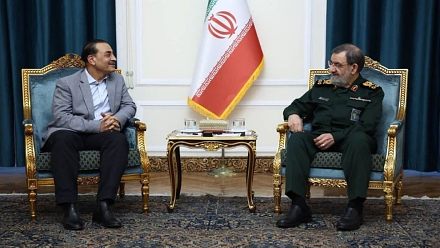
CNN-News18 examined the footage of the meeting, which shows a restrained greeting between the two officials, with little visible warmth.
The interaction has attracted attention against the backdrop of Pakistan’s latest attempt to mediate between the United States and Iran amid continuing tensions over Tehran’s nuclear programme.
What Does The Video Reveal?
The footage shows Rezaei standing as Munir approaches him for a greeting. Their interaction appears brief and formal, with little of the warmth usually associated with a cordial diplomatic reception.
Rezaei maintains a reserved posture, while Munir appears to lean towards him during the exchange. There is no prolonged handshake or proper embrace visible in the footage.
The contrast in their body language is particularly striking, with Munir appearing more deferential during the interaction, while Rezaei maintains a relatively stiff and impassive demeanour.
Major General Rezaei, Secretary of Iran’s SNSC, in a meeting with Asim Munir, Pakistan’s Army Chief:
“Not a single particle of Iran’s enriched nuclear material will ever leave the country.” https://t.co/Pw60TOH0uZ
— IRIB (Islamic Republic of Iran Broadcasting) (@iribnews_irib) October 20, 2026
The Iranian official’s restrained greeting has raised questions about whether the encounter reflected Tehran’s displeasure over the message Munir was carrying from Washington.
Munir’s Mission To Iran Hits A Roadblock
The meeting came during Munir’s latest visit to Iran, where he reportedly carried a fresh message from the United States concerning Iran’s nuclear assets.
According to sources, the Pakistani military chief held high-level discussions with Iranian President Masoud Pezeshkian, Parliament Speaker Mohammad Bagher Ghalibaf and Rezaei as Islamabad sought to facilitate dialogue between Washington and Tehran.
However, the talks reportedly yielded little progress, with Iranian officials refusing to offer fresh concessions on the country’s nuclear programme.
Ghalibaf, identified by sources as Iran’s chief negotiator, reportedly told Munir, “We have nothing new to say.”
Iran Refuses To Transfer Enriched Nuclear Material
One of the strongest messages reportedly delivered during Munir’s visit concerned Iran’s stockpile of enriched nuclear material.
According to sources, Rezaei made it clear to the Pakistani military chief that Iran would not transfer any enriched nuclear material outside its territory, describing it as a national treasure.
Rezaei reportedly declared that “not even the slightest amount” of enriched uranium would leave Iran.
The Iranian official also stressed that Tehran would not negotiate with the United States until Washington took concrete steps to rebuild trust and met conditions laid down by the Iranian leadership.
Qatari Delegation’s Brief Visit Raises More Questions
Pakistan’s reported diplomatic setback was followed by another development involving Qatar, which has also played an intermediary role in regional diplomacy.
According to a top source linked to Iran’s Islamic Revolutionary Guard Corps (IRGC), a senior Qatari delegation arrived in Tehran after Munir’s departure but reportedly left after approximately 30 minutes without securing a breakthrough.
The circumstances surrounding the delegation’s brief visit remain unclear, but the reported development has added to questions about the progress of regional mediation efforts.
Both Pakistan and Qatar have sought to facilitate communication between Washington and Tehran as tensions persist following the US-Israeli war on Iran.