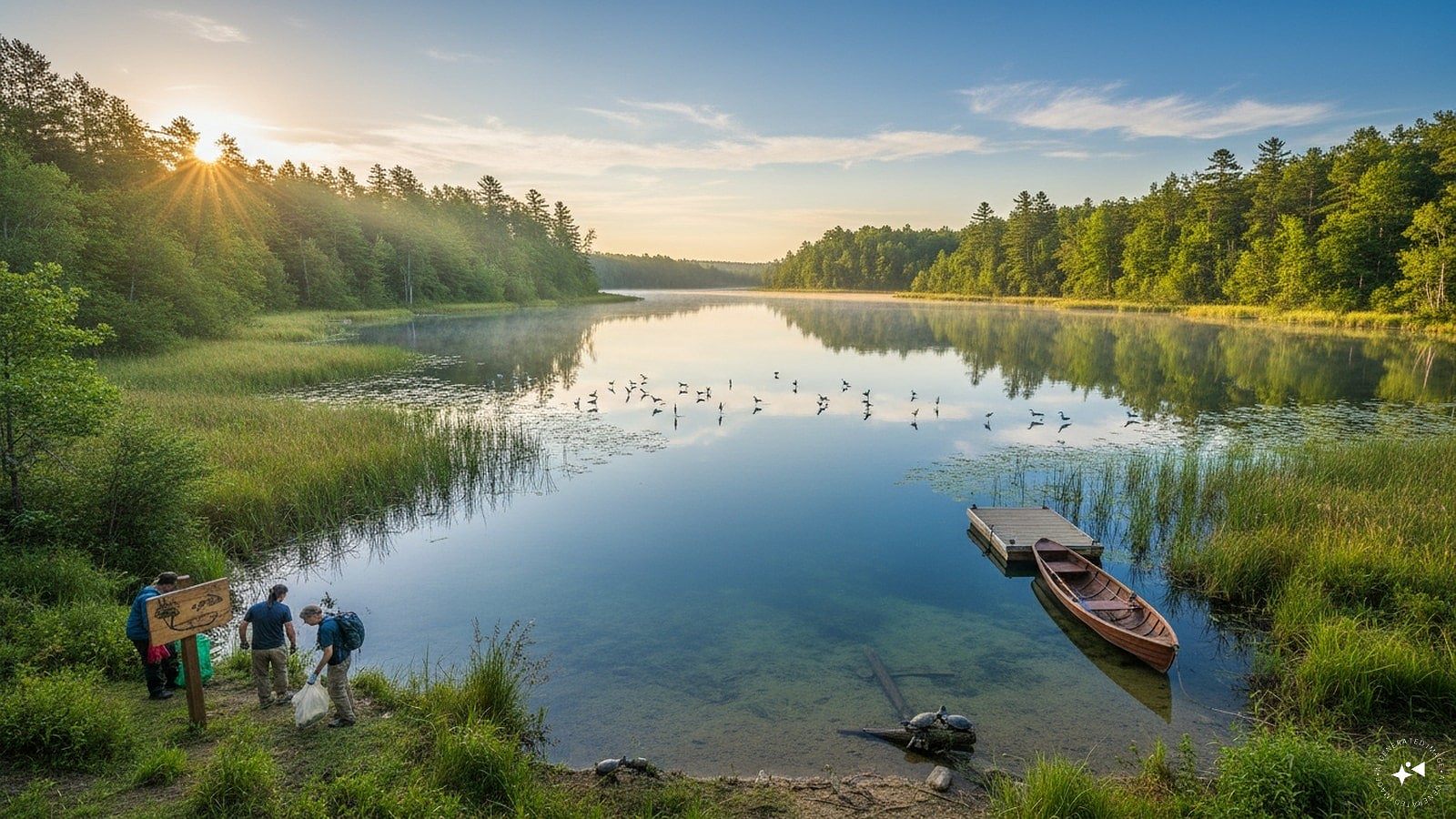
World Lake Day 2026: Why Lakes Matter, History, Significance And Conservation Tips
World Lake Day 2026 is celebrated annually on August 27 highlighting the vital role lakes play in freshwater security, biodiversity, livelihoods and climate resilience. The United Nations designated the day through Resol
Por Nibandh Vinod··30K lecturas
World Lake Day 2026: Why Lakes Matter, History, Significance And Conservation Tips
World Lake Day 2026 is celebrated annually on August 27 highlighting the vital role lakes play in freshwater security, biodiversity, livelihoods and climate resilience. The United Nations designated the day through Resolution 79/142, adopted without a vote on December 12, 2024. It commemorates the opening of the first World Lake Conference in Shiga Prefecture, Japan, in 1984.
As the second annual UN observance, World Lake Day 2026 offers a timely opportunity to understand why lakes matter and what can be done to protect them. Pollution, overuse, climate change and biodiversity loss make sustainable lake management urgent worldwide.
World Lake Day 2026: What Is It and Why Is It Important?
World Lake Day is a United Nations observance dedicated to raising awareness about the importance of lakes and encouraging their preservation, conservation, restoration and sustainable management.
The United Nations General Assembly adopted Resolution A/RES/79/142 on December 12, 2024, designating August 27 every year as World Lake Day. The resolution was adopted without a vote.
The observance recognises that lakes are far more than scenic water bodies. They support freshwater supplies, agriculture, fisheries, biodiversity, livelihoods and economic activity. They can also help communities manage floods and droughts and provide important cultural and recreational benefits.
For 2026, World Lake Day falls on Thursday, August 27, making it the second annual observance since the UN established the day in 2024.
World Lake Day History
The history of World Lake Day is closely connected with the global movement for sustainable lake management.
On August 27, 1984, the first World Lake Conference was held in Shiga Prefecture, Japan. Shiga is home to Lake Biwa, Japan’s largest freshwater lake. The date of that historic conference was later chosen as the annual date for World Lake Day.
The United Nations General Assembly formally established World Lake Day through Resolution 79/142 in December 2024. The resolution calls for greater education and awareness about the importance of lakes, along with efforts to preserve, conserve, restore and sustainably manage lake and related ecosystems.
The first World Lake Day was observed on August 27, 2025. Therefore, World Lake Day 2026 marks the second annual UN observance.
Why Are Lakes Important?
Lakes provide vital freshwater resources
Lakes are important sources of freshwater for communities, agriculture and industry. According to the United Nations, lakes contain about 90% of the world’s unfrozen surface freshwater, underlining their importance as accessible freshwater resources.
Lakes support biodiversity
Lakes provide habitats for fish, aquatic plants, birds, amphibians and numerous other organisms. Healthy lake ecosystems therefore contribute to biodiversity and ecological balance.
The UN has highlighted the decline of freshwater species as a major concern, making the protection of lake ecosystems increasingly important.
Lakes support livelihoods and economies
Fishing, agriculture, tourism and other activities around lakes support millions of livelihoods. In many regions, lakes are also closely linked with local traditions, cultural identity and recreation.
Lakes can help manage climate-related risks
Healthy lake ecosystems can contribute to flood and drought management and play a role in local climate regulation. However, climate change is also putting increasing pressure on lakes through higher temperatures, changing precipitation patterns, evaporation and changes in water levels.
Lakes contribute to food and water security
Freshwater ecosystems are closely connected with food production and human well-being. Protecting lakes therefore has implications that extend beyond environmental conservation to water security, agriculture, nutrition and livelihoods.
Major Threats Facing Lakes
Despite their importance, lakes around the world face multiple pressures.
Pollution: Agricultural runoff, fertilisers, contaminants and solid waste can enter lakes directly or through rivers and drainage systems. Such pollution can damage water quality and aquatic ecosystems.
Climate change: Rising temperatures can increase evaporation and contribute to changes in lake water levels. Changes in rainfall and extreme weather can further affect freshwater ecosystems.
Overuse of water: Excessive extraction for agriculture, industry or other activities can place pressure on lake systems and affect their long-term health.
Biodiversity loss: Changes in water quality, habitat degradation, pollution and other human pressures can threaten species that depend on freshwater ecosystems.
Rapid urbanisation and industrialisation: Expanding cities and industrial activity can increase pollution, alter natural drainage and place additional demands on freshwater resources.
World Lake Day 2026: Conservation Tips
Protecting lakes is not limited to governments and environmental organisations. Individuals and local communities can also contribute.
Reduce plastic and solid waste
Avoid throwing plastic, packaging, bottles or other waste into or around lakes. Proper waste disposal helps prevent pollutants from entering freshwater ecosystems.
Avoid dumping chemicals into waterways
Paints, oils, household chemicals and other pollutants should never be poured into drains or water bodies where they can eventually reach lakes.
Use water responsibly
Reducing unnecessary water consumption can help ease pressure on freshwater resources, particularly in areas facing water scarcity.
Support lake clean-up initiatives
Participating in responsible community clean-up activities can help remove litter and build awareness about the importance of local water bodies.
Protect vegetation around lakes
Vegetation around lake edges can form an important part of the surrounding ecosystem. Avoid unnecessary destruction of natural vegetation and support restoration where appropriate.
Prevent polluted runoff
Communities and land managers can help reduce the movement of fertilisers, sediment and other pollutants into lakes by using appropriate land and water management practices.
Learn about your local lake
Understanding where a lake gets its water, how it is used and what threats it faces is an important first step towards meaningful conservation.
Spread awareness
World Lake Day is also an opportunity to encourage schools, communities and local organisations to discuss freshwater conservation and sustainable lake management.
Is There an Official World Lake Day 2026 Theme?
The UN resolution establishing World Lake Day does not prescribe a separate annual theme for 2026. It instead sets out broad objectives around education, awareness, preservation, conservation, restoration and sustainable management of lakes and related ecosystems.
For 2026, the UN is also hosting an event titled “Commemorating World Lake Day: Strengthening Global Cooperation for Sustainable Lake Management” on August 27. The event highlights the need for international cooperation as lakes face pressures including pollution, agricultural runoff, climate-driven evaporation and biodiversity loss.
World Lake Day Significance
The significance of World Lake Day lies in shifting attention towards freshwater ecosystems that are essential but often overlooked.
The day provides an international platform to discuss the health of lakes, encourage sustainable management and highlight the connection between freshwater, biodiversity, food security and human well-being.
The UN has also noted that lakes are under pressure from pollution, overuse and climate change, while water quality and quantity are deteriorating in many parts of the world.
For individuals, World Lake Day is a reminder that protecting a lake begins with protecting the wider ecosystem around it. For governments and institutions, it underscores the need for science-based monitoring, responsible water management and cooperation across communities and sectors.
World Lake Day 2026: The Way Forward
Healthy lakes are essential to healthy communities and ecosystems. Protecting them requires more than one-day campaigns; it requires long-term conservation, responsible water use, pollution control, ecosystem restoration and informed decision-making.
World Lake Day 2026 offers an opportunity to recognise this connection and turn awareness into action. From reducing waste and protecting local water bodies to supporting sustainable lake management, every effort can contribute to safeguarding freshwater ecosystems for future generations.