What Is A Vampire Facial, How Does It Work And What Does It Cost?
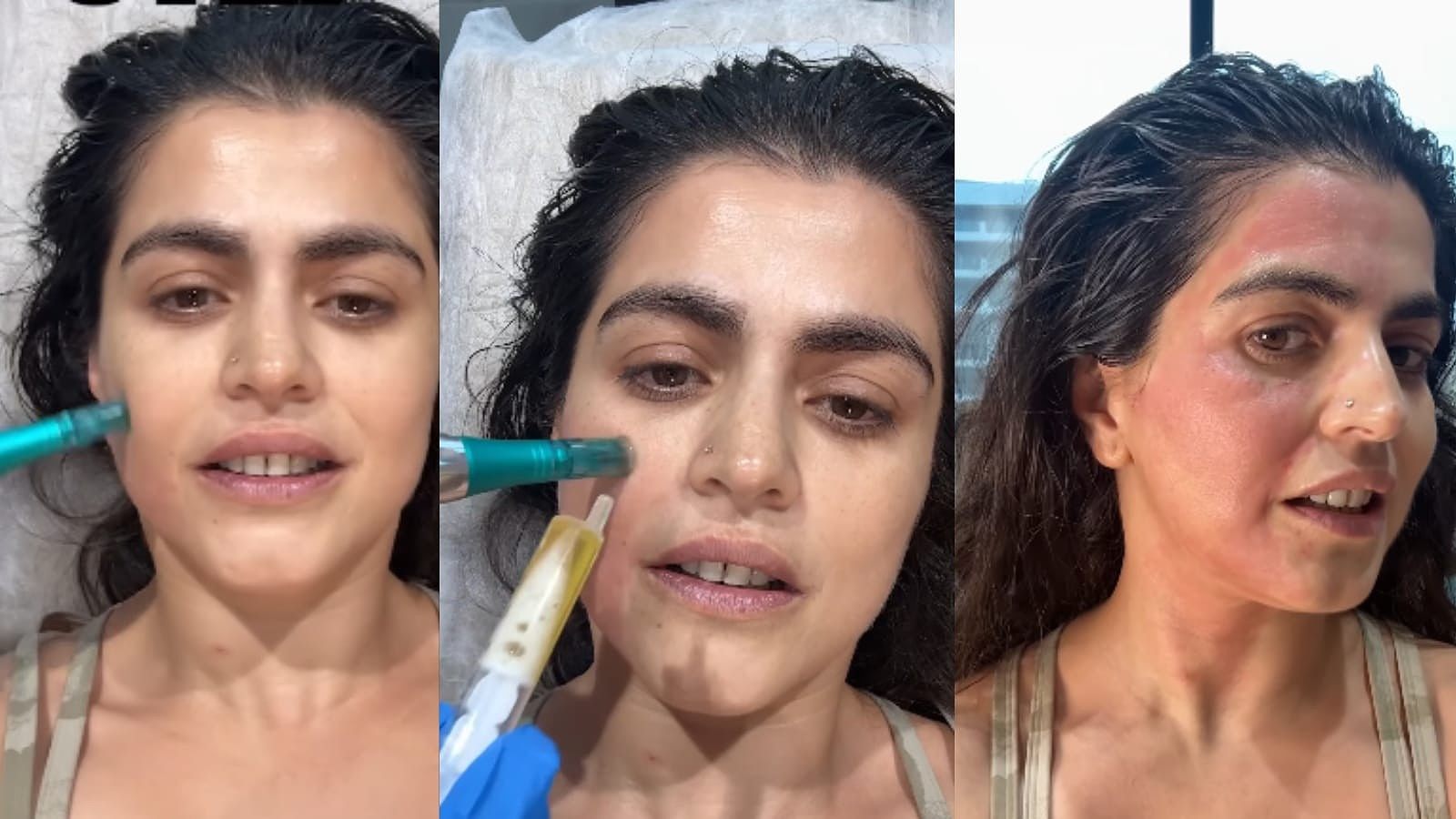
Actress and travel host Shenaz Treasury recently gave her Instagram followers a glimpse of a rather unusual beauty treatment—the vampire facial. Sharing the procedure step by step, she said, “Kim Kardashian and Shah Rukh
Por Lifestyle Desk··27K lecturas
What Is A Vampire Facial, How Does It Work And What Does It Cost?
Actress and travel host Shenaz Treasury recently gave her Instagram followers a glimpse of a rather unusual beauty treatment—the vampire facial. Sharing the procedure step by step, she said, “Kim Kardashian and Shah Rukh Khan both love this facial,” before showing blood being drawn, her face being treated with tiny needles and plasma being applied to her skin.
Despite its dramatic name, a vampire facial is not about applying blood directly to the face as a conventional skincare ingredient. It is a cosmetic procedure involving platelet-rich plasma (PRP) derived from the person’s own blood, often combined with microneedling. It has gained popularity as a skin-rejuvenation treatment, but its benefits are not as firmly established as celebrity buzz might suggest.
So, what happens during a vampire facial, what is it supposed to do, and how much can you expect to pay? Here’s a simple guide.
What Is A Vampire Facial?
A vampire facial typically combines PRP with microneedling. PRP is prepared from a small amount of the patient’s own blood and contains a higher concentration of platelets.
Platelets are best known for their role in blood clotting, but they also contain growth factors involved in healing and tissue repair. This is why PRP has been explored in several areas of medicine as well as cosmetic dermatology.
The term “vampire facial” is commonly used when PRP is paired with microneedling, although PRP can also be injected into the skin in some cosmetic procedures.
How Does A Vampire Facial Work?
The treatment generally starts much like a routine blood test. A small quantity of blood is drawn from the arm and placed inside a centrifuge, which spins it to separate its components and produce platelet-rich plasma.
The face is cleaned, and a topical numbing cream may be applied. A microneedling device containing very fine needles is then moved across the skin, creating controlled microscopic channels.
The prepared PRP is subsequently applied to the treated skin, allowing it to enter these microchannels. Depending on the procedure, PRP may instead or additionally be injected into selected areas.
The principle behind the treatment is that microneedling triggers the skin’s repair response while PRP provides concentrated platelets and growth factors. The combination is intended to encourage processes involved in tissue repair and collagen production.
What Can A Vampire Facial Do For Your Skin?
PRP-based facial treatments are promoted for concerns such as fine lines, skin texture, dullness and signs of ageing. Some studies have reported improvements in areas such as wrinkles, texture and skin appearance.
However, expectations need to be realistic.
The American Academy of Dermatology notes that there is still limited evidence to determine how effectively PRP produces younger-looking skin.
A broader overview of systematic reviews published in 2024 similarly concluded that the available evidence is not strong enough to draw firm conclusions about PRP for facial rejuvenation.
In fact, the results of one randomised clinical trial published in 2024 found no notable improvement in facial skin laxity and wrinkles with injectable PRP compared with the control treatment.
In short, PRP may show promise for certain cosmetic uses, but a vampire facial should not be viewed as a guaranteed shortcut to younger or flawless skin.
Does A Vampire Facial Hurt?
The level of discomfort varies. Because microneedling repeatedly punctures the skin, a numbing cream is generally used beforehand to make the procedure more comfortable.
After treatment, the face may look red and feel sensitive. PRP procedures can also cause temporary swelling, bruising or discomfort, which generally settles within a few days.
The appearance immediately afterwards can therefore be quite different from the eventual result—redness right after the procedure is not the promised “glow.”
How Long Does It Take To See Results?
A vampire facial is not generally an instant-results treatment. The American Academy of Dermatology notes that when people do experience results from PRP, the full effects may take several weeks to months to become apparent.
Multiple treatments may also be required. Research cited by the academy suggests that patients who see results often undergo three or more PRP treatments.
The number and spacing of sessions should be decided by a qualified dermatologist based on the person’s skin, treatment method and intended outcome.
How Much Does A Vampire Facial Cost In India?
There is no standard nationwide price because charges depend on the city, clinic, doctor’s expertise, area being treated and whether PRP is injected, combined with microneedling or used alongside another procedure.
Current published clinic pricing cited in reports places a full-face vampire facial at roughly Rs 6,000 to Rs 15,000 per session, while PRP combined with microneedling can cost approximately Rs 8,000 to Rs 18,000 per session.
Since some treatment plans involve multiple sessions, it is worth asking for the total expected treatment cost, rather than looking only at the price of a single appointment.
Are There Risks?
The fact that PRP comes from your own blood does not make the entire procedure risk-free.
Temporary pain, bruising and swelling can occur. More importantly, because blood is collected and processed, sterile handling is crucial.
The American Academy of Dermatology warns that improper blood handling can lead to infection and stresses the importance of ensuring that a patient’s own blood product is correctly returned to them.
Microneedling also deliberately disrupts the skin barrier, making hygiene and appropriate aftercare particularly important.
For that reason, a vampire facial is better treated as a medical cosmetic procedure rather than an ordinary salon facial. Anyone considering it should consult a qualified dermatologist or appropriately trained medical professional, particularly if they have an existing skin condition or other health concerns.