From Makeup Glow To Skin Glow: Why Indian Consumers Are Choosing Skin Health Over Quick Fixes
There was a time when getting ready for a night out meant reaching for a familiar arsenal: foundation to even things out, concealer to erase the tiredness, highlighter to bring back the glow. Good skin, in many ways, was
Por Swati Chaturvedi··14K lecturas
From Makeup Glow To Skin Glow: Why Indian Consumers Are Choosing Skin Health Over Quick Fixes
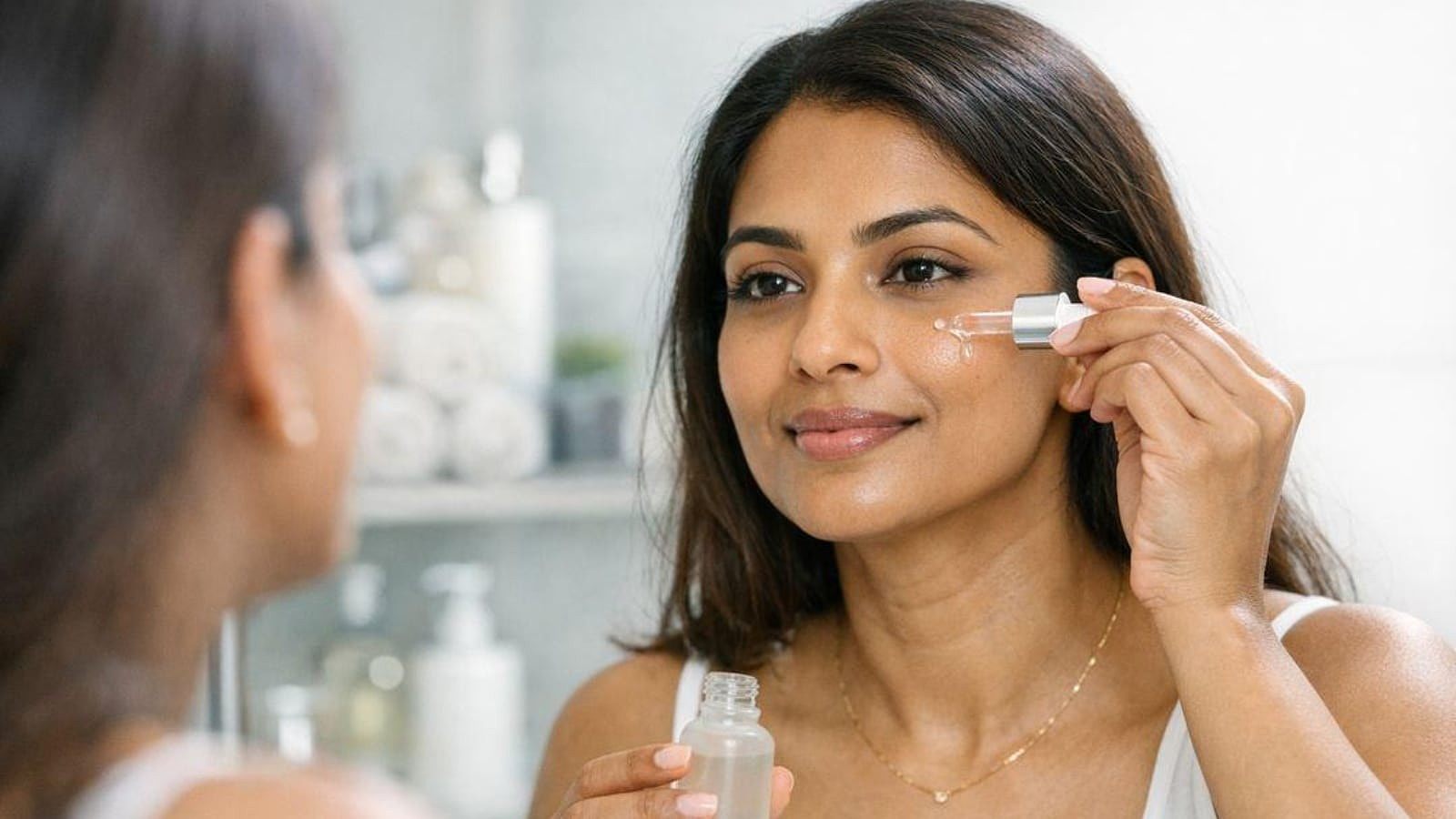
There was a time when getting ready for a night out meant reaching for a familiar arsenal: foundation to even things out, concealer to erase the tiredness, highlighter to bring back the glow. Good skin, in many ways, was something you could create in 20 minutes. Now, the beauty conversation is changing.
A growing number of Indian consumers are looking beyond the immediate gratification of a makeup finish and asking a more fundamental question: What if the glow came from the skin itself?
“I still love makeup, but I don’t want makeup to be doing all the work anymore,” says Ananya, a 29-year-old Mumbai-based creative professional. “I want to wake up, look in the mirror and feel like my skin looks good before I’ve put anything on.”
It is a small shift in language, but a significant one for beauty. The aspiration is no longer necessarily poreless, glass-like or perfectly filtered skin. Instead, consumers are increasingly talking about skin health, resilience, barrier care and long-term results.
For Dr Rinkle Sangoi Kapoor, Founder & Chief Formulator of Twenty-Seven, this represents something deeper than another passing beauty trend.
The End Of The ‘Cover It Up’ Era
“For years, Indian consumers were sold the idea that good skin was something you painted on,” Kapoor says. “The beauty industry built itself on concealing, correcting and covering.”
But the consumer has become harder to convince. Today, beauty shoppers are reading ingredient lists, following dermatologists and questioning claims before putting a product into their baskets. They are less willing to accept a promise simply because the packaging looks beautiful or a celebrity says it works.
At Twenty-Seven, Kapoor describes this emerging philosophy as “Skin Resilience”, the idea that healthy-looking skin should not simply be the result of repairing damage after it occurs, but of building skin that is better equipped to withstand everyday stressors.
“Skin Resilience is the idea that great skin is not about repair after damage but about building a barrier strong enough that the damage doesn’t register,” she says.
It is a compelling reframing of the familiar beauty obsession with fixing.
Instead of asking how quickly a product can make skin look brighter, clearer or smoother, the question becomes: how can we make the skin itself healthier over time?
The Consumer Is Reading The Label Now
That change is being fuelled, in part, by access to information. Consumers no longer have to rely entirely on beauty counters or advertising to understand what they are buying. Ingredient databases, dermatologist-led content and social media have made skincare education far more accessible, even if they have also created their own ecosystem of misinformation.
Deepti Kulkarni, Founder, KASS, Skincare Formulator and Certified Esthetician, says consumers are becoming increasingly deliberate about what they put on their skin.
“With constant prioritization of both body and skin health, consumers are educating themselves before they pick anything,” Kulkarni says. “Not just understanding the skin concerns and finding the solution, they are also studying the ingredients that will be entering their skin.”
That ingredient literacy is changing the relationship between consumer and product.
A moisturiser is no longer simply a moisturiser. Consumers want to know whether it supports the barrier, whether it is appropriate for acne-prone skin, whether it contains ingredients they recognise and whether the promised result is actually realistic.
The Quick-Fix Fatigue Is Real
For all the excitement around new launches, there is also a certain fatigue setting in. Consumers have tried the 10-step routine. They have bought the trending serum. They have layered actives, switched moisturisers and followed routines designed to deliver overnight transformation.
And when the promised transformation doesn’t arrive, the response is increasingly not What else should I buy?
It is Why isn’t this working?
Kapoor believes that this disillusionment with quick fixes is part of what is pushing the market towards a more resilient-skin philosophy.
“The failure of quick fixes, consumers who spent years layering products with no lasting result, eventually stopped buying the promise,” she says.
That doesn’t mean the appetite for instant beauty has disappeared. A brightening mask before an event or a strategically applied highlighter will always have its place.
But consumers increasingly want that immediate result to sit on top of something more substantial.
Makeup can create the glow. Skincare has to create the canvas.
From ‘Glow’ To Skin Health
The shift is also visible in the way brands are positioning products. Kulkarni points to the rise of skin-first benefits, from oil-free moisturisers and acne-control face washes to products marketed around longer-term skin health rather than simply promising radiance.
“The skincare market has also adapted to it by giving skin-first benefits,” she says. “Businesses are heavily leaning their marketing towards long-term skin health, instead of just radiant glow.”
This is an important distinction.
“Glow” is an aesthetic outcome.
Skin health is a process.
One can be achieved with a clever combination of makeup, lighting and skincare. The other requires consistency, an understanding of one’s skin and, often, considerably more patience.
And increasingly, consumers appear willing to wait.
But The Quick Fix Isn’t Dead
It would be too easy and perhaps too convenient, to declare that Indian consumers have abandoned instant beauty. They haven’t.
There is still a powerful desire for immediate results, particularly before weddings, parties, holidays and major occasions. Beauty is emotional, and sometimes you simply want something that works now.
Kulkarni acknowledges that the movement towards skin health hasn’t completely erased quick fixes.
“Indian consumers choosing skin health over last-minute fixes hasn’t completely wiped off quick fixes yet,” she says. “But they do expect their beauty and skincare products to help in achieving healthier skin over time.”
That may be the more interesting evolution.
The consumer isn’t necessarily choosing skin health instead of beauty.
She is beginning to see the two as connected.
The New Beauty Ideal Is Less Perfect
Perhaps the most significant change is cultural. For years, the beauty ideal presented to consumers was almost impossibly polished: poreless skin, no texture, no blemishes, no signs of fatigue, no evidence that an actual human being lived underneath the foundation.
The newer language around skin resilience suggests something different.
Kapoor describes the aspiration as skin that is “not poreless, not filtered. Confident. Resilient. Yours.”
That last word matters.
Because healthier skin doesn’t necessarily mean flawless skin.
Real skin has pores. It has texture. It changes with weather, hormones, stress, sleep and age. It can break out. It can be sensitive. It can have pigmentation.
The goal is increasingly less about making skin look unreal and more about making it feel comfortable, strong and healthy enough to look like itself.
The Beauty Cabinet Is Becoming More Intentional
This doesn’t necessarily mean consumers are buying fewer products. It means they may be buying them differently. Instead of accumulating products because each one promises a new version of perfection, there is growing interest in understanding what each product actually does and whether it has a meaningful place in a routine.
That makes formulation matter. It also makes education matter.
And it raises the bar for brands. A consumer who understands ingredients is less likely to be satisfied by vague claims and more likely to ask questions about efficacy, formulation and long-term skin health.
For brands, the implication is clear: the glow can no longer be the entire story.
Beauty Is Moving From Concealment To Care
What is emerging in India is not the death of makeup. It is something more nuanced.
The beauty routine is moving from concealment to care, from correction to maintenance, from an obsession with instant transformation to an interest in what happens to the skin over months and years.
The result is a beauty consumer who may still love her foundation, lipstick and highlighter but doesn’t necessarily want them to disguise her skin.
She wants them to complement it.
And perhaps that is the real meaning behind the move from makeup glow to skin glow.
The new luxury in beauty may not be looking perfect. It may simply be having skin that doesn’t need to be hidden.
As Kapoor puts it, “The problem was never the skin. The problem was the promise that it needed to be something other than itself.”
The future of Indian beauty may therefore belong to brands that understand a simple shift: consumers don’t just want to look better tonight. They want to have better skin tomorrow.