From Bows To Hair Jewellery: Why Accessories Are Having A Major Hair Moment
From Zendaya turning a simple polka-dot bandana into a fashion statement to Sabrina Carpenter continuing the oversized-bow conversation, celebrities are making a compelling case for treating hair as an accessory in its o
Por Swati Chaturvedi··23K lecturas
From Bows To Hair Jewellery: Why Accessories Are Having A Major Hair Moment
From Zendaya turning a simple polka-dot bandana into a fashion statement to Sabrina Carpenter continuing the oversized-bow conversation, celebrities are making a compelling case for treating hair as an accessory in its own right. Ariana Grande has played with bows and headbands, while stars including Kendall Jenner and Elle Fanning have embraced the headscarf as more than a holiday staple.
Oversized bows, hair jewellery, soft movement, personalised cuts and even hair perfume are all changing the way we think about hair. It is no longer something we decide on after getting dressed. It is becoming part of the outfit itself.
There is a new ritual happening in front of the mirror.
The dress is chosen. The shoes are decided. The jewellery is laid out. And then, instead of treating hair as the final item on the checklist, we start with a different question:
What do I want my hair to say about this look?
It is a small shift, but it changes everything.
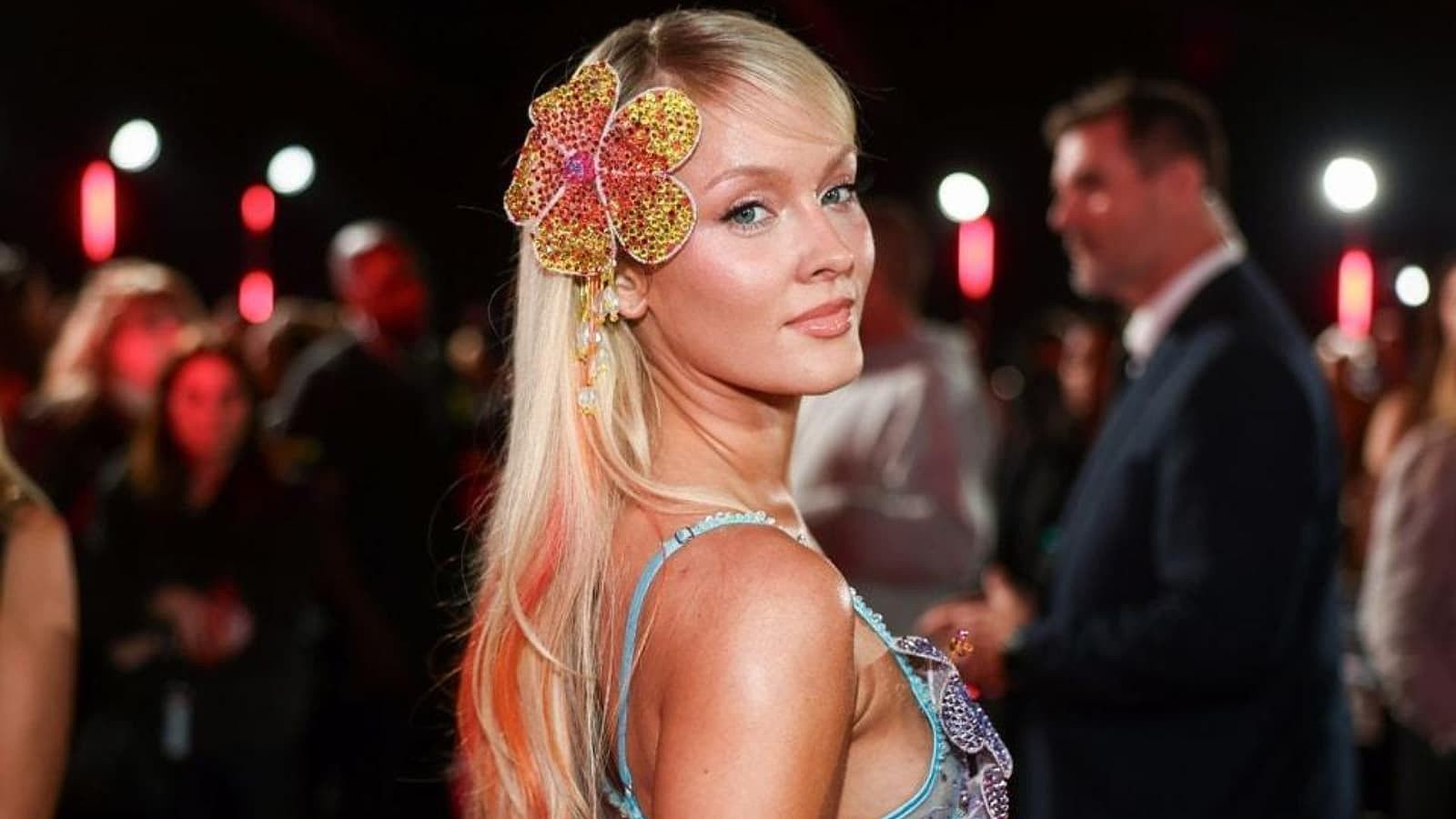
Hair is no longer simply about looking polished. It has become a form of styling, self-expression and, increasingly, fashion. A silk scarf can change the mood of a simple ponytail. A crystal pin can turn a bun into eveningwear. An oversized bow can become the statement piece of an otherwise minimal outfit. Even the fragrance we choose for our hair is becoming part of the ritual.
Priyanka Sanghi, Founder, Hair Drama Co., has watched this transformation happen up close. She says consumers are far more conscious today of how their hair completes the overall look. Where hair was once almost an afterthought, something considered after the clothes, shoes, bags and jewellery, it is increasingly being treated as an equal part of fashion expression. And that may be the biggest hair shift of all. We are no longer simply doing our hair. We are styling it.
Hair Is Having Its Own Fashion Moment
For a long time, hair trends were relatively easy to define. There was the bob. The balayage. The beach wave. The slicked-back bun. Now, the conversation is much more personal.
Priyanka Sanghi describes a consumer who is increasingly willing to experiment with colour, accessories, textures and styling, but who also wants to put an individual stamp on whatever is trending. That means the trend itself is becoming less important than the interpretation.
A bow doesn’t have to be delicate. A scarf doesn’t have to be retro. A hair pin doesn’t have to be bridal. A blowout doesn’t have to be perfectly set.
The most interesting looks are the ones where the trend is visible but the person wearing it is even more visible.
And that is why hair feels so different right now. It has become another place to show personality.
The Accessory Has Moved Up the Beauty Hierarchy
Perhaps nowhere is this change more obvious than in hair accessories. The clip that once existed purely to keep hair out of your face is now capable of being the most noticeable part of an outfit.
Priyanka Sanghi says one of the biggest changes she has seen is that people now plan their hair accessories alongside their clothes, rather than deciding on them afterwards. A dinner or cocktail look might involve choosing between silver, gold, mixed metals or colour before the hairstyle is even finalised.
It is the same thought process we already apply to jewellery.
What works with the neckline? What complements the colour? What is the mood?
What feels like me? The difference is that the accessory now sits in the hair.
And suddenly, a hairstyle can have the same visual impact as a statement necklace.
The New Hair Accessory Wardrobe
The idea of owning one or two “good” hair accessories is beginning to feel almost quaint.
The contemporary hair wardrobe is more specific. There is the oversized bow for the dinner party. The silk scrunchie for everyday. The statement clip for a night out. The scarf for travel. The crystal pin for a wedding.
The headband for the days when you want to look polished without spending an hour styling your hair.
Consumers are becoming increasingly particular about the accessories they use every day, even selecting different materials and styles depending on the occasion and activity.
It is essentially the same philosophy we apply to clothes: Different mood, different accessory. And that makes hair much more interesting.
Enter the Oversized Bow
The bow has become one of the clearest symbols of this new approach. But this isn’t necessarily the sweet, tiny ribbon of childhood. The contemporary bow can be oversized, embellished, sculptural or deliberately excessive.
Priyanka Sanghi is seeing strong interest in oversized and embellished bows, including crystal versions that consumers are wearing with relatively simple outfits to create a dramatic focal point. There is something wonderfully uncomplicated about the styling logic.
Take a simple black dress. Add an enormous bow. Stop there.
The clothes don’t need to compete. The hair becomes the accessory. And the look suddenly feels considered rather than basic.
That idea of balancing one dramatic element against a quieter outfit is becoming increasingly important as people experiment more confidently with hair fashion.
Hair Jewellery Is Replacing the Idea of “Hair Decoration”
There is a difference between decorating your hair and styling your hair with jewellery. The latter feels much more deliberate. Priyanka Sanghi identifies hair jewellery and hair scarves as two categories currently seeing strong momentum, with embellished hair pins, charms and statement pieces becoming increasingly important to the way people dress their hair.
Think of a simple bun. Without an accessory, it is a hairstyle. Add a jewelled pin, and suddenly it becomes a look. That distinction matters.
The accessory isn’t merely functional anymore. It creates the focal point. It can be the equivalent of a pair of chandelier earrings, except the face, neck and ears remain relatively clean. For evening dressing, that can be particularly effective.
And Then There Is the Hair Scarf
The scarf has had a remarkably long fashion life, but it is entering another chapter. Sanghi has seen a strong consumer response to scarf styling across social media, where people began experimenting with scarves on their heads, around their necks and even around their waists. What began as an aesthetic became a shopping behaviour almost overnight.
The reason is simple: A scarf gives you an entirely new look without changing your hair.
Tie it around a ponytail. Wrap it around a bun. Wear it as a headscarf. Thread it through a braid. Let it trail from a low ponytail.
The possibilities are endless, and the accessory itself can introduce colour, pattern and texture in a way that a haircut cannot.
It also makes hair styling feel more like fashion styling. You aren’t simply deciding how to wear your hair. You’re deciding how to compose the entire frame around your face.
The New Hair Philosophy: Don’t Copy, Personalise
This is where the salon conversation becomes particularly important. Because social media has given us an extraordinary amount of inspiration but inspiration can become problematic when we treat someone else’s hair as a template.
Anand Bhatia, Head of Training, Lakmé Salon, says clients are arriving with references from Instagram and other digital platforms far more frequently than before. But increasingly, they want to understand how a trend can be adapted to their own face shape, hair texture, lifestyle and maintenance routine.
That is a crucial distinction. A reference is not an instruction. Bhatia says the same haircut or colour can look completely different depending on hair texture, density, skin tone, face shape, products and even the amount of time a person is prepared to spend styling it.
So perhaps the smarter question to ask your stylist isn’t: “Can you give me this exact haircut?”
It is: “What is it about this look that I like, and how can we translate that onto me?”
Maybe it is the movement. Maybe it is the face-framing. Maybe it is the volume. Maybe it is the colour. Maybe it is simply the way the ends fall. Once you know that, the trend becomes much more useful.
The Haircut Is Becoming Softer
If there is one clear direction emerging from the salon chair, it is movement.
Bhatia says current requests are leaning towards soft layers, face-framing cuts, textured movement and effortless-looking blow-dries. Rather than one dominant hairstyle, the emphasis is increasingly on fluid shapes that work with the individual’s natural texture.
This is a subtle departure from the era of highly engineered hair. The new layers don’t necessarily announce themselves. They move around the face. They create shape. They add volume without looking overly styled. The blow-dry still exists, but it looks less like a blow-dry. And perhaps that is the real luxury now: Hair that looks expensive without looking overworked.
The End of Stiff, Heavily Set Hair
There is also a broader rejection of hair that looks frozen. Bhatia says the industry is moving away from overly stiff, heavily set and artificial-looking styles towards movement, softness, texture and healthy-looking shine. Even polished hairstyles increasingly retain an element of natural movement.
That doesn’t mean abandoning polish. It means changing the finish. A wave can still be glamorous. A bun can still be immaculate. A ponytail can still be sleek. But there should be some sense that the hair is alive. A little movement at the ends. A soft piece around the face. A texture that doesn’t look completely manufactured.
The distinction is subtle, but it is the difference between hair that looks styled and hair that looks frozen.
Even Bridal Hair Is Becoming More Personal
The shift becomes particularly visible in occasion dressing. For years, bridal and festive hair often meant elaborate, heavily structured styles that were designed to hold their shape for hours.
Now, there is a growing appetite for something softer. Bhatia says festive and bridal styling is moving towards soft waves, natural-looking volume, face-framing details and textured finishes. Brides increasingly want their hairstyles to photograph well from multiple angles while still feeling comfortable and authentic.
At the same time, Sanghi says brides are increasingly thinking about hair styling across the entire wedding calendar, not just the main ceremony, but pre-wedding events, parties and other celebrations. That changes the role of the hairstyle.
It isn’t one big transformation. It becomes a series of looks. One event might call for flowers. Another for a scarf. Another for pearls. The wedding wardrobe now has a hair wardrobe to match.
Hair Perfume: The Beauty Detail You Didn’t Know You Needed
Then there is a trend that makes perfect sense once you accept that hair has become part of fashion: hair perfume.
Sanghi says hair perfume and hair mist have become significant growth categories for Hair Drama Co., with specialised fragrance designed for the hair emerging as a strong consumer interest.
It sounds like an indulgence. But think about what fragrance does. It moves with you.
It lingers. It is discovered rather than announced. Hair is already one of the most naturally mobile parts of your appearance. Adding fragrance simply makes that movement sensory.
It is the invisible accessory. The one you don’t see but someone standing next to you might notice.
Why Instagram Still Has the Power to Make a Hair Trend Explode
The relationship between social media and hair is now impossible to separate.
Sanghi says Indian consumers are becoming increasingly experimental and willing to recreate aspirational looks they see on Pinterest, Instagram and on celebrities or influencers. She has seen categories change rapidly when a particular aesthetic suddenly captures attention online.
The fascinating part is how quickly the cycle now moves. Someone styles a scarf differently.
A celebrity wears a bow. An influencer turns a simple clip into the focal point of an outfit.
The image spreads. People save it. And then they want to recreate it. But today’s consumer doesn’t necessarily want an exact replica. They want to own the aesthetic.
That distinction is what makes personalisation so important.
“Too Much” Is No Longer Quite So Scary
There is also a new confidence around maximalism. Sanghi says she is seeing consumers experiment more boldly with colour, embellishment and silhouettes, with a growing willingness to wear unexpected combinations. At Hair Drama Co., this includes oversized bows, embellished accessories, charms and unusual textures being incorporated into both occasion and everyday looks.
But there is a secret to making “too much” work: Balance. A huge bow can work with a simple dress. A dramatic outfit can work with a restrained hair accessory. A colourful headband can be the only colour in an otherwise neutral look. A heavily embellished hairpiece can replace statement jewellery.Maximalism doesn’t mean adding everything. It means choosing what deserves to be maximal.
What Should We Actually Invest In?
For anyone feeling overwhelmed by the sheer number of trends, Bhatia’s advice is refreshingly practical. Start with the haircut. Then the everyday styling. Then, if you want it, the accessory.
He recommends choosing a haircut and blow-dry approach that works with your face shape, hair texture, density and lifestyle, and using professional consultation before making major changes to colour or overall look.
In other words: Don’t buy the accessory before you understand the hair. A beautiful clip can’t compensate for a haircut that doesn’t work for you. And a trending colour isn’t necessarily the right colour. The best investment may still be the most basic one: good hair, properly understood.
The Future of Hair Is Personal
If there is one idea connecting everything happening in hair right now, it is personalisation.
The consumer wants inspiration. But they also want ownership. They want to take a trend and make it theirs.
Priyanka Sanghi believes the next stage of hair fashion will be even more expressive, with colour, styling, texture and embellishment becoming ways to communicate mood and personality. She expects people to become increasingly comfortable moving between different aesthetics rather than committing to one permanent hair identity.
That sounds less like a trend forecast and more like a cultural shift. Because why should your hair have one identity? It can be sleek on Monday. Soft and romantic on Friday. Covered in crystals for a wedding. Wrapped in silk on holiday.
Tied into an enormous bow simply because you feel like it. Hair can now change with the mood. And perhaps that is the most fashionable thing about it.
Hair Is No Longer the Final Detail
The beauty industry has spent years telling us that the right haircut can transform your face. Now the conversation is broader.
The right accessory can transform an outfit.
The right texture can change your silhouette.
The right colour can change your mood.
The right styling can make a familiar haircut feel completely new.
And the right amount of imperfection can make polished hair feel modern.
For Sanghi, hair has become part of the complete fashion decision, something to plan, personalise and play with.
For Bhatia, the future lies in understanding the individual first and then translating trends around them.
Put the two ideas together and the new rule becomes remarkably simple:
Don’t let the trend wear you.
Let the trend become yours. Because the most fashionable hair right now isn’t necessarily the biggest, sleekest, longest or most elaborate.
It is the hair that looks as though you chose it on purpose. And that is why hair is no longer an afterthought. It is part of the look.