Drip Vs Espresso Coffee Maker: Which Suits Indian Homes Better?
Choosing a coffee maker becomes much easier once you think about the coffee you actually drink. If your mornings usually involve a mug of black coffee, or you want to brew enough for several people without much effort, a
Por Consumer Trends Desk··20K lecturas
Drip Vs Espresso Coffee Maker: Which Suits Indian Homes Better?
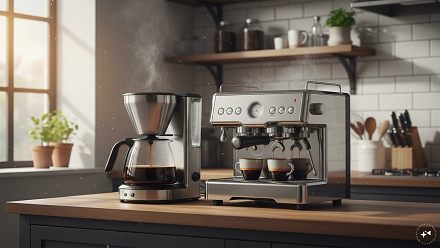
Choosing a coffee maker becomes much easier once you think about the coffee you actually drink. If your mornings usually involve a mug of black coffee, or you want to brew enough for several people without much effort, a drip coffee maker may be all you need. But if you prefer a short, concentrated espresso or regularly order cappuccinos and lattes, an espresso machine gives you much more control over what ends up in your cup.
The difference isn’t simply that one is cheaper or more sophisticated than the other. They use very different brewing methods. A drip machine slowly passes hot water through ground coffee and collects the brewed coffee in a carafe. An espresso machine forces hot water through finely ground coffee under pressure, producing a much smaller and more concentrated drink.
That also changes how the two fit into an Indian kitchen. Drip machines tend to be easier to use when several family members want coffee in the morning. Espresso machines make more sense for someone who enjoys the ritual of making coffee and wants drinks closer to what they would order at a café.
For this comparison, we have picked three drip coffee makers and three espresso machines across different price points and looked at which type works better for different coffee-drinking habits.
Which should you buy?
Buy a drip coffee maker if:
You mostly drink black coffee or coffee with a little milk.
You want to make several cups in one go.
More than one person at home drinks coffee in the morning.
You want to put in the coffee and water and leave the machine to brew.
You don’t want to spend time learning how to pull an espresso shot.
You like having a pot of coffee ready for a leisurely breakfast or while working from home.
You want something relatively simple to clean and maintain.
Buy an espresso coffee maker if:
You prefer strong, concentrated coffee.
Cappuccinos, lattes, Americanos and iced coffees are your usual café orders.
You want to experiment with coffee strength, extraction and milk.
You normally make one or two cups rather than a whole pot.
You’re happy to spend a little more time making each coffee.
You want your coffee machine to recreate more of the café experience at home.
You don’t mind the additional cleaning involved with the portafilter and milk frother.
For a family that mainly wants straightforward morning coffee, a drip machine is usually the easier appliance to live with. If you’re the sort of person who looks forward to a cappuccino or espresso rather than simply wanting caffeine before work, the extra effort of an espresso machine is much easier to justify.
Top picks
Best for small households: AGARO Royal
Best for simple everyday brewing: Pigeon Brewster
Best for several cups at breakfast: Morphy Richards Europa
Best for cappuccinos and lattes: De’Longhi Dedica EC685.B
Best for one-touch convenience: Nespresso Essenza Mini
Best for experimenting with extraction: VANTRO
Quick comparison
Feature
Drip coffee maker
Espresso coffee maker
Main purpose
Brewing regular coffee
Making concentrated espresso
Brewing method
Hot water passes gradually through coffee grounds
Pressurised hot water passes through finely ground coffee
Coffee strength
Milder
Stronger and more concentrated
Quantity
Several cups at once
Usually one or two shots at a time
Ease of use
Very easy
Requires more involvement
Milk drinks
Milk has to be added separately
Many machines include a steam wand or frother
Cappuccino and latte
Not true café-style versions
Much better suited
Black coffee
Excellent for larger mugs
Espresso can be diluted for an Americano
Brewing effort
Low
Higher
Cleaning
Generally straightforward
More components need cleaning
Counter space
Usually compact
Generally larger
Best for
Everyday coffee, families and multiple cups
Espresso, cappuccino, latte and café-style coffee
How does a drip coffee maker work?
A drip coffee maker is deliberately uncomplicated. Water is heated inside the machine and gradually dispersed over ground coffee held in a filter. The brewed coffee then drips into a glass carafe underneath.
The big advantage is volume. Rather than making each person’s coffee separately, you can brew several cups together. Once you’ve worked out how much coffee you like to use, there isn’t much technique involved.
For a busy household, that’s useful. You can start the machine while making breakfast and have a pot ready by the time everyone sits down.
Where drip coffee makers perform best
Drip machines make the most sense for people who enjoy a longer, lighter cup of coffee rather than a concentrated espresso. They’re particularly convenient when two or more people drink coffee at roughly the same time.
A warming plate can also keep the carafe warm after brewing, although coffee generally tastes better when it hasn’t been sitting on heat for too long.
They’re also approachable for someone buying a coffee machine for the first time. There is no portafilter to master and no milk steaming technique to learn.
Where drip coffee makers struggle
The limitation becomes obvious if what you really want is café-style coffee. A drip machine doesn’t produce espresso. Adding hot milk to drip coffee can make a perfectly enjoyable milky coffee, but it won’t give you the concentrated espresso base and textured milk of a cappuccino or latte.
So if your regular coffee order is a cappuccino, buying a drip machine simply because it’s easier may leave you wanting another machine later.
How does an espresso machine work?
Espresso brewing uses pressure. Finely ground coffee is packed into a portafilter and hot water is forced through it, producing a small, concentrated shot.
This shot becomes the foundation for several familiar café drinks. Add hot water and you have an Americano. Add steamed or textured milk and you can make drinks such as cappuccinos and lattes.
The machines in this comparison also show how much espresso equipment can vary. The De’Longhi Dedica uses 15-bar pressure and includes a milk frother, while the VANTRO model advertises 20-bar pressure along with adjustable temperature and extraction time. The Nespresso Essenza Mini takes a very different approach, using capsules and one-touch brewing rather than requiring you to handle ground coffee.
Where espresso machines perform best
If you regularly spend money on café coffee because you genuinely enjoy espresso-based drinks, this is where an espresso machine starts to make sense.
You can change beans, grind, coffee quantity and, depending on the machine, extraction settings. A steam wand also gives you the ability to texture milk rather than simply pouring hot milk into brewed coffee.
The Nespresso approach is different. It gives up much of that manual involvement in favour of convenience. Insert a compatible capsule, press a button and you have a consistent espresso-style drink without grinding beans or dealing with a portafilter.
Where espresso machines struggle
They’re not necessarily the best choice when everyone in the house simply wants a large mug of coffee at breakfast.
Traditional espresso machines require more preparation and cleanup. The coffee grounds need to be removed, the portafilter rinsed and the steam wand cleaned after milk use. There’s also a learning curve if you want consistently good results.
Capsule machines remove much of that work, but tie you to compatible capsules rather than ordinary ground coffee.
Drip vs espresso: Which is quicker?
For making a single small coffee, an espresso or capsule machine can be very quick. But speed needs to be considered alongside quantity.
If three or four people all want a full mug of coffee, a drip machine can brew the required amount together. Making several espresso-based drinks individually involves repeating the extraction process and, for milk drinks, steaming or frothing milk as well.
So the practical winner depends on your morning. One espresso before leaving home is very different from making coffee for the whole family over breakfast.
Which is better for Indian homes?
There isn’t one answer because Indian coffee habits vary enormously.
If coffee at home means a large cup with breakfast, something to sip while reading the newspaper, or a pot that two or three people can share, the simplicity of a drip machine is hard to beat.
If your coffee habit has increasingly moved towards cappuccinos, lattes, iced Americanos and stronger speciality coffee, an espresso machine gives you considerably more scope.
Neither should be confused with a traditional South Indian filter, however. If what you specifically want is South Indian filter kaapi, neither appliance reproduces the traditional brewing process exactly.
Drip or espresso: Which should you choose?
Choose a drip coffee maker if convenience and quantity matter most. It is particularly useful when several people drink coffee, you prefer a full mug rather than a small concentrated shot, and you don’t want coffee-making to become another morning task.
Choose an espresso machine if the coffee itself is more of the event. If you enjoy choosing beans, experimenting with extraction, frothing milk or recreating the cappuccino you normally buy outside, you’ll get much more out of it.
And there is a middle ground. If you love espresso but don’t want the ritual, a capsule machine such as the Nespresso Essenza Mini offers a simpler route.
Common usage scenarios
Common usage
Drip coffee maker
Espresso coffee maker
Better choice
Morning black coffee
Easy to make a full mug or several cups
Stronger but produces a much smaller shot
Drip
Coffee for 3–4 people
Brews several servings together
Drinks generally need to be prepared individually
Drip
Cappuccino
Can’t produce a true espresso base or textured milk
Designed for espresso and, with a frother, milk drinks
Espresso
Latte
Possible only as regular coffee with added milk
Much better suited
Espresso
Americano
Produces regular brewed coffee rather than espresso
Espresso can be diluted with hot water
Espresso
Working-from-home coffee
Convenient if you like having a pot available
Better if you prefer making one fresh drink at a time
Depends on your habit
Quick single coffee
Easy, but you may brew more than you need
Particularly quick with a capsule machine
Espresso/Capsule
Guests
Convenient for serving several regular coffees
Better if guests want different café-style drinks
Drip for quantity, espresso for variety
Iced coffee
Works well for lighter iced coffee
Concentrated espresso stands up well to ice and milk
Espresso
Café-style drinks
Limited
One of its main strengths
Espresso
Minimal effort
Add water and coffee and brew
Manual machines require more involvement
Drip
Experimenting with coffee
Limited control over the brewing process
Much greater scope with a manual machine
Espresso
FAQs
1. Can a drip coffee maker make espresso?
No. A drip machine doesn’t generate the pressure required for espresso. It produces a longer and generally less concentrated brewed coffee.
2. Can you make regular black coffee with an espresso machine?
Yes. You can add hot water to an espresso to make an Americano. It won’t taste exactly like drip coffee because the extraction method is different.
3. Which is easier to maintain?
A drip machine is generally simpler. Manual espresso machines require the portafilter and other coffee-contact parts to be cleaned regularly, while milk frothers or steam wands need cleaning after use.
4. Which is better if two or three people drink coffee every morning?
If everyone wants regular brewed coffee, drip is usually more convenient because you can make several cups together. If everyone prefers cappuccinos, lattes or espresso, an espresso machine is the better fit despite the extra work.
Disclaimer: The product descriptions mentioned in the article are solely based on the primary and secondary research conducted by our experts. To keep you ahead of the curve with these latest products, News18 utilises affiliate links. This means if you decide to shop through our recommendations, we may earn a small referral commission at no extra cost to you. Please be advised that News18 is not responsible for any claims under the Consumer Protection Act, 2019, or other applicable laws regarding the final performance, quality, or safety of these products.