Big Ears, Tiny Eyes, Big Lessons: What Lord Ganesha Can Teach Children About Judging Less
Ask a child to draw a picture of God and chances are they will think about what God should look like. That is what makes Lord Ganesha so interesting.
Por Swati Chaturvedi··20K lecturas
Big Ears, Tiny Eyes, Big Lessons: What Lord Ganesha Can Teach Children About Judging Less
Ask a child to draw a picture of God and chances are they will think about what God should look like. That is what makes Lord Ganesha so interesting.
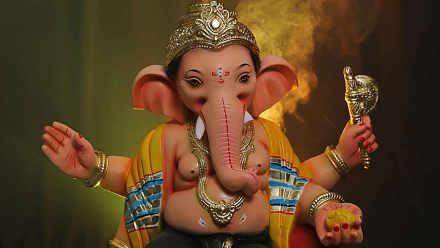
He has the head of an elephant, enormous ears, small eyes, a curved trunk and a large belly. To a child, he may simply look different from every other deity they see.
But that difference is precisely where the lesson begins. For generations, Ganesha’s distinctive form has been understood symbolically. His large ears are commonly associated with listening, while his small eyes are linked to concentration, attentiveness and focused observation.
For children, those ideas can become something more than religious symbolism.
They can become a way of understanding an increasingly important question: Do we really see people, or do we simply see what they look like?
His big ears: Listen before you decide
Ganesha’s ears are among the first things a child notices. They are large, almost comically so, compared with his face.
Traditionally, those ears are interpreted as a reminder to listen, to pay attention, absorb knowledge and hear what others have to say. Some explanations also connect the ears with the ability to listen widely while using wisdom to distinguish what is worth retaining.
That is a surprisingly useful lesson for children.
A child may see a classmate who is quiet and assume they are unfriendly.
Another child may speak loudly and be labelled “naughty”.
Someone who does not answer quickly may be called unintelligent.
But listening changes the picture.
Maybe the quiet child is shy.
Maybe the loud child is excited rather than badly behaved.
Maybe the child who takes longer to answer simply needs more time to think.
Listening gives us information that appearances cannot.
So perhaps Ganesha’s giant ears offer children a simple rule: before deciding what someone is like, hear them out.
His small eyes: Look closely, not just quickly
Ganesha’s eyes are relatively small compared with his large elephant face, and they are commonly interpreted as symbols of concentration and focused attention.
That idea feels especially relevant for children growing up surrounded by fast-moving images.
They are constantly being encouraged to look — at photographs, videos, clothes, faces, screens and social media.
But looking is not the same as seeing.
A child can look at another child’s expensive shoes and decide that they must be “rich”.
They can see someone’s old uniform and assume that person has less.
They can notice a physical difference and decide that someone is strange.
Ganesha’s small, focused eyes offer another way of looking: pay attention to what is underneath the obvious.
What is this person feeling?
What are they trying to say?
What don’t I know about them yet?
That is where observation becomes empathy.
Ganesha’s unusual appearance is itself a lesson
There is something quietly powerful about the fact that one of Hinduism’s most beloved deities does not conform to a conventional human image.
He has an elephant’s head and a human body. And yet, children are not taught to worship him despite looking different.
They are taught to recognise him, celebrate him and turn to him as Ganesha, the deity associated with wisdom and the removal of obstacles.
That creates an opportunity for parents to ask a very simple question:
If Ganesha can look different and still represent wisdom, why should a person have to look a certain way to be respected?
It is a question children can understand.
People have different skin colours, bodies, faces, abilities, voices, clothes and ways of communicating.
Different does not mean less.
Unfamiliar does not mean bad.
And unusual does not mean something is wrong.
The face we see is not the whole person
Children naturally make quick judgments. They are learning to make sense of the world, and appearance is one of the easiest pieces of information available to them.
But parents can help them learn that appearance is only the beginning of knowing someone.
A child with glasses is not necessarily “the smart kid”.
A child who struggles in class is not necessarily unintelligent.
A child who does not speak much is not necessarily rude.
A child who looks different is not necessarily someone to be afraid of.
And the child who looks confident may be carrying worries that nobody can see.
This is where the symbolism of Ganesha can become a useful conversation starter.
Listen to people. Look carefully. Ask questions. Don’t rush to conclusions.
His form teaches children that wisdom isn’t about looking perfect
There is another lesson hidden in Ganesha’s appearance.
We live in a culture that increasingly teaches children to associate certain appearances with beauty, popularity and success.
Ganesha offers an almost opposite image.
His appeal does not come from looking conventionally perfect.
It comes from what he represents: wisdom, knowledge, attention, strength, adaptability and the ability to overcome obstacles. Interpretations of his other features — including his large head, trunk and broken tusk — similarly connect his form with qualities such as thinking, adaptability and learning.
That distinction is worth making early.
A person’s value is not a beauty contest.
The face, body, clothes or physical differences we notice first tell us very little about the qualities that actually make someone who they are.
Kindness cannot be seen from across a classroom.
Courage doesn’t have a particular face.
Intelligence doesn’t come in one body type.
And empathy has no uniform.
Perhaps the biggest lesson is to slow down
There is a common thread running through the symbolism of Ganesha’s ears and eyes.
Don’t rush. Listen before responding. Observe before judging. Understand before assuming. For children, that can be turned into something wonderfully simple.
When you meet someone new, don’t ask only, “What do they look like?”
Ask:
What can I learn about them?
What are they saying?
What might I be missing?
Would I feel differently if I knew their story?
That is the kind of lesson that can travel far beyond Ganesh Chaturthi.
Because eventually, children grow into adults who encounter people who look, speak, dress and behave differently from them every day.
The ability to listen to those people, pay attention and resist the urge to judge them quickly may be one of the most valuable forms of wisdom they can carry with them.
And perhaps that is one beautiful way to look at Ganesha’s unusual face.
The big ears remind us to hear more.
The small eyes remind us to look more closely.
And the elephant’s face reminds us that wisdom has never needed to look like everyone else.