Beyond The Perfect Picture: Why Experiential Travel Is About More Than the Instagram Post
There was a time when a holiday could be distilled into a single image: the turquoise lagoon, the saffron sunset, the perfectly framed doorway, the infinity pool suspended above a valley. We travelled towards the picture
Por Swati Chaturvedi··27K lecturas
Beyond The Perfect Picture: Why Experiential Travel Is About More Than the Instagram Post
There was a time when a holiday could be distilled into a single image: the turquoise lagoon, the saffron sunset, the perfectly framed doorway, the infinity pool suspended above a valley. We travelled towards the picture, took it, posted it and sometimes moved on before we had really experienced the place. That is changing.
The photograph still matters, of course. Travellers still want the spectacular view, the atmospheric café, the beach at golden hour and the sunset captured at precisely the right moment. But increasingly, the photograph is becoming evidence of a journey rather than the journey itself. What travellers are chasing now is the story behind the picture: the meal they learnt to cook, the farmer they met, the craftsperson who explained a disappearing technique, the guide who pointed out animal tracks before sunrise.
In other words, the new luxury of travel may be participation rather than possession.
Recent travel research reflects this shift. Booking.com’s 2025 Sustainable Travel Research, based on more than 32,000 travellers across 34 countries and territories, found that 77% of travellers want authentic experiences representative of local culture, while 73% want the money they spend to go back to the local community.
The implication is significant: travellers are not necessarily looking for less luxury. They are looking for luxury with context.
When the Hotel Becomes Part of the Story
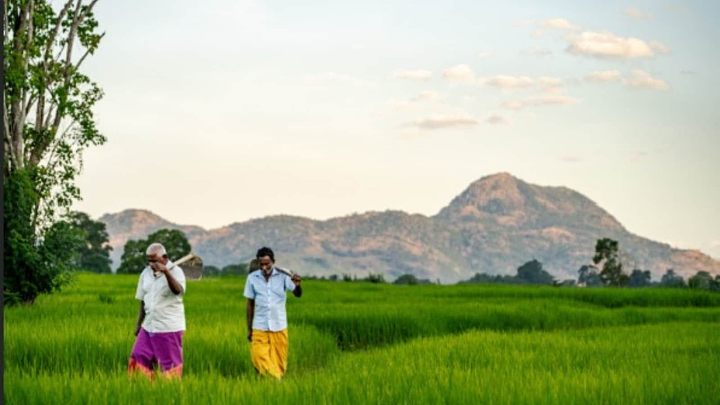
Swati Rao Purohit, Management consultant, experienced precisely this kind of travel while staying at Jetwing Kaduruketha in Sri Lanka. Her memory of the property begins not with a room or a view, but with fifty acres of paddy fields and two farmers walking home with mammoties balanced on their shoulders.
“Fifty acres of paddy in Kaduruketha, two farmers walking home with mammoties on their shoulders and the realisation that the most photogenic thing about this isn’t the rural capture of the Wellawaya landscape…it’s what happens when a hotel decides its fellow community are its partners,” she says.
For Purohit, the landscape became meaningful because the hotel had made the surrounding community part of its story. Jetwing Kaduruketha’s agricultural programme works with local farmers and focuses on organic heirloom rice cultivation and traditional farming practices.
“What you take home isn’t the photograph,” Purohit says. “It’s a meal you’d never have cooked, a rhythm of life you’d never have kept, and the quiet realisation that underneath all that beautiful difference, we’re the same people.”
Her conclusion is particularly telling: “Collaboration over consumption.” It is perhaps one of the clearest ways to describe the new travel mindset. The traveller is no longer simply consuming a destination as scenery; they are looking for ways to understand what makes it live.
The Luxury of Being Let In
For Bindu Gopal Rao, a software professional and a traveller who actively seeks out the offbeat and unusual, the most memorable hotel experiences have similarly been those that opened a door into another world.
At Coconut Lagoon, CGH Earth Resort in Kumarakom, the story began with the architecture. Each of the rooms, she recalls, had been dismantled and rebuilt on site. But food became another important part of the experience.
As a vegetarian, Rao remembers meals inspired by varied local traditions, including Syrian Christian and Malabar cuisine and the traditional Sadya.
A different kind of encounter awaited her at Dwarika’s in Kathmandu, where she had the opportunity to attend a wood workshop with the owner himself. He explained how his grandfather had helped revive the craft by ensuring artisans had a platform to continue their work.
For Rao, this is what travel should ultimately accomplish. “Travel to me is all about enriching experiences that make me learn about something new, which I seek every time,” she says.
The distinction is subtle but important. Instead of asking only what can I see?, the traveller begins asking: What can I learn? Who can I meet? What can I understand here that I couldn’t understand from home?
The Luxury Traveller Wants More Than Access
Amit Kalsi, Travel Designer, Experiential Travel Journeys believes “The luxury traveller has become far more curious about what lies behind a destination. It is no longer enough to arrive somewhere beautiful, stay in a beautiful hotel and see the famous sights. Increasingly, travellers want access, to a person, a craft, a kitchen, a landscape or a story that they could not have encountered in quite the same way on their own. The real value of a travel designer today is not simply arranging the logistics; it is creating those moments of connection. The most successful itineraries are often the ones where the traveller comes home with a story that cannot be replicated.”
That is perhaps why experiential travel has become such an important part of the luxury conversation. The most valuable element of an itinerary may no longer be what can be bought, but what can be accessed, understood and remembered.
From Spectator to Participant
This is perhaps the biggest shift underway in experiential travel. The traveller is moving from spectator to participant. In Kenya, for instance, the safari photograph may be the obvious prize. But the experience begins long before the camera comes out.
“The example of Kenya illustrates how much a destination can offer beyond just a postcard moment,” says Mira Bid, Managing Director, Muthaiga Travel.
A safari can deliver the unforgettable photograph of a lion, elephant or herd of wildebeest. But, she points out, the memory may equally comprise “getting to the park at five o’clock in the morning, observing the wildlife scenery, seeing animal footprints together with the guide, or sitting near the campfire in the evening.”
The animal may be what gets photographed. The journey to find it is what gets remembered.
And that distinction is becoming increasingly important as travellers look for experiences that cannot simply be replicated by scrolling through someone else’s feed.
The Photograph Still Matters Just Differently
It would be too easy to declare that travellers have moved beyond Instagram. They haven’t.
The visual grammar of travel remains extraordinarily powerful. A beautiful image can inspire an entire trip. What is changing is the role that image plays. The photograph is becoming the entry point, rather than the conclusion.
Dr. Mira Sen, Cultural Anthropologist and Researcher in Tourism & Heritage, says, “There is a difference between consuming a culture and encountering it. A photograph places you outside a culture, you are looking at something. Participation places you within an interaction, you are doing something with someone. Of course, no traveller can completely ‘experience’ another culture as a local does, and we should be careful about using the word authentic too casually. But sharing a meal, learning a craft or spending time with people creates a relationship rather than simply producing an image. That relationship is often what gives a journey its lasting meaning.”
That may be why travellers are increasingly looking for experiences that involve participation: cooking a local dish, dining with local people, travelling by an unusual route, learning about a custom or simply spending time doing something that could never be recreated at home.
New Travel Currency
Sri Lanka offers an especially compelling example of how scenery and experience can work together. “Sri Lanka offers a vibrant blend of stunning landscapes, rich culture, warm hospitality, and unforgettable experiences,” says Nalaka Amaratunga, Senior Vice President, John Keells Holdings PLC. The island’s appeal, he says, lies in the combination of golden beaches, scenic mountains, historic sites, bustling markets and its diverse cuisine and local flavours. That combination matters because a landscape catches the eye; culture gives the place depth.
For destinations such as Sri Lanka, the opportunity is therefore not simply to present another beautiful photograph. It is to give travellers reasons to enter the frame, to meet the people, taste the food, understand the traditions and participate in the life surrounding the landscape.
The Rise of the Unrepeatable
There is another reason experiences are gaining currency: they are harder to replicate. A hotel room can be photographed. A famous viewpoint can be saved to a phone. A restaurant can be added to a map. But the exact conversation you have with a farmer, the person who teaches you how to make a regional dish, the sound of a forest before sunrise, or the story a craftsperson tells you about their grandfather cannot be downloaded.
That may be the real premium of experiential travel: its unrepeatability.
Booking.com’s research found that travellers are increasingly conscious of the impact of tourism on local communities, with 73% saying they want the money they spend to go back to the local community.
This creates an interesting new equation for hospitality. The experience becomes more valuable when it benefits not only the traveller but also the people and places that make it possible.
A Different Role for Hotels
For the hospitality industry, this shift presents both an opportunity and a responsibility. The most compelling hotels may increasingly be those that don’t simply place guests beside a destination, but connect them meaningfully to it.
Jetwing Kaduruketha is one example. Its agricultural programme connects the property to the surrounding farming community while placing local agriculture and traditional cultivation at the centre of the guest experience.
That model suggests a larger possibility for hospitality: a hotel can be a beautiful object, but it can also be a bridge, to a community, a landscape, a cuisine, a craft or a way of life.
And when hospitality gets that right, the experience becomes more than a hotel stay.
What We Bring Home
Perhaps the most meaningful travel souvenirs have never been things. They are fragments of other people’s lives that somehow become part of ours: the recipe we attempt to recreate at home, the craft we suddenly notice in another city, the phrase a guide taught us, the taste of a dish we had never encountered, the memory of walking through a landscape before everyone else had woken up.
The photograph remains. It always will. But increasingly, it is the photograph that prompts the story rather than replacing it. Because long after the post disappears from the feed, what stays is the experience behind it: the meal, the conversation, the landscape, the lesson and the feeling that, for a few days, you didn’t simply visit somewhere. You participated in it.