Samosa Caucus Gets A Fresh Serving: Pia Dandiya's Midterm Win Boosts Indian-American Numbers
The “Samosa Caucus” is having an interesting run in the US midterm elections. Indian-American candidates have put up a strong showing, even as Vivek Ramaswamy lost his race in Ohio. The group’s presence in the US House o
লেখক Shuddhanta Patra··66K বার পড়া
Samosa Caucus Gets A Fresh Serving: Pia Dandiya's Midterm Win Boosts Indian-American Numbers
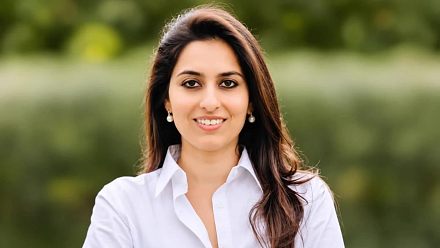
The “Samosa Caucus” is having an interesting run in the US midterm elections. Indian-American candidates have put up a strong showing, even as Vivek Ramaswamy lost his race in Ohio. The group’s presence in the US House of Representatives is also set to get a boost, with Democrat Pia Dandiya winning a closely contested congressional seat in Florida.
Her victory comes at a time when the informal group of Indian-American lawmakers, popularly known as the “Samosa Caucus”, was facing the prospect of losing two of its members following the 2026 US midterm elections.
Dandiya, a former school principal whose parents immigrated from India, defeated Republican Casey Askar in Florida’s 22nd Congressional District on Wednesday. She received around 52 per cent of the vote, while Askar secured 48 per cent.
Her victory brings another Indian-American woman into the House and changes the numbers for the caucus, which had been at risk of shrinking from six members to four. The group could return to its full strength of six if Indian-American physician and former state lawmaker Amish Shah maintains his lead in Arizona.
New Wins, Familiar Faces
Several other Indian-American lawmakers also secured victories or are leading in their respective congressional races.
In Virginia, Congressman Suhas Subramanyam won re-election from the 10th Congressional District, defeating Republican Dave Beckwith. Reacting to his victory, Subramanyam said in a statement, “The campaign is over, but the work is just beginning. I look forward to working with our community to deliver change in Washington.”
Congresswoman Pramila Jayapal retained Washington state’s 7th Congressional District after defeating Republican Nirav Sheth. In California, Ro Khanna won another term from the 17th Congressional District, defeating Republican Ritesh Tandon.
Ami Bera was leading Republican Robb Tucker by around 60 per cent to 40 per cent in California’s newly redrawn 3rd Congressional District. Meanwhile, Amish Shah was ahead of Republican Jay Feely in Arizona’s 1st Congressional District. A victory for Shah would take the Samosa Caucus back to six members.
Why The Caucus Was Facing A Setback
The group reached its highest strength of six members in January 2025, when Subramanyam was sworn in after winning Virginia’s 10th Congressional District. He joined Ami Bera, Pramila Jayapal, Ro Khanna, Raja Krishnamoorthi and Shri Thanedar.
However, the group faced the prospect of losing two members. Krishnamoorthi, who represents Illinois’s 8th Congressional District, gave up his House seat to contest the US Senate election. He lost the March 17 Democratic primary to Illinois Lieutenant Governor Juliana Stratton, who secured 40.39 per cent of the vote against his 32.71 per cent.
After conceding defeat, Krishnamoorthi said, “Obviously, this is not the result we sought… But unlike Donald Trump, I’m not going to question the outcome. I’m proud of the race we ran.”
Thanedar also lost his bid to secure another term after being defeated in the August 4 Democratic primary in Michigan’s 13th Congressional District by state Representative Donavan McKinney. McKinney won 51.9 per cent of the vote, against Thanedar’s 48.1 per cent.
McKinney received the backing of Justice Democrats, which spent nearly $1 million supporting his campaign. Senator Bernie Sanders also endorsed him.
In a Facebook statement on August 5, Thanedar said, “I want to congratulate Representative Donavan McKinney on a hard fought race… It was the honor of my life to represent the 13th District in the United States Congress.”
How Indian-American Representation Grew
Indian-American representation in the US Congress remained limited for decades. Before 2012, only two Indian Americans had served in Congress. Democrat Dalip Singh Saund represented California from 1957 to 1963, while Republican Bobby Jindal represented Louisiana from 2005 to 2008.
Ami Bera’s election in 2012 marked the beginning of a larger Indian-American presence in Congress. The numbers increased in 2017, when Ro Khanna, Pramila Jayapal and Raja Krishnamoorthi entered the House. Thanedar joined in 2023, followed by Subramanyam in 2025.
With Dandiya’s victory and Shah leading in Arizona, the group is now looking to maintain its strength rather than face the losses it had feared. There is little immediate scope for further expansion in January, as no other Indian-American candidate is considered a competitive nominee for a House seat.
Indian Americans number around 5.5 million, accounting for roughly 1.6 per cent of the US population. Their growing presence in Congress reflects a steady rise in political representation over the past decade.