Will Mumbai Get A Congestion Tax? BMC Commissioner Reveals When It Could Happen
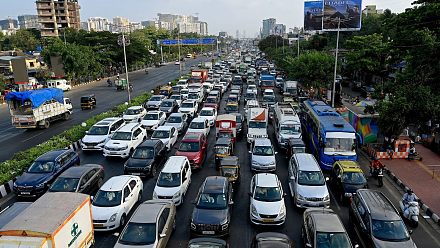
Let’s admit it, Mumbaikars: Mumbai’s traffic situation is a mess. With roads across the city regularly struggling under heavy traffic, several measures have been proposed to reduce congestion, including a congestion tax
লেখক Saurabh Verma··78K বার পড়া
Will Mumbai Get A Congestion Tax? BMC Commissioner Reveals When It Could Happen
Let’s admit it, Mumbaikars: Mumbai’s traffic situation is a mess. With roads across the city regularly struggling under heavy traffic, several measures have been proposed to reduce congestion, including a congestion tax on the lines of schemes in cities such as London and Singapore.
Now, Brihanmumbai Municipal Corporation (BMC) Commissioner Ashwini Bhide has said Mumbai could also consider introducing congestion charges — but only after strengthening the city’s public transport system.
Speaking on the Sushasan podcast, Bhide said congestion pricing could help manage traffic if commuters have a reliable alternative to private vehicles.
“Congestion charges could be a solution (to traffic) provided we have an alternative mechanism,” she said.
Bhide pointed to Singapore and London as examples, saying both cities were able to introduce congestion charges because they have robust and well-connected public transport networks. “Once you give a good public transport option, then you can force them to not use private vehicles and you can create a mechanism to incentivise and disincentivise that,” she said.
She also highlighted Singapore’s integrated public transport system, where commuters can use a common card across different modes of transport. Higher costs for private vehicle use, including parking charges, can further encourage people to opt for public transport, she said.
“I think we can also do it if our public transport is good and the bus fleet is robust. Then in certain areas of the city, we can certainly think of that,” Bhide said.
Mumbai’s Congestion Tax Proposal Is Not New
The idea of introducing a congestion tax in Mumbai has been discussed before.
Earlier this year, senior BJP corporator Makarand Narwekar wrote to the BMC Commissioner proposing a congestion-pricing scheme for some of the city’s busiest areas.
Narwekar had urged the civic body to design and pilot a system targeting single-occupant private vehicles entering high-traffic zones in south Mumbai during peak hours. The proposed areas included Fort, Nariman Point and Colaba.
Under such a system, private vehicles entering designated zones during specified periods could be charged a fee, with the aim of reducing the number of cars on already congested roads.
For now, however, Bhide’s comments indicate that Mumbai’s congestion-tax debate remains closely linked to one fundamental question: can the city first provide a public transport system good enough for commuters to leave their cars and two-wheelers behind?
What Is A Congestion Tax?
A congestion tax, also known as congestion pricing or a congestion charge, is a fee imposed on vehicles entering or driving through heavily congested parts of a city, particularly during periods of peak traffic.
The idea is different from a conventional highway toll, which is generally intended to recover the cost of building and maintaining roads. Congestion pricing is primarily designed to manage traffic demand by making driving in crowded areas more expensive.
Cities that use the system typically rely on cameras, sensors or electronic tolling equipment to identify vehicles and collect payments without requiring drivers to stop. Charges can vary depending on the time of day, with higher rates during busy periods and lower or no charges during off-peak hours.
By increasing the cost of driving into congested areas, authorities aim to encourage commuters to use public transport, share rides or travel at less busy times. The policy can also help reduce traffic-related emissions and improve the movement of buses and other vehicles.
In many cities, the money collected through congestion charges is used to support public transport and other urban infrastructure, including bus services, rail networks, cycling facilities and pedestrian improvements.
Which Cities Have A Congestion Tax?
Singapore was among the first cities to introduce congestion pricing, launching its initial scheme in 1975. It later developed the Electronic Road Pricing system, which uses electronic gantries to charge vehicles and can adjust rates based on traffic conditions and the time of day.
London introduced its Congestion Charge in 2003. Vehicles entering the designated central London zone during specified hours are required to pay a daily charge. Durham in the UK has also operated a smaller road-user charging scheme in its historic city centre since 2002.
Sweden has congestion-tax systems in Stockholm and Gothenburg. Cameras record vehicles entering designated areas, with charges varying according to factors such as the time of travel.
Milan in Italy operates Area C, a restricted zone covering the city’s historic centre where vehicles are subject to charges and emissions-related restrictions.
New York became the first major US city to introduce a congestion-pricing programme when its Central Business District Tolling system began in January 2025. It applies to vehicles entering Manhattan south of and including 60th Street, subject to the programme’s rules and exemptions.
Other cities have adopted variations of the concept. Valletta in Malta uses an automated charging system for non-resident vehicles entering its historic centre, with the amount linked to the duration of a vehicle’s stay.
Norwegian cities, including Oslo and Bergen, also use urban toll systems, with charges that can vary according to factors such as the time of day.