Iran, UAE At BRICS 2026: India Has A Diplomatic Tightrope To Walk
India faces a delicate diplomatic challenge at the BRICS 2026 summit as Iran and the UAE arrive with sharply different positions on the West Asia conflict. New Delhi’s priority is to secure a joint Delhi Declaration whil
লেখক Shuddhanta Patra··80K বার পড়া
Iran, UAE At BRICS 2026: India Has A Diplomatic Tightrope To Walk
India faces a delicate diplomatic challenge at the BRICS 2026 summit as Iran and the UAE arrive with sharply different positions on the West Asia conflict. New Delhi’s priority is to secure a joint Delhi Declaration while preventing the divisions from overshadowing the bloc’s economic agenda.
BRICS foreign ministers failed to issue a joint statement in May after disagreements between Iran and the UAE over the conflict. India had to issue a chair’s statement instead.
The issue has direct economic implications for India. The Strait of Hormuz normally carries about a fifth of the world’s oil and liquefied natural gas supplies, while India imports most of the crude it consumes.
What India Wants?
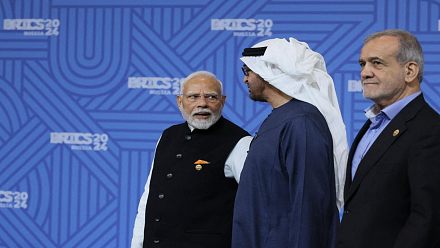
Top government sources told News18 that India will seek to keep the focus on regional stability.
“Every party will attack or if one attack other will speak. BRICS is more of an economic forum but UAE-Iran relation points will be raised in name of economic stability. India will balance the ties between both the countries because we are chair this year by saying we are concerned about the regional stability. India’s aim will be to pacify by saying all parties should adhere to regional stability,” the sources said.
BRICS Sherpas have met to finalise the Delhi Declaration ahead of the summit. Their discussions include differences over references to the West Asia war and Palestine.
India has pushed for anti-terror measures and reforms of multilateral institutions. Trade in national currencies and projects through the New Development Bank will also be discussed. The summit will follow a people-centric approach, with energy and supply chains among the focus areas.
Iran And UAE On Opposite Sides
Iran wants BRICS to condemn US and Israeli military actions and support its sovereignty claims. The UAE, which is closely aligned with the US and other Gulf states, wants greater emphasis on maritime security and preventing attacks on commercial shipping in the Gulf.
The divide has deepened in recent months. The UAE accused Iran of missile and drone threats to maritime routes and, in August, halted trade and financial transactions with Tehran.
The differences have already caused deadlocks at BRICS foreign ministers’ and trade ministers’ meetings earlier this year, increasing the possibility of another impasse at the leaders’ summit.
India’s West Asia Balancing Act
India is working through the Sherpas on language that reaffirms respect for sovereignty, non-use of force and freedom of navigation in the Gulf without naming specific countries or assigning blame.
The proposed approach also calls for de-escalation and dialogue, keeping the focus on regional stability instead of a direct condemnation that either Iran or the UAE could reject.
New Delhi is also keeping the summit focused on areas where consensus is more achievable. These include trade, supply-chain resilience, digital public infrastructure, start-up and incubator networks, energy transition and development finance through the NDB.
The published agenda is designed to avoid the most divisive security details, including detailed language on the Hormuz crisis.
Will Bilaterals Bridge The Differences?
India is also using bilateral and smaller diplomatic channels to address disagreements before the leaders arrive. Special representatives have met in New Delhi to fine-tune the Delhi Declaration and narrow differences between Iran and the UAE over references to West Asia and Palestine.
Russia is publicly hopeful of consensus and has offered to help normalise ties, giving India additional diplomatic space to work towards compromise language.
India is also using side meetings with Tehran, Abu Dhabi and other Gulf partners to reassure each side that its core concerns are reflected in principle, even if individual countries are not named.
Why Hormuz Matters To India
India’s balancing act is also driven by its own economic interests.
Any escalation that disrupts the Strait of Hormuz could push up oil prices and increase India’s import bill. The Gulf is also important for Indian exports, remittances and the welfare of millions of Indian workers.
For this reason, New Delhi cannot afford to be seen as taking sides against Iran or key Arab partners.
The Iran-UAE rupture followed the 2026 US-Iran war and, more immediately, UAE accusations that Iran had fired ballistic missiles towards its territory and maritime traffic. In mid-August, the UAE announced an indefinite suspension of all trade, commercial exchanges and financial transactions with Iran.
How The Iran-UAE Rift Escalated
The conflict began with US-Israeli military operations against Iran on February 28, 2026. Iran retaliated with missile and drone strikes targeting US bases and oil infrastructure across the Gulf, including in the UAE, Saudi Arabia, Qatar, Kuwait, Bahrain, Iraq, Oman and Jordan.
Dubai International Airport was damaged by drone strikes early in the war, flights were halted, and shipping lines rerouted to avoid the Strait of Hormuz and Red Sea.
On August 18-19, the UAE said its air defences detected two ballistic missiles launched from Iran towards maritime traffic, with one falling within UAE territorial waters.
Citing “regional escalations that undermine regional and international peace and security”, the UAE foreign ministry announced that all trade, commercial exchanges and financial transactions with Iran would be halted “until further notice”.
Iran has denied launching missiles at the UAE, with some Iranian statements suggesting the incident could have been a “false flag” operation.
UAE’s Position On Shipping Attacks
The UAE has issued strong statements over Iranian attacks on shipping. Following attacks on ADNOC-affiliated ships in the Strait of Hormuz, Abu Dhabi described them as a “flagrant violation” of UN Security Council Resolution 2817, which affirms freedom of navigation and rejects attacks on commercial vessels or obstruction of international maritime routes.
The UAE said using the Strait as a means of “economic coercion or blackmail” amounted to “acts of piracy by Iran’s Revolutionary Guard Corps” and threatened regional stability and global energy security.
It demanded an immediate end to hostilities and the complete and unconditional reopening of the Strait.
After an Iranian attack on the Saudi carrier Sidr in the Strait in early September, the UAE again condemned the incident, calling it a grave threat to international navigation and a dangerous escalation. It expressed solidarity with Saudi Arabia and support for measures to protect its vessels and national interests.
The UAE has also rejected reports by Iranian state media about attacks on US facilities at Al Minhad Air Base, calling them “false”. Its defence ministry said its air force had engaged an Iranian drone detected over UAE territorial waters approaching from Iran.
India will host the 18th BRICS Summit in New Delhi on September 12 and 13. The official theme is “Building for Resilience, Innovation, Cooperation and Sustainability”.