‘Decisions Made Independently’: Govt Debunks ‘External Pressure’ Claim On UPI Merchant Fee
The Centre on Wednesday rejected allegations that its decision to introduce Merchant Discount Rate (MDR) on certain UPI transactions was influenced by pressure from the United States, asserting that India’s digital payme
লেখক Prisha Vibhavari··114K বার পড়া
‘Decisions Made Independently’: Govt Debunks ‘External Pressure’ Claim On UPI Merchant Fee
The Centre on Wednesday rejected allegations that its decision to introduce Merchant Discount Rate (MDR) on certain UPI transactions was influenced by pressure from the United States, asserting that India’s digital payments policy is decided independently.
The Ministry of Finance dismissed what it called the “External Pressure” myth and said the objective of the new framework was to create a financially sustainable and accessible digital payments system.
“Debunking the “External Pressure” Myth: Some claims suggest the change is due to foreign influence. This is false. India’s UPI policy decisions are made independently, with the clear goal of building a self-sustaining, inclusive, and affordable digital payments ecosystem,” the ministry stated.
� UPI Remains Free for Consumers
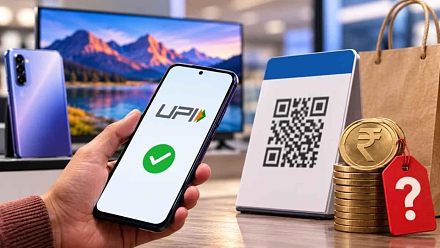
UPI continues to be free for customers. Sending money to friends, paying at shops, or scanning a QR code — all remain without charges.
Key Facts:
✅ No charges on P2P: Person-to-Person transfers are always free, regardless of amount.
✅ Small… pic.twitter.com/PyQ7hotNMN
— Ministry of Finance (@FinMinIndia) September 16, 2026
What Congress Alleged?
The clarification came after the Congress alleged that the government had yielded to a US demand by ending the zero-MDR regime for certain merchant payments made through UPI.
Congress general secretary in charge of communications Jairam Ramesh questioned whether the new 0.4% MDR was intended, among other things, to give American card networks greater scope to compete with UPI.
Also Read: Rs 300 Cap: Why UPI Payment Beyond Rs 75,000 Won’t Keep Getting More Expensive
“Here, the Modi government has given into a US demand to get rid of zero MDR and charge for UPI. The U.S. Trade Representative earlier this year criticized UPI for being free and having driven out Visa and Mastercard,” Ramesh said.
“Why 0.4% MDR? Is it because debit card MDR is also 0.4%? Is this being done to enable US card companies to compete with UPI?” he said.
Ramesh linked the issue to wider tensions between New Delhi and Washington, pointing to proposed US legislation that could impose tariffs of up to 100% on countries continuing significant trade in Russian energy.
He also raised concerns over immigration measures affecting Indian nationals in the US, including changes relating to H-1B visas.
The Congress leader also challenged the government’s argument that MDR was necessary to make the UPI ecosystem financially sustainable.
Is this going to make UPI “sustainable” as the government claims, the Congress leader asked.
Ramesh estimated the annual cost of operating the UPI ecosystem at around Rs 20,000 crore and argued that the figure was less than 10% of the transfers made by the Reserve Bank of India to the Union government in recent years.
“The PM has redefined NOTA – Narendra’s Ongoing Trump Appeasement,” Ramesh said.
In a separate post, he described the government’s decision as “2017 GST Redux”.
What The New UPI MDR Means
The government announced the new MDR framework a day earlier, with a 0.4% charge applying from October 15 to specified merchant transactions above Rs 2,000. The measure does not cover routine person-to-person transfers.
The Finance Ministry has repeatedly stressed that the MDR is a charge within the merchant payments ecosystem and is not a fee imposed directly on consumers.
Also Read: New UPI Rules From October 15: 8 Things Your Bank, App And Shopkeeper Can’t Charge You For
“Customers will not be required to pay any charge when making such payments through UPI,” the finance ministry said in a statement, adding, “MDR is a charge within the merchant payment ecosystem. It is not a charge on customers making UPI payments.”
Individuals will also retain “unlimited free usage, with no monthly quotas, volume restrictions or tiered caps on free UPI transactions”, the ministry said.
The decision has nevertheless triggered a political confrontation, with the Congress describing the measure as a “Modi tax”.
Congress leader Rahul Gandhi accused Prime Minister Narendra Modi of being “compromised” and alleged that the government was “once again surrendering” to American pressure.
The BJP has rejected those allegations, accusing the Congress of spreading “fake news” and pointing to the government’s clarification that consumers will not be charged MDR for making UPI payments.