Your Grandmother Had The Jewellery. Gen Z Has The Styling Rules.
For a generation that has grown up scrolling through Instagram, saving jewellery looks on Pinterest and mixing high street fashion with inherited pieces from their mothers’ wardrobes, jewellery is no longer something tha
লেখক Swati Chaturvedi··23K বার পড়া
Your Grandmother Had The Jewellery. Gen Z Has The Styling Rules.
For a generation that has grown up scrolling through Instagram, saving jewellery looks on Pinterest and mixing high street fashion with inherited pieces from their mothers’ wardrobes, jewellery is no longer something that waits patiently inside a locker.
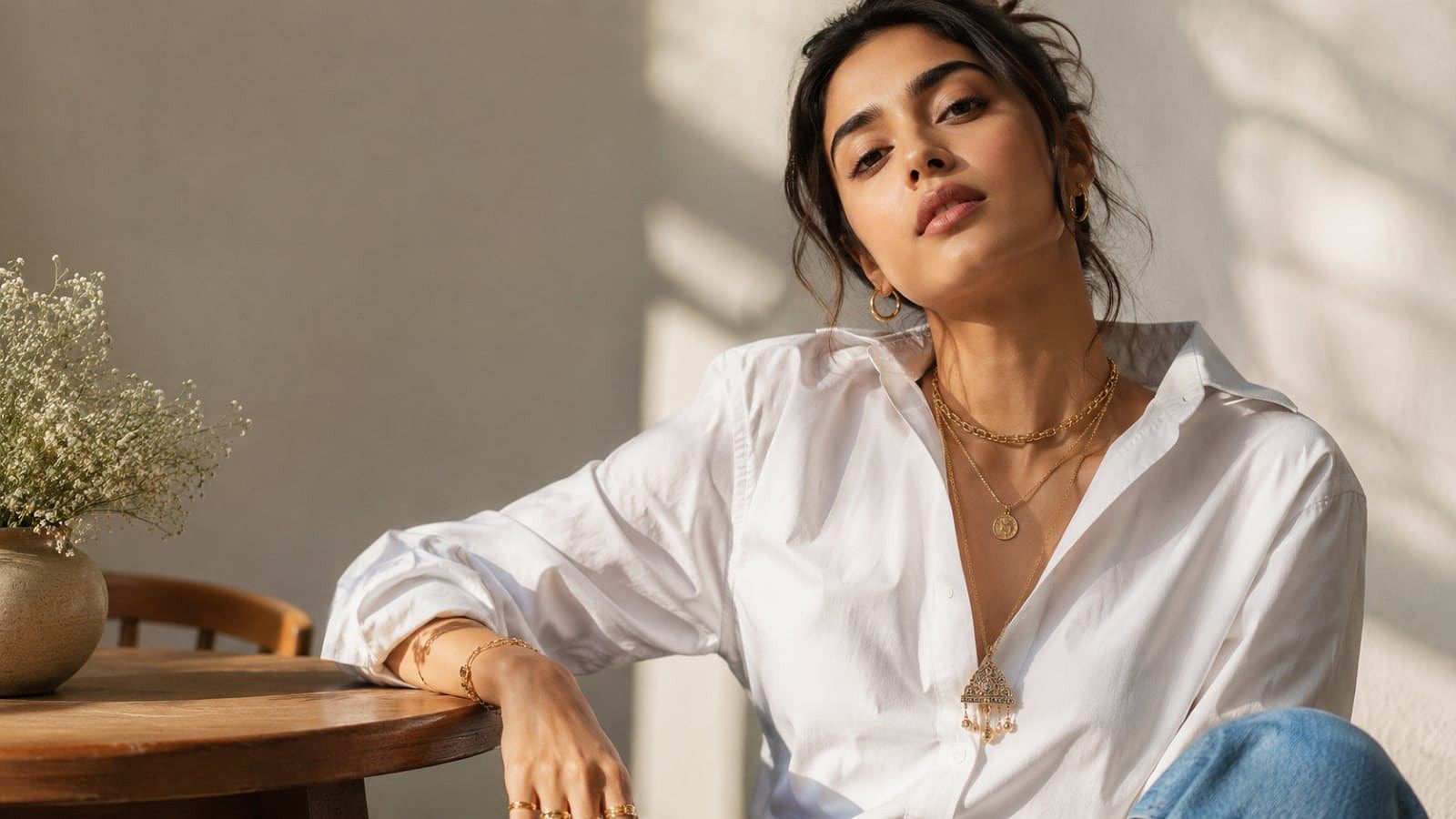
A pair of gold hoops can be worn with a white shirt on Monday. A traditional ring can be stacked with silver bands on Tuesday. A necklace inherited from a grandmother can suddenly find a new life over a tank top and jeans.
For Gen Z and millennials, jewellery is becoming less about the occasion and more about the person wearing it.
“The biggest shift we see is that jewellery is moving from the locker to the wardrobe,” says Gaurav Singh Kushwaha, Founder & CEO, BlueStone. “For this generation, it isn’t something bought for one occasion and stored, it’s worn every day, as an expression of who they are.”
Jewellery Is No Longer Waiting For A Wedding
For decades, the Indian jewellery wardrobe was built around occasions. Weddings demanded elaborate sets, festivals brought out gold and important milestones often meant buying a significant piece.
That still exists. But there is now another jewellery wardrobe emerging, one made up of pieces that can be worn on an ordinary Tuesday.
Ananya Desai, a 24-year-old Mumbai-based fashion professional, says she thinks about jewellery much like she thinks about clothes. “I don’t want to buy something that I can wear only once. If I’m spending on jewellery, I want to know that I can wear it with jeans, a dress or even to work. I like pieces that become part of my everyday look rather than making me feel overdressed.”
That shift towards versatility is something Leshna Shah, Founder, Irasva Fine Jewellery, has also observed. “We’re seeing a clear shift towards versatile, design-led pieces that can be styled, layered and worn in unexpected ways,” Shah says. Jewellery, she adds, is increasingly becoming “a form of self-expression, individuality and everyday luxury.”
For younger buyers, the jewellery box is beginning to resemble the wardrobe: personal, mix-and-match and constantly evolving.
The New Jewellery Uniform
Think delicate chains, stackable rings, everyday earrings, slim bracelets and pieces that can move effortlessly from day to night. Rhea Verma, a 27-year-old Delhi-based IT professional, says she rarely thinks about jewellery in terms of “occasion” anymore. “I’d rather have five pieces that I genuinely wear all the time than one huge set that comes out once a year. I also like layering. Sometimes I’ll wear my mother’s old chain with a very minimal necklace I bought myself. It feels much more personal.”
That desire to make jewellery personal is changing the way younger consumers approach buying. “A younger buyer may walk into a jewellery store looking for something for a birthday, a new job, a personal milestone or simply something they like,” says Anil Jose, Managing Director, T.T. Devassy Jewellery.
He also points to growing interest in lighter jewellery, contemporary interpretations of familiar motifs and pieces that can be worn in different ways.
Tradition Isn’t Going Anywhere
The interesting part is that this generation isn’t necessarily rejecting traditional Indian jewellery. It is simply wearing it differently.
“I don’t think younger consumers are moving away from Indian jewellery traditions. They are simply finding their own way of wearing them,” says Minna Elizabeth, Creative Director, POYEMS.
That could mean pairing a traditional-inspired necklace with contemporary clothing, wearing a heritage-style ring with minimalist jewellery or turning an heirloom into part of an everyday look.
Elizabeth says younger consumers are also increasingly comfortable experimenting.
“A piece does not necessarily have to be heavy, traditional or reserved for a wedding. A small pair of earrings, a chain, a ring or a bracelet can become something they wear every day and make their own.”
Kabir, a 25-year-old Bengaluru-based designer, agrees. “I actually like jewellery that has an Indian reference, but doesn’t immediately look traditional. If a motif has a story behind it but the design is clean and modern, that’s much more interesting to me.”
It is perhaps this balance between heritage and modernity that defines the new Indian jewellery consumer.
Tell Me The Story Behind It
For younger consumers, knowing what they are buying can be almost as important as how it looks. Who designed it? Where was it made? What inspired it? Is the craftsmanship traditional? Can it be personalised?
“The story behind a piece can be just as important as the piece itself,” says Elizabeth.
Social media has only intensified this curiosity. Younger shoppers are exposed to jewellery from across India and the world, often discovering designs through creators, stylists and fashion communities before they ever walk into a store.
“They discover online, compare thousands of designs, and arrive with a clear point of view,” says Gaurav Singh Kushwaha.
That has raised the bar for jewellery brands.
“For most of its history this category was built on reputation; today it has to be built on product,” Kushwaha says. “Design is what earns a young consumer’s choice now — and she’ll only choose you again if you keep earning it.”
Buying Jewellery For Yourself
Perhaps the biggest cultural shift is that younger consumers are increasingly comfortable buying jewellery for themselves. It doesn’t necessarily have to be a gift from a parent, partner or family member. A new job, a birthday, a promotion or simply the desire to own something beautiful can be reason enough.
That is changing the emotional relationship with jewellery.
Instead of asking, “When will I wear this?”, the younger buyer is increasingly asking, “How can I wear this?”
For Pawan Gupta, Director, P.P. Jewellers by Pawan Gupta, that is where contemporary jewellery has an opportunity to meet India’s long-standing jewellery traditions.
“Today’s young jewellery buyers are looking for pieces that fit their lifestyle,” he says. “They want jewellery that feels modern, easy to wear and reflects their personal style, while still giving them the trust and quality that come with a strong jewellery legacy.”
The Jewellery Box Gets A Personality
The future of Indian jewellery may therefore not be about choosing between traditional and contemporary. It could be about wearing both.
A grandmother’s necklace with a slip dress. A traditional-inspired ring with an oversized blazer. Gold earrings with a T-shirt. A modern bracelet stacked beside a piece that has been in the family for decades.
As Anil Jose puts it, younger consumers remain curious about the traditions behind the jewellery they buy. “They simply want to experience them differently.”
And perhaps that is the real shift. Jewellery is still about emotion, memory, craftsmanship and meaning. But for Gen Z and millennials, it is also about individuality, everyday style and the freedom to decide what a piece means to them.
The jewellery locker is opening. And this time, the pieces are staying out.