This super-cooled squirrel could revolutionise emergency care
No other mammal can survive colder body temperatures than the Arctic ground squirrel. Its chilly hibernation is inspiring new treatments for heart attacks, stroke, and brain injury.
লেখক Katarina Zimmer··9K বার পড়া
This super-cooled squirrel could revolutionise emergency care
No other mammal can survive colder body temperatures than the Arctic ground squirrel. Its chilly hibernation is inspiring new treatments for heart attacks, stroke, and brain injury.
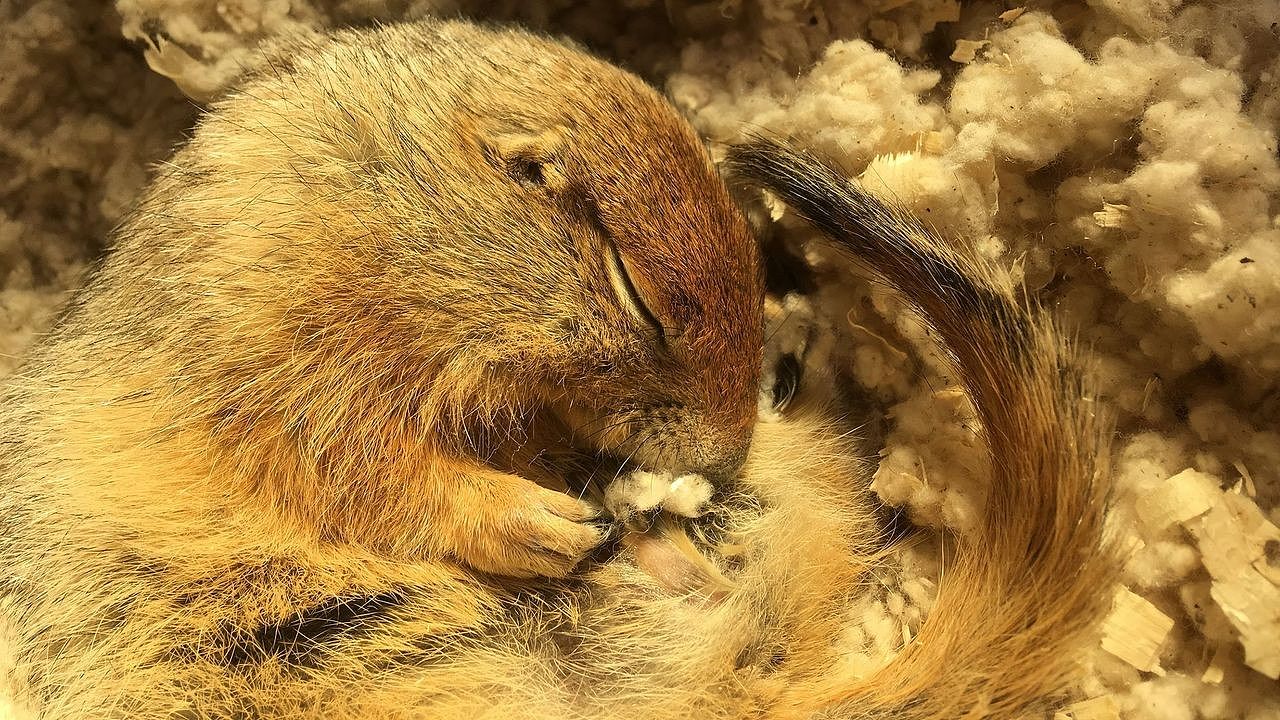
In August, as summer draws to a close and the days shorten, a female Arctic ground squirrel knows it's time to fatten up. The small, copper-hued rodent scouts the tundra for whatever food she can find – grasses, sedges, and leaves – until she retreats to her burrow to sink into a deep wintry slumber. About a metre underground, her body winds down into slow motion. At just a few breaths and heartbeats per minute, it would be easy to mistake her for dead.
As the ground above her freezes solid, reaching temperatures of -20C (-4F), her body temperature plummets. Astonishingly, her brain cools to 0C (32F), her abdomen to -2C (28F) and her hind limbs even down to -2.9C (27F) – colder than any other mammal has been recorded alive. For eight months she lies here without food or water, rousing only occasionally, until the ground warms and she returns to life aboveground.
Like many mammals of northern climates, Arctic ground squirrels survive the harsh winters of Canada, Alaska and Siberia by hibernating, but they're somewhat unusual in the sheer length of time they spend in this state and unique in that they survive at such cold body temperatures.
These extreme features have made Arctic ground squirrels, alongside some close relatives, a popular study subject for scientists striving to better understand what makes hibernation biologically possible – not just out of scientific curiosity, but also in the hopes of someday applying this to humans.
Being able to slow down human metabolism could help doctors buy more time in treating severe conditions like heart attacks, strokes, and traumatic brain injuries, and induce beneficial cooling to protect vital organs. And, in the distant future, this research might even pave the way to putting astronauts into states of suspended animation to help them weather long-distance space flights.
This research is young, but it's already showing how studying the animal kingdom's extreme survivors could help unlock new strategies to boost human health. "Their physiology is just so different," says physiological ecologist Cory Williams of Colorado State University. "At the same time, you can see [how] if you could harness this attribute and apply it to humans, there could be real practical function."
Scientists at the University of Alaska Fairbanks have been studying Arctic ground squirrels for more than 50 years. The rodents seem to have an internal clock which – alongside the changing length of daylight – tells them when it's time to hibernate; for females this happens around August while males start a few months later.
Staff then transfer the squirrels from their enclosures into a dark refrigerated room that mimics the conditions inside the rodents' natural hibernation burrows. The animals lie curled up inside cotton or wood shavings inside plastic cages. For certain studies, staff cuddle the animals in the beginning to get them used to being handled so they don't stir when scientists take blood and other measurements, says hibernation scientist Sarah Rice of the University of Alaska Fairbanks. Their bodies are so cold, and their breathing and heartbeat so slow, she says, that "sometimes it's hard to tell if they're alive or not".
Rice's colleagues, including hibernation scientist Kelly Drew, have been investigating what exactly triggers the slowdown in the animals' metabolism that allows their body temperature to drop so low.
But if scientists could identify a way of winding down patients' metabolism – which would then naturally allow their body to cool – that might prove more effective, "because the body doesn't fight it", Drew says.
Slowing down metabolism could help to preserve organs destined for transplantation for longer time periods outside the body. It could also help to protect cancer patients against the harmful effects of radiation, which causes dangerous byproducts under normal metabolism, says neurophysiologist Domenico Tupone of Oregon Health and Science University and Italy's University of Bologna.
And importantly, slowing metabolism could buy time for patients suffering medical emergencies – from those suffering strokes who live long distances from hospitals, to soldiers wounded on battlefields (which is partly why the US Army Research Office and the Department of Defence have funded research on Arctic ground squirrels).
"If you could really genuinely, safely slow down metabolism for a long time, you could buy time for critical illness," Rice says.
In one 2011 study, Drew and her colleagues injected a drug with a similar structure to adenosine, called 6N-cyclohexyladenosine, or CHA, into the brains of Arctic ground squirrels. Sure enough, the animals would fall into a hibernation-like state, at least when the scientists did this close to the animals' natural hibernation time. Their metabolisms slowed down, their bodies stopped generating heat, "and then they cooled in a manner very similar to hibernation", Drew says.
Remarkably, the molecule has a similar effect in ordinary rats, even though the species doesn't naturally hibernate. In a 2013 study, Tupone and his colleagues injected CHA into rat brains and observed the animals' core body temperature fall from 38C (100F) to roughly 28C (82F). (Their bodies didn't cool any lower because the surrounding temperature was purposefully maintained in a mild, safe range, Tupone says.)
And, compared to hibernating Arctic ground squirrels, the rats exhibited similar patterns of electrical activity in their brains and similarly slow and irregular heartbeats.
It's a mystery why rats would have the ability to fall into a hibernation-like state; perhaps ancestral mammals hibernated and many species retained the molecular machinery that allows for this, Tupone speculates. To him, the experiment proves that it's possible to induce hibernation in animals that don't naturally do so, he says.
That said, translating this into humans is easier said than done; injecting adenosine-like drugs into the brain would be too invasive to be feasible in emergency medical situations, Drew says. And giving adenosine via blood infusions could have side effects, including dangerous fluctuations in blood sugar levels or even heart failure, she adds. (And in any case, Rice says it is – at least currently – impossible to cool human body temperatures as low as those of Arctic ground squirrels, which have special ways of super-cooling their tissues.)
While Drew is exploring ways of making adenosine safer for human use, Tupone has been investigating another strategy to induce hibernation. Just last year, he published a study showing the effects of chemically blocking a specific cluster of nerve cells inside the brains of rats, called the ventromedial periventricular area, which lies in the hypothalamus, a region that controls body temperature.
When these nerve cells are active, the body's temperature regulation system acts to maintain a warm core body temperature – for instance, preventing overcooling through shivering or avoid overheating by widening the skin's blood vessels to shed heat. But blocking these nerve cells turns the system on its head, in what Tupone and his colleagues call "thermoregulatory inversion": striving for a cooler body temperature, the animals' metabolism, heart rate, and breathing slows down and the body cools. And adenosine, Tupone speculates, might act as a signal that prompts the switch between the normal temperature regulation circuit to the alternative one.
Tupone is now collaborating with Drew to see if this alternative temperature control circuit is also what induces hibernation in Arctic ground squirrels. The research could help pave the way for developing drugs that block the responsible nerve cells. "If we can do that, we can create a very nice, regulated hibernation-like state in… humans for therapeutic purposes," Tupone says.
There isn't yet any evidence that this alternative temperature control circuit exists in humans. But, while cases of hypothermia in humans are often fatal, there are occasional cases where people have survived extremely low temperatures for some period of time. Over 10 years ago in Tresckow, Pennsylvania, a man survived intense hypothermia after passing out in 2ft (0.6m) of snow on a walk home from a night out. When he was found, his body temperature was just 18C (64F) – yet when he was medically warmed, he was found to be alive.
"Maybe hibernators and non-hibernators are not so different when they're presented with extreme circumstances," says biochemist and cell biologist Mark Roth of Fred Hutchinson Cancer Center in the US. "Maybe the ability for rodents or ground squirrels to do it is more apparent and less apparent in people, but maybe it's still there."
He and other scientists have been interested in Arctic ground squirrels' ability to resist certain kinds of injuries. One example is ischemia-reperfusion injury, the damage that happens when blood finally returns to an organ that has been deprived of oxygen due to a stroke or heart attack, for instance. The sudden rush of oxygen and immune cells can cause inflammation and cell death. Arctic ground squirrels seem to be resistant to this, perhaps because they're adapted to the low blood flow and little oxygen characteristic of hibernation, Rice says.
In one 2020 study, Drew, Roth, Rice and their colleagues discovered one possible reason: they found that Arctic ground squirrels' blood concentrations of iodide – a substance obtained from animal diets which plays important roles in the body – surge up to three times their normal levels during hibernation. The substance seems to protect against ischemia-reperfusion injury; when the scientists applied a tourniquet to the limbs of mice to cut off blood flow and then injected iodide, the animals suffered less tissue damage compared to animals that received a saline injection.
These and other findings motivated Roth and a company he founded, Faraday Pharmaceuticals, to explore the benefits of giving iodide to human patients. In a 2022 phase 2 clinical study, doctors administered an iodide-containing drug to dozens of patients about to undergo angioplasty treatment (a procedure used to widen narrow or blocked blood vessels) after suffering a severe heart attack. Compared to patients who received a placebo, the iodide-treated patients showed fewer signs of heart damage and stress, although the authors noted that a larger trial is needed to test the drug's effectiveness.
Rice, meanwhile, is trying to understand how Arctic ground squirrels manage to preserve so much of their muscle while they hibernate – knowledge that could be used to develop treatments that prevent muscle loss in patients on long-term bedrest, for instance. Williams, for his part, is studying how ground squirrels switch from a ravenous appetite in the weeks leading up to hibernation to fully suppressing appetite during hibernation – which could help pinpoint the neurological processes that suppress appetite in humans. "If we're thinking about drugs that can be used to combat obesity, we can potentially target the same neural pathways," Williams says.
Eventually, scientists speculate, Arctic ground squirrel research could even be useful for astronauts weathering long-term space flights, which is partly why Nasa has funded some of Drew's research.
In theory, putting astronauts in a state of suspended animation could reduce the amount of food required and waste produced, while also helping to combat the loss of muscle that occurs in anti-gravity and protecting astronauts from dangerous radiation in space, Drew says. "Also, the state… would alleviate some of the psychological challenges of being in a small spacecraft with lots of people," Drew says.
Deep inside the ground in the Arctic tundra, the female Arctic ground squirrel has months to go until the spring. As she lies transfixed in frozen slumber, scientists will continue to explore how her unique biology could help humans aboveground survive and thrive – and perhaps, one day, even fly to the stars.
--
For essential climate news and hopeful developments to your inbox, sign up to the Future Earth newsletter, while The Essential List delivers a handpicked selection of features and insights twice a week.
For more science, technology, environment and health stories from the BBC, follow us on Facebook and Instagram.