Stop Giving This Medicine To Your Child For Every Cold, Cough And Allergy, Says Paediatrician
This mid-monsoon season is turning out to be a tricky time for parents, considering the entirety of India, especially Delhi-NCR is dealing with rising cases of cold, cough, fever and allergies. And when a child develops
লেখক Mallika Bhagat··23K বার পড়া
Stop Giving This Medicine To Your Child For Every Cold, Cough And Allergy, Says Paediatrician
This mid-monsoon season is turning out to be a tricky time for parents, considering the entirety of India, especially Delhi-NCR is dealing with rising cases of cold, cough, fever and allergies. And when a child develops a runny nose, cough or fever, many parents reach for medicines they have used before, especially if their medicine cabinet has a tablet prescribed during a previous illness.
But paediatricians are warning parents against treating medicines as a one-size-fits-all answer to childhood colds and coughs. The concern comes at a time when the government is also tightening rules around some medicines commonly found in children’s cold and allergy preparations.
On August 18, 2026, the Central Drugs Standard Control Organisation (CDSCO) published a notification prohibiting all fixed-dose combinations containing chlorpheniramine maleate and phenylephrine hydrochloride for use in children below four years of age. The move builds on earlier restrictions and requires such formulations to carry a clear warning about use in young children.
Chlorpheniramine is an antihistamine used to reduce allergy symptoms such as a runny nose and sneezing, while phenylephrine is a decongestant used to relieve nasal congestion. The two are found together in some cold and allergy medicines. For parents, the new rule is a reminder that medicines commonly kept at home are not necessarily suitable for every child or every episode of cough and cold.
The Montelukast Problem Parents May Not Know About
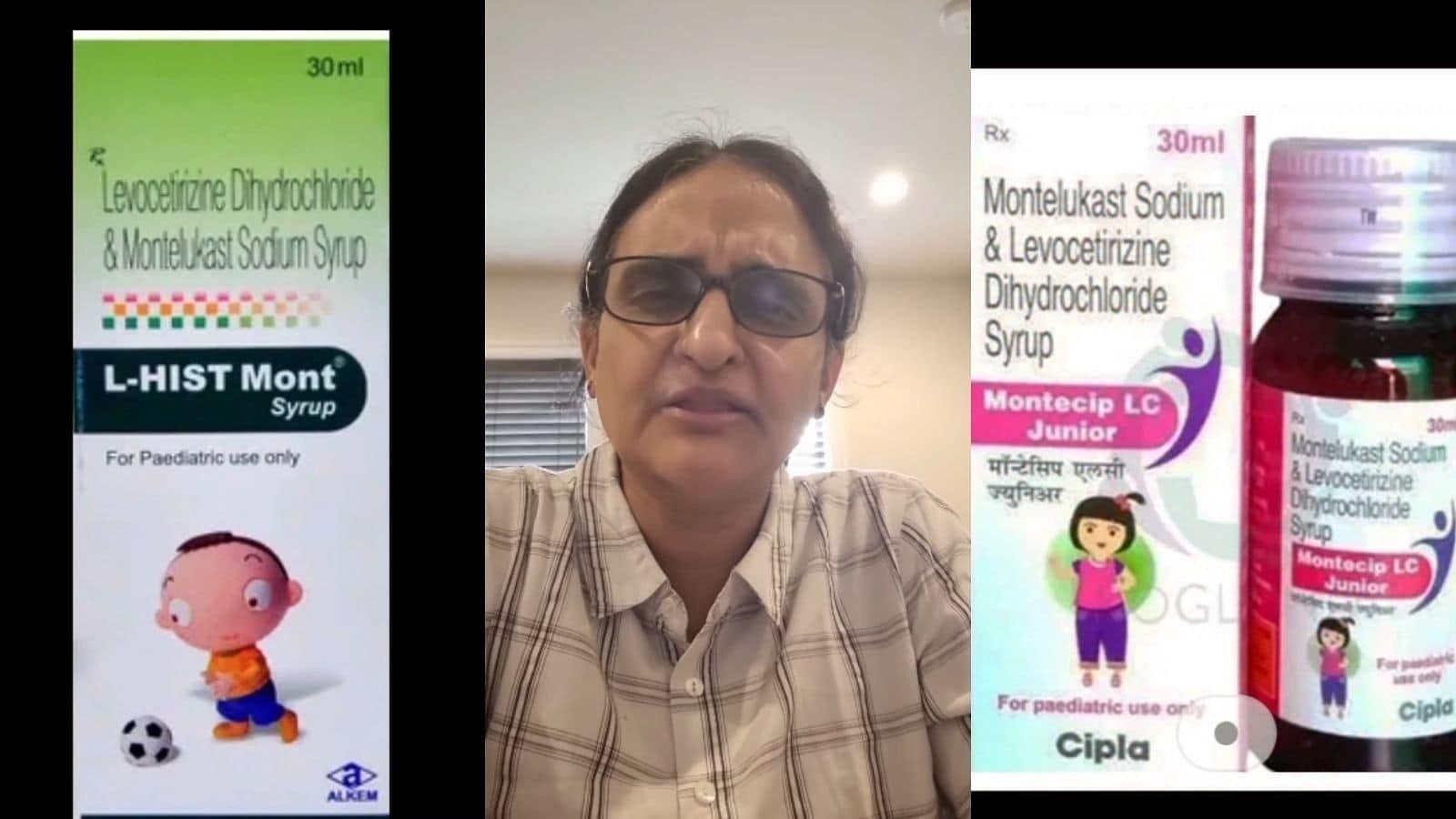
One medicine that paediatrician and public health advocate Dr Sivaranjani Santosh says parents are increasingly using for routine coughs and colds is montelukast, often found in combination with levocetirizine. Products containing the combination include brands such as Montair-LC Kid and Montek-LC Kid. In a video, Dr Sivaranjani says she has seen parents using these medicines for almost every cold and cough.
“Many parents are using Montelukast and Levocetirizine for every cold and cough, and many doctors are also prescribing them. They contain Montelukast and Levocetirizine. Levocetirizine works for allergies, and Montelukast is also not a medicine to be given for just 4 or 5 days. We give it in certain conditions, like when medicines for allergies don’t work, or if there’s a particular reason in asthma. It is a medicine given for at least one or two months. ”
View this post on Instagram
A post shared by Dr Sivaranjani Santosh (@drsivaranjanionline)
The key point, she says, is that montelukast is not intended to be a routine four- or five-day treatment for a viral cold.
“It is definitely not a medicine for cold and coughs caused by viral fever for 4 or 5 days. Besides that, it has a black box warning, which means some teenagers may have suicidal thoughts. Small children may become aggressive, like hitting everyone, and sleep problems may occur. All these things are being reported. That’s why we doctors prescribe it very carefully and only if it’s really necessary. And that too, not for 3 or 4 days of fever, cough, and cold here. This is definitely not a medicine to keep in your 1st aid kit at home and use as you please,” she adds.
The US Food and Drug Administration has a boxed warning for montelukast concerning serious neuropsychiatric events. Parents should therefore use the medicine only when it has been recommended for the child’s specific condition and should discuss any concerning behavioural or mood changes with their doctor.
Why A Cold Medicine Isn’t Always Just A Cold Medicine
Children can develop coughs, congestion and runny noses for many reasons. A viral infection, allergy, asthma or another respiratory condition may require very different approaches. That is why a medicine prescribed for one child or one condition should not automatically become the medicine given to another child the next time they develop similar symptoms.
This is particularly important with combination medicines, where several active ingredients are packed into one formulation.
The government’s latest action specifically concerns chlorpheniramine maleate and phenylephrine combinations in children below four. The 2025 notification had already restricted these combinations with a warning against use in children below four, after expert bodies concluded that the combination could pose risks and that safer alternatives were available. The 2026 notification prohibits their use in this age group across such formulations.
What About Cough Syrups?
Cough syrups have also come under intense scrutiny in India, particularly after the deaths of children were linked to contaminated oral medicines in 2025.
The World Health Organization issued a medical product alert in October 2025 after India’s CDSCO reported diethylene glycol contamination in specific batches of three oral liquid medicines: Coldrif, Respifresh TR and ReLife. The affected products had been linked to medicines used for symptoms such as cold, flu and cough. Diethylene glycol is a toxic substance that can cause severe illness, including acute kidney injury, and can be fatal. WHO said the contaminated medicines were particularly dangerous for children.
WHO has previously warned that contaminated liquid medicines, including cough syrups, have caused serious illness and deaths in children in several countries.
Disclaimer: The views and opinions expressed in this article are those of the expert quoted and do not necessarily reflect the views of News18. News18 has not independently verified the claims, recommendations or medical information shared in this article. Readers are advised not to use this information as a substitute for professional medical advice, diagnosis or treatment. Please consult a qualified doctor or healthcare professional before making any changes to your medication, diet or treatment.