Over 767 Million Children Exposed To Second-Hand Smoke, Says Lancet Study : What Repeated Exposure Can Do To Developing Lungs
A staggering global estimate reveals that 767 million children are exposed to second-hand smoke, underscoring a preventable public health crisis that threatens the respiratory development of the world’s youngest populati
লেখক Tanya Dutt··26K বার পড়া
Over 767 Million Children Exposed To Second-Hand Smoke, Says Lancet Study : What Repeated Exposure Can Do To Developing Lungs
A staggering global estimate reveals that 767 million children are exposed to second-hand smoke, underscoring a preventable public health crisis that threatens the respiratory development of the world’s youngest population.
Children aged 0–14 years were exposed to second-hand smoke globally in 2023, according to a new Global Burden of Disease Study published in The Lancet Public Health. Overall, around 2.71 billion people were exposed to second-hand smoke that year, with the exposure linked to 1.66 million deaths and 44.8 million disability-adjusted life-years globally.
The scale of exposure is particularly concerning for children because their lungs are still developing. The absence of an obvious cough, wheezing or breathing difficulty also does not necessarily mean that tobacco smoke has left the lungs unaffected.
Dr. Davinder Kundra, Head – Department of Pulmonology, Manipal Hospital Dwarka, New Delhi, explains why developing lungs may be particularly vulnerable and what repeated exposure can mean over time.
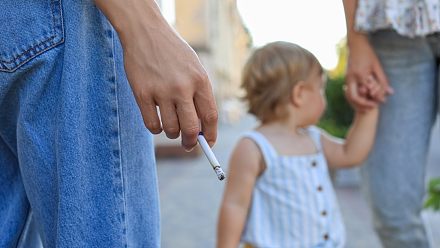
Representative Image: Canva
Dr. Kundra says, “Developing lungs are particularly vulnerable because children have an immature immune system, which can make the lungs more susceptible to chronic inflammation and respiratory infections. The cells of developing lungs are also undergoing rapid cell division and growth, and tobacco smoke can interfere with normal cell proliferation and differentiation. It may also hamper the antioxidant defences of the lungs, leading to greater oxidative injury.”
India recorded the second-highest number of people exposed to second-hand smoke globally in 2023, after China, according to the study.
Why Are Kids Lungs More Vulnerable To Tobacco Smoke?
Developing lungs are particularly vulnerable because children have an immature immune system, which can make the lungs more susceptible to chronic inflammation and respiratory infections. The cells of developing lungs are also undergoing rapid cell division and growth, and tobacco smoke can interfere with normal cell proliferation and differentiation. It may also hamper the antioxidant defences of the lungs, leading to greater oxidative injury.
Dr Kundra explains, “In addition, developing lungs have smaller and narrower airways, so exposure to tobacco smoke can cause more inflammation and mucus production, which may gradually lead to airway obstruction. There is also ongoing alveolar development after birth, and tobacco smoke can impair alveolar formation and lung growth, potentially resulting in reduced maximal lung function.”
The latest global analysis also found that second-hand smoke exposure was associated with several health outcomes, including asthma and lower respiratory infections. Among children, exposure was estimated to have contributed to millions of respiratory tract infections in 2023.
Representative Image: Canva
Can Tobacco Smoke Affect Lung Growth Without Symptoms?
Tobacco smoke can impair a child’s lung growth even when the child has no symptoms. It can silently injure developing lungs by reducing lung growth and interfering with normal airway and alveolar development. Long-term exposure can lead to reduced lung function, and children exposed to tobacco smoke may not reach the expected level of lung function in adolescence or adulthood.
According to Dr. Kundra, and this is one of the reasons childhood exposure can be difficult to identify. “Tobacco smoke can also cause subclinical inflammation and oxidative stress even before symptoms such as cough or breathlessness appear. It can increase the vulnerability of developing lungs to diseases such as asthma, respiratory infections and COPD later in life. Therefore, the absence of cough or breathing difficulty does not mean that the lungs have not been affected.”
This means parents should not use the absence of visible symptoms as evidence that exposure is harmless. Some effects may occur beneath the threshold at which a child or caregiver notices a respiratory problem.
What is Third-Hand Smoke?
Second-hand smoke is not the only concern inside a smoking environment. Tobacco residue can remain behind after the visible smoke has cleared. This is commonly referred to as third-hand smoke.
Representative Image: Canva
Dr. Kundra explains, “Third-hand smoke refers to tobacco residue that remains on surfaces even after smoking has stopped. These residues can persist on clothes, skin, carpets, curtains, furniture and inside cars. Smoke chemicals can also cling to a smoker’s clothes, hair and skin and then be transferred to children through close contact.”
“Opening a window or using ventilation may reduce smoke in the air, but it does not remove all the residues from surfaces. Young children frequently touch floors, furniture and other surfaces and put their hands in their mouths, which can expose them to these residues. Nicotine left on surfaces can also react with indoor pollutants and form harmful compounds.”
Dr Kundra highlights, “There is no safe smoking area inside a car or home. The best protection for a developing child is a completely smoke-free and tobacco-free environment, and children should not be exposed to second-hand or third-hand smoke.”
What Does 767 Million Children Exposed To Smoke Tell Us About The Scale Of The Problem?
The global figure shows that childhood exposure to tobacco smoke remains a widespread public health issue despite decades of tobacco-control efforts. Children cannot control the smoking environment at home or in places where people smoke, making home exposure particularly important.
While smoking is restricted in various public places, the home can remain a major source of exposure if someone smokes there. The problem is also largely preventable because second-hand smoke exposure can be eliminated by making homes, cars and other places completely smoke-free for children.
Dr. Kundra says, “Childhood exposure may not always cause acute symptoms, but it can impair lung development and contribute to problems later in life, including asthma, repeated respiratory infections and COPD. Second-hand smoke is equally harmful to a child as active smoking is to an adult, highlighting the need to provide children with a smoke-free environment.”
The study assessed exposure and associated disease burden across 204 countries and territories between 1990 and 2023. Second-hand smoke is emerging as a significant public health concern in India, with deaths attributed to passive smoking rising by nearly 50% over three decades, according to new research published in The Lancet Public Health.
In 2023, an estimated 325,600 people in India died from illnesses linked to second-hand smoke, up from 217,700 deaths in 1990. The findings underscore the continued health burden of tobacco smoke exposure, even as the overall proportion of people exposed has declined.
What Can Parents Do To Protect Children?
The most effective protection is straightforward: do not smoke around children and keep homes and cars completely tobacco-free.
For a developing child, there is no practical benefit in trying to identify a supposedly safer corner of the house or car for smoking. As Dr. Kundra points out, residues can remain on surfaces and clothing even after smoking has stopped.
With hundreds of millions of children exposed worldwide, reducing second-hand smoke exposure is also a preventable part of protecting respiratory health. A smoke-free home, car and caregiving environment can help ensure that children are not repeatedly exposed while their lungs are still growing.