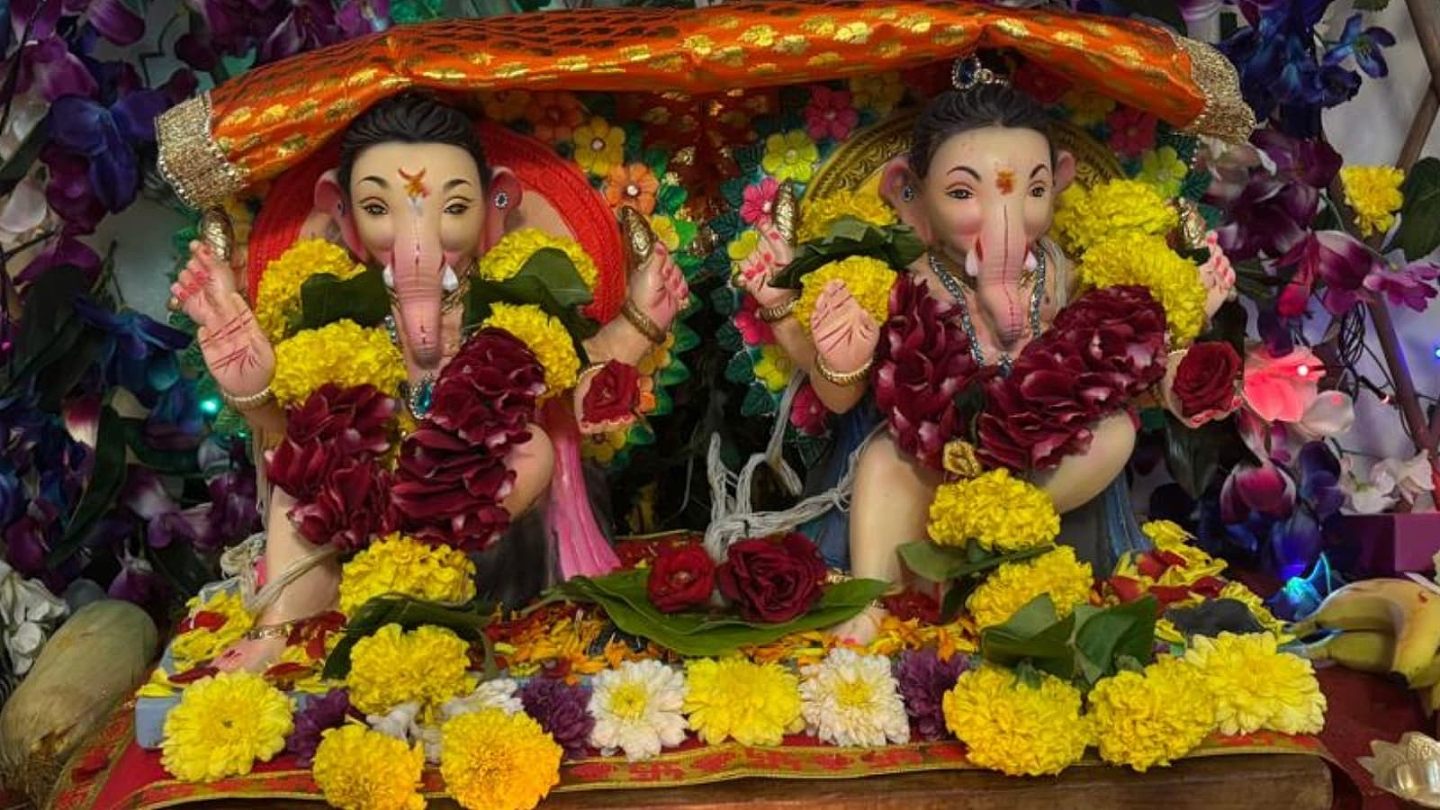
Jodi Ganpati: Why Some Maharashtra Families Worship Two Ganesh Idols
Ganesh Chaturthi in Maharashtra is celebrated through grand public festivities as well as intimate family traditions at home. While bringing home a single Ganesh idol is common, some families worship two idols together.
লেখক Nibandh Vinod··19K বার পড়া
Jodi Ganpati: Why Some Maharashtra Families Worship Two Ganesh Idols
Ganesh Chaturthi in Maharashtra is celebrated through grand public festivities as well as intimate family traditions at home. While bringing home a single Ganesh idol is common, some families worship two idols together. This practice is popularly referred to as Jodi Ganpati.
For families that follow it, the tradition can go back several generations. Parents pass it on to their children, who continue the same practice during Ganesh Chaturthi. Interestingly, some families know that their ancestors followed Jodi Ganpati but may not know exactly when or why the custom began.
Read More: Happy Ganesh Chaturthi 2026: 100+ Wishes, Messages, Greetings, Images And WhatsApp Status In English, Hindi And Marathi
There does not appear to be one universally accepted origin story for the practice. Instead, its significance seems to vary between families, making it an interesting example of how traditions are preserved through generations.
What Does Jodi Ganpati Mean?
Jodi Ganpati refers to the tradition followed by some families of worshipping two Lord Ganesh idols together during Ganesh Chaturthi.
Jodi Ganpati simply refers to two Ganesh idols worshipped together. During Ganesh Chaturthi, the idols are generally placed side by side in the family’s puja area.
For some households, the pair has been a familiar part of their Ganesh Chaturthi celebrations for as long as anyone can remember. The tradition may be associated with a particular family ritual, an ancestral practice or simply the way Ganesh Chaturthi has always been observed at home.
There is no need for every family to attach the same meaning to the two idols. Like many household customs, Jodi Ganpati can have a significance that is specific to the family following it.
Read More: Ganesh Visarjan 2026: When To Bid Farewell To Bappa After One And A Half Day
Why Do Some Families Worship Two Ganesh Idols?
The reasons can differ from one household to another.
In Indian families, many religious practices are passed down by watching and participating rather than through formal instructions. Children grow up seeing how their parents conduct a puja, decorate the shrine, prepare offerings and celebrate festivals. Over time, these practices become part of the family’s own way of observing important occasions.
Jodi Ganpati can follow the same pattern.
A family may have worshipped two idols for generations because that was the tradition followed by their parents and grandparents. Even if the original explanation is no longer remembered, the practice itself continues.
For such families, maintaining the tradition can become more important than knowing its exact beginning.
A Tradition Passed From One Generation To Another
The strongest thread running through Jodi Ganpati is continuity.
A custom followed by grandparents can become part of a child’s childhood memories. Years later, that child may continue the same tradition in their own home. The two Ganesh idols thus become more than just part of the festive decoration – they represent a link between generations.
This is particularly significant during Ganesh Chaturthi, when families come together for prayers, aarti, offerings and other rituals.
The practice may also travel with families when they move from one place to another. What began as a custom in an older family home can eventually become part of the next generation’s celebrations elsewhere.
Why Does The Tradition Continue?
For devotees who follow Jodi Ganpati, the answer may be quite simple: it is their family tradition.
Not every religious custom needs to have a widely known story attached to it. Some survive because generations of families choose to keep doing what their elders did.
That is what makes Jodi Ganpati an interesting part of Maharashtra’s festive culture. It reflects the personal side of Ganesh Chaturthi – the small rituals and customs that may not be part of the public celebration but remain deeply meaningful within individual homes.
The tradition also shows how India’s festivals continue to evolve through family practices. While the larger celebrations of Ganesh Chaturthi may be familiar to millions, individual households can have their own ways of welcoming Lord Ganesh.
For some, that means bringing home not one, but two Ganesh idols – a Jodi Ganpati tradition carried forward from one generation to the next.