International Chocolate Day 2026: How Indian Brands Are Challenging Global Giants
International Chocolate Day 2026: International Chocolate Day is an occasion to celebrate one of the world’s most loved treats while looking at how chocolate is evolving across markets. In India, the story is no longer l
লেখক Nibandh Vinod··13K বার পড়া
International Chocolate Day 2026: How Indian Brands Are Challenging Global Giants
International Chocolate Day 2026: International Chocolate Day is an occasion to celebrate one of the world’s most loved treats while looking at how chocolate is evolving across markets. In India, the story is no longer limited to imported labels and multinational confectionery companies. A growing group of homegrown chocolate makers is building a distinctive Indian identity around cacao, craftsmanship and regional flavours.
From bean-to-bar producers working with Indian farmers to premium brands experimenting with spices, coffee, fruits and indigenous ingredients, India’s chocolate landscape has become increasingly diverse. As consumers show greater interest in provenance, quality and artisanal products, Indian chocolate brands are finding new ways to compete with established global players.
International Chocolate Day: More Than Just a Celebration Of Chocolate
Chocolate has traditionally been associated with European confectionery traditions, but the ingredient itself has a much broader global journey. Cacao originated in the Americas before eventually becoming an important agricultural crop in tropical regions around the world.
India is also a cacao-growing country, with cultivation concentrated primarily in southern states. Over the years, improvements in farming, processing and chocolate-making have created opportunities for Indian companies to move beyond conventional mass-market confectionery.
That has helped fuel the emergence of India’s craft and bean-to-bar chocolate movement.
Instead of competing only on price or distribution, smaller chocolate makers are increasingly differentiating themselves through the origin of their cacao, production methods, flavour profiles and storytelling.
How Indian Chocolate Brands Are Changing The Market
The biggest shift is the move from chocolate as a generic packaged confectionery product towards chocolate as a premium food experience.
Homegrown companies are experimenting with several aspects of the product.
Indian Cacao Is Becoming Part Of The Story
India produces cacao, particularly in southern states including Andhra Pradesh, Karnataka, Kerala and Tamil Nadu.
For craft chocolate makers, locally grown cacao provides an opportunity to establish closer relationships with farmers and highlight the characteristics of different growing regions.
The result is a greater emphasis on cacao origin and traceability—concepts that have long been important in specialty coffee and are increasingly relevant to premium chocolate.
Regional Indian Flavours Are Creating Differentiation
One of the most interesting advantages for Indian chocolate makers is the country’s enormous culinary diversity.
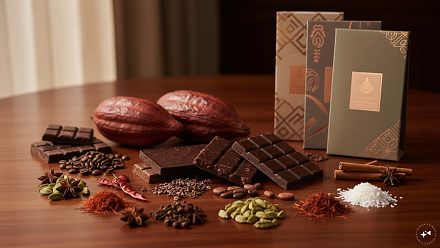
Chocolate can be paired with ingredients such as:
Cardamom
Coffee
Coconut
Chilli
Saffron
Sea salt
Sesame
Mango
Cashew
Indian spices
These combinations allow brands to create products that feel distinctly Indian rather than simply reproducing familiar international flavour profiles.
The strategy also reflects a wider consumer trend: premium products are increasingly expected to have a story, a sense of place and an identifiable point of difference.
The Rise Of India’s Bean-To-Bar Movement
The term bean-to-bar refers broadly to chocolate makers who have greater control over the process of transforming cacao beans into finished chocolate.
The process can involve sourcing cacao, roasting and cracking the beans, grinding and refining the chocolate, conching and finally tempering and moulding it.
This approach gives manufacturers greater control over flavour.
It also allows them to explore how cacao from different farms or regions behaves during chocolate production.
For consumers, this can mean chocolate with more complex flavour profiles than conventional mass-produced products.
Indian Chocolate Brands Are Finding A Premium Niche
Large multinational chocolate companies have major advantages: extensive distribution networks, established brands, substantial marketing budgets and enormous production capacity.
Homegrown chocolate companies cannot necessarily compete with those strengths on an equal footing.
Instead, many are targeting a different segment.
They are building their proposition around:
Premium ingredients
Small-batch production
Indian cacao
Craft manufacturing
Innovative flavours
Sustainable sourcing
Gift-oriented packaging
Direct relationships with consumers
This creates a different competitive equation.
The question is not simply whether an Indian craft chocolate maker can sell more chocolate than a multinational. It is whether the smaller company can persuade consumers that its product offers a different and more distinctive experience.
From Cocoa Farming To Finished Chocolate
The Indian chocolate ecosystem also highlights the importance of the farmer.
Cacao quality is influenced by factors including variety, climate, soil, harvesting, fermentation and drying.
Better post-harvest practices can significantly influence the quality of beans available to chocolate manufacturers.
For Indian craft chocolate companies, working closely with cacao growers can therefore become an important part of their business model.
The relationship potentially benefits both sides: farmers can gain access to buyers interested in quality and origin, while chocolate makers can develop products around specific cacao characteristics.
However, claims around farmer income, sustainability and ethical sourcing should always be assessed individually. Not every premium chocolate brand automatically has the same sourcing practices.
Why Consumers Are Looking Beyond Conventional Chocolate
India’s changing food culture is another factor behind the growth of premium chocolate.
Urban consumers are increasingly familiar with concepts such as:
Single-origin products
Dark chocolate
High-cacao chocolate
Artisanal production
Bean-to-bar chocolate
Ethical sourcing
Ingredient transparency
Social media has also made it easier for small food businesses to tell their stories directly to consumers.
A chocolate maker can now showcase its production process, introduce farmers, explain cacao origins and launch limited-edition flavours without relying exclusively on traditional advertising.
That has lowered some of the barriers that once made it difficult for small food brands to establish themselves.
Can Indian Chocolate Really Take On Global Giants?
The answer depends on what “take on” means.
Indian chocolate brands are unlikely to displace multinational companies in the mass-market segment simply by copying their products.
The more interesting opportunity lies in creating a strong Indian premium-chocolate category.
This is similar to what has happened in other speciality food sectors. Indian businesses have increasingly demonstrated that local ingredients and production traditions can be turned into premium products for both domestic and international consumers.
Chocolate offers a similar opportunity.
Instead of presenting Indian cacao as a substitute for imported cacao, homegrown makers can position it as something worth discovering in its own right.
The Global Opportunity For Indian Cacao
The international market presents both an opportunity and a challenge.
India has the potential to build recognition around its cacao-growing regions, but doing so requires consistency in farming, fermentation, drying, processing and quality control.
For chocolate makers, international expansion also means meeting regulatory, packaging, logistics and food-safety requirements in individual markets.
Brand recognition takes time.
A distinctive origin story can help, but ultimately the product has to deliver on flavour and quality.
International Chocolate Day And The Future Of Indian Chocolate
International Chocolate Day provides a useful moment to look beyond familiar confectionery names and examine how the category is changing.
India’s homegrown chocolate makers are not necessarily trying to win by becoming smaller versions of global giants. Their opportunity lies in doing something those giants cannot easily replicate at scale: telling a compelling story about Indian cacao, Indian ingredients and Indian craftsmanship.
The next phase of the industry could therefore be less about whether India can produce chocolate and more about whether it can establish a recognisable identity in the global premium-chocolate market.
For consumers, that means more choice.
For cacao farmers, it could create greater interest in quality and origin.
And for Indian chocolate makers, it offers the chance to turn a familiar indulgence into a product that carries a distinctly local identity.
International Chocolate Day: What Makes Indian Chocolate Different?
The emerging Indian chocolate story can broadly be summed up in three words: origin, flavour and craft.
Indian cacao gives makers a local foundation. Regional ingredients provide distinctive flavour combinations. Bean-to-bar and artisanal techniques allow manufacturers to focus more closely on quality and production.
Together, these elements are helping create a category that is increasingly separate from conventional mass-market chocolate.
That may ultimately be the biggest opportunity for India’s chocolate industry—not simply to compete with global giants on their terms, but to persuade chocolate lovers around the world to discover what Indian chocolate tastes like.