Chandra Grahan 2026: From Food To Sutak Kaal, Know The Do’s And Don’ts
The final lunar eclipse of 2026 is set to take place on August 28, bringing a striking partial lunar eclipse to the night skies across parts of the world. The eclipse will see a large portion of the Moon move into Earth’
লেখক Swati Chaturvedi··11K বার পড়া
Chandra Grahan 2026: From Food To Sutak Kaal, Know The Do’s And Don’ts
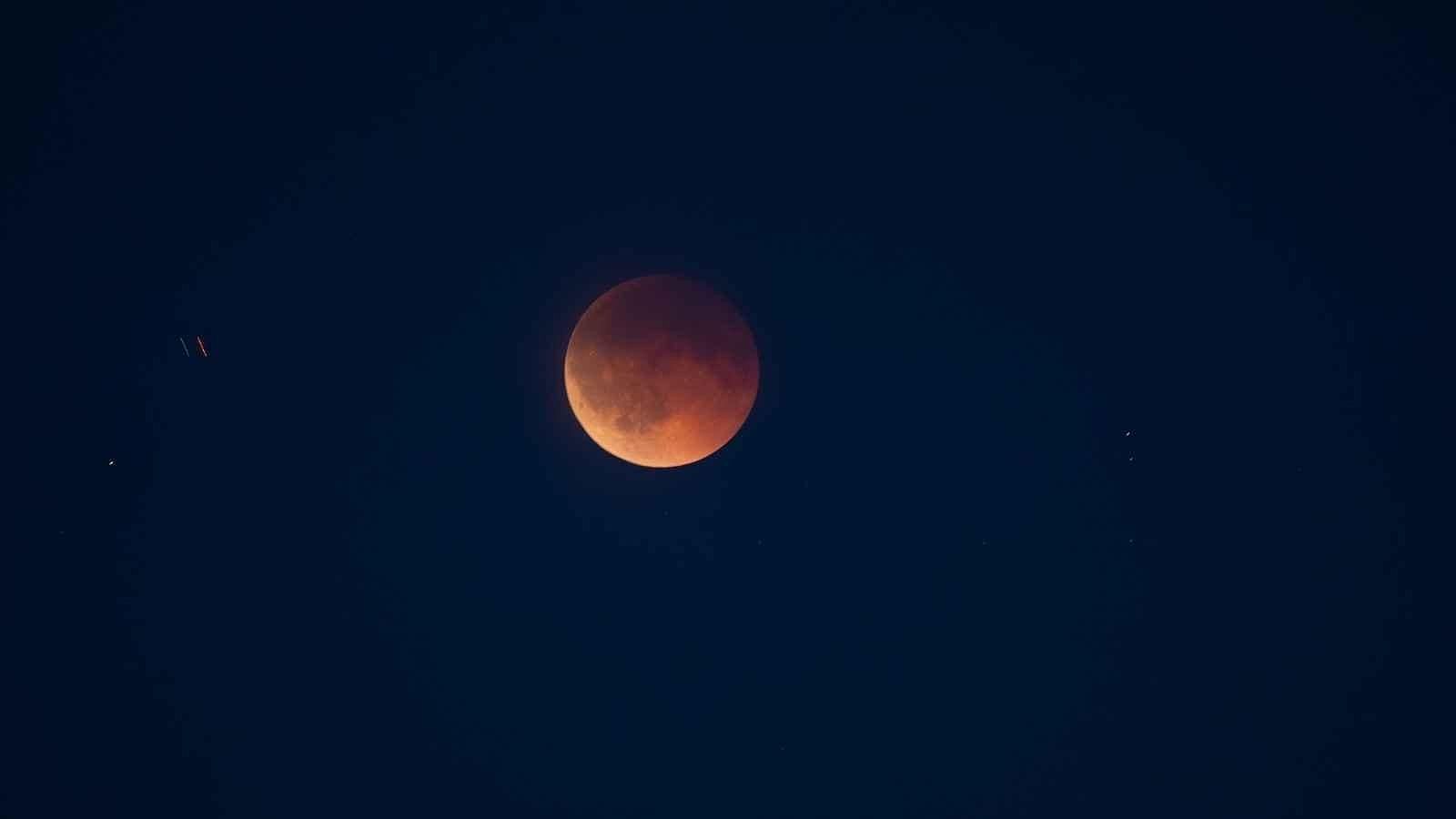
The final lunar eclipse of 2026 is set to take place on August 28, bringing a striking partial lunar eclipse to the night skies across parts of the world. The eclipse will see a large portion of the Moon move into Earth’s darkest shadow, creating a dramatic reddish appearance around the peak.
According to NASA, the August 28 event is a partial lunar eclipse, with the eclipse reaching its maximum at around 04:14 UTC. The partial phase will last approximately 3 hours and 18 minutes, while the complete eclipse event, including the penumbral phases, will last around 5 hours and 38 minutes.
However, there is an important point for Indian readers: the August 28 lunar eclipse will not be visible from India, including Delhi, because the Moon will remain below the horizon during the event.
Despite this, the eclipse has generated interest in India because it falls on the same day as Raksha Bandhan. For those who follow Hindu traditions, this has also led to questions around Sutak Kaal and the dos and don’ts traditionally associated with a Chandra Grahan.
So, what should you keep in mind?
What Is A Lunar Eclipse?
A lunar eclipse occurs when the Earth moves between the Sun and the Moon, causing Earth’s shadow to fall across the Moon.
Unlike a solar eclipse, a lunar eclipse is completely safe to observe with the naked eye. During a partial lunar eclipse, only part of the Moon moves through Earth’s darkest shadow, or umbra. The rest remains illuminated by sunlight.
The August 28 eclipse is particularly interesting because it is a deep partial lunar eclipse. At its peak, around 93% of the Moon’s diameter will be covered by Earth’s umbra, giving it a reddish or coppery appearance in regions where the eclipse is visible.
Lunar Eclipse 2026: Do’s To Keep In Mind
1. Follow Your Family’s Traditional Practices If You Observe Them
In Hindu traditions, lunar eclipses are often associated with specific rituals and restrictions. Some families observe Sutak Kaal before the eclipse and avoid certain activities during this period.
These practices are religious and cultural traditions, rather than scientifically established health rules.
If observing them is important to you or your family, follow the customs that are part of your tradition.
2. Take A Bath After The Eclipse If It Is Part Of Your Tradition
Taking a bath after an eclipse is a traditional practice in several Hindu households. Some people also change into clean clothes afterwards.
This is traditionally understood as a ritual of purification.
There is no scientific requirement to bathe specifically because of a lunar eclipse, but there is also no harm in taking a normal bath if it is part of your personal or family practice.
3. Clean The Puja Space
Some Hindu traditions recommend cleaning the home or puja area after the eclipse and restarting regular worship practices.
You can treat this as a spiritual or cultural ritual rather than a scientific necessity.
4. Chant Mantras Or Meditate
Many people choose to spend the eclipse period in prayer, meditation or mantra chanting.
If you find these practices calming, there is no reason not to continue them. Meditation and mindful breathing can be useful relaxation practices regardless of whether an eclipse is taking place.
5. Watch The Eclipse Safely If You Are In A Visible Region
For anyone in an area where the eclipse is visible, there is no special eye protection required for viewing a lunar eclipse.
Unlike a solar eclipse, looking at the Moon during a lunar eclipse is safe with the naked eye. Binoculars or a telescope can also be used to get a closer view.
For Indian readers, however, the August 28 eclipse itself will not be visible from the country.
Lunar Eclipse 2026: Don’ts To Keep In Mind
1. Don’t Treat Religious Beliefs As Scientific Facts
One of the biggest things to remember during an eclipse is the difference between tradition and science.
You may hear claims that an eclipse makes food poisonous, causes illness or has direct physical effects on people. There is no scientific evidence that a lunar eclipse makes normally safe food toxic or harmful.
If you choose to follow traditional food restrictions, that is a matter of personal or religious practice.
2. Don’t Avoid Food Because You Fear The Eclipse
Some traditional practices recommend fasting during an eclipse or avoiding food during Sutak Kaal.
There is no scientific evidence that eating during a lunar eclipse is inherently dangerous.
People who need regular meals, particularly children, older adults or anyone with a medical condition should not skip food because of an eclipse without appropriate medical advice.
3. Don’t Believe That You Need Special Protection From Moonlight
A lunar eclipse does not make moonlight dangerous. The Moon is simply passing through Earth’s shadow. There is no special radiation from a lunar eclipse that requires people to stay indoors.
4. Don’t Look For An Eclipse Effect On Your Health Without Evidence
Eclipses have inspired many beliefs around physical and emotional health, but an astronomical eclipse does not automatically cause illness, pregnancy complications or other health problems.
If you experience a genuine health concern, treat it as a health concern rather than assuming it is caused by the eclipse.
5. Don’t Miss The Chance To Understand The Science
Even if you follow the traditional side of Chandra Grahan, the eclipse itself is a fascinating astronomical event. The reddish colour sometimes seen during a lunar eclipse occurs because sunlight passes through Earth’s atmosphere before reaching the Moon. Blue wavelengths scatter more easily, while longer red and orange wavelengths are more likely to reach the lunar surface.
What About Sutak Kaal?
Sutak Kaal is a traditional period associated with eclipses in some Hindu communities. It is often described as beginning before the eclipse and is accompanied by practices such as avoiding food, cooking or certain religious activities.
However, there is no single universal practice followed by every Hindu family, and traditions can vary according to region, community and religious custom.
There is also an important distinction for this particular eclipse: because the August 28 lunar eclipse will not be visible from India, several reports note that traditional observance may differ depending on the school of practice followed.
If your family follows a specific tradition, it is best to follow the guidance of your family’s religious tradition or trusted spiritual authority rather than social-media forwards.
Lunar Eclipse 2026: The Bottom Line
The August 28 lunar eclipse is an impressive astronomical event, but it doesn’t need to be surrounded by fear. For those observing Hindu traditions, prayer, meditation, fasting or purification rituals can be followed as matters of personal faith and culture. From a scientific perspective, however, there is no reason to fear the Moon, moonlight or the eclipse itself.
And because this particular eclipse will not be visible from India, Indian sky-watchers will have to wait for another opportunity to observe a lunar eclipse from home.
For now, the simplest takeaway is this: respect your traditions, separate belief from scientific fact, and don’t let eclipse-related misinformation create unnecessary fear.