League With A Larger Purpose: SA20 COO Lynn Naude On League's Impact In South Africa | Exclusive
When Lynn Naude joined SA20, the opportunity was not simply to help launch another franchise cricket competition. South Africa had watched the global T20 landscape expand rapidly, but establishing a league of its own mea
بقلم Feroz Khan··45K قراءة
League With A Larger Purpose: SA20 COO Lynn Naude On League's Impact In South Africa | Exclusive
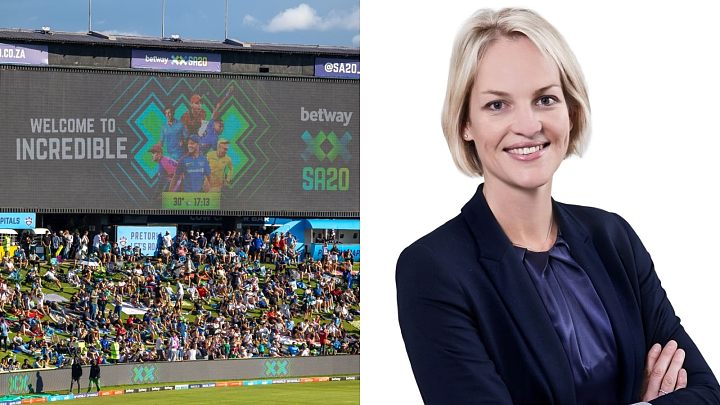
When Lynn Naude joined SA20, the opportunity was not simply to help launch another franchise cricket competition. South Africa had watched the global T20 landscape expand rapidly, but establishing a league of its own meant addressing a broader challenge: attracting spectators to the game, creating a commercially viable property, giving domestic players a platform to develop and ensuring that the benefits extended beyond the boundary.
Four seasons later, SA20 continues to establish a considerable following, with its six franchises drawing strong crowds across South Africa and attracting some of the leading names in international cricket. The fourth season (December 2025-January 2026) saw 22 of its 34 matches sell out, while the league’s latest independent economic impact assessment put its contribution to South Africa’s gross domestic product at $406 million, an increase of 23 per cent over the previous season.
It also created or sustained 9,470 annualised jobs, according to figures reported recently.
For Naude, however, the significance of the league’s progress extends well beyond its commercial performance. The return of South African supporters to cricket, the opportunities created for young professionals and the growing interest among children are among the developments she considers particularly meaningful, even if their long-term value cannot always be expressed in financial terms.
“I think that everything I’ve done before SA20 has set me up for this particular role,” Naude tells News18. “I started my career at the ICC, and I had been watching the growth of franchise cricket. I’ve seen a couple of the trials by Cricket South Africa previously, so I knew it was probably imminent for South Africa to launch its own league.”
“I was fortunate that the timing was right for me to come on board and work with Graeme (Smith). The privilege of building something from the ground up is unique in a career, and that’s exactly the opportunity this gave me. So that was very attractive to me,” she adds.
The role brought together her experience across sport, business and major events at a time when franchise cricket was becoming an increasingly important part of the international calendar. Building SA20 from its inception also meant working across functions that extend well beyond the cricket itself, from regulations and player recruitment to commercial partnerships, production, event operations and long-term strategy.
Naude says the volume of work involved in delivering a major competition was one of the biggest professional learning curves, particularly because much of the work happens outside the tournament window.
“We’re a very small team. There are only 20 of us delivering this, and we were a lot smaller in the first season. I think the greatest learning curve for me has actually been the volume of work throughout the year that is required to show up in January and February.
“A lot of people think it’s something you do in three months, but straight after the tournament is done, you start working on regulations for the next season, player retention, and all those things as you build towards the auction. Trying to juggle the volume of work in my role and across all the functions that I pull together has definitely been a learning curve. That was something I perhaps wasn’t as prepared for as I could have been.”
The league’s development has since changed the nature of her responsibilities. With the operational foundations in place, the focus increasingly falls on improving efficiency, investing in technology, identifying new commercial opportunities and determining how SA20 should position itself within a global cricket calendar that continues to evolve.
“As we grow, there are obviously new areas of growth. Whilst the foundations are in place and the building part is fairly solid, I think it’s about looking at some of the new things, whether that is improving efficiencies, investing in different technologies to increase our output, or looking at the strategic plan going forward, considering the changing global landscape of cricket and what our role in that is.
“There’s more focus for me from a strategic point of view as well, but I’m also a big believer in continuing to nurture the basics. That’s a discipline we need to maintain in the business, making sure that the things that have made us successful and helped us become who we are do not lose our attention.
“Protecting the core is strategically very important for us, while looking for new opportunities and global best practices keeps me busy in this next phase of SA20’s growth.”
Beyond the numbers
SA20’s economic contribution has become a more prominent part of the league’s story as its audience and commercial operations have expanded. The Season 4 assessment recorded, as per a report, $406 million in GDP contribution, $137 million in direct expenditure and $106 million in household income generated through the tournament, while the number of annualised jobs created or sustained rose by 16 per cent from the previous season.
These figures reflect activity across the six host cities, including spending associated with matches, employment and the businesses involved in delivering the competition.
Naude believes the league’s influence can also be seen in how cricket organisations, venues and suppliers have developed their capabilities through their association with SA20.
“If I look at our cricket ecosystem, whether that is Cricket South Africa or the different venues, I can see that the ways of working look different. There’s a different sense of pride in cricket as a product, and I think SA20 has positively contributed to the stakeholders it works with across the industry.
“If I look at our supplier base, the agencies and the teams that help us deliver this tournament across those 34 days, many of them have gone on, after being showcased at SA20, to win new business. Similar to how players are showcased and given a platform to demonstrate what they are capable of, stakeholders within our ecosystem, including suppliers, have positively benefited from working with SA20, and their businesses have grown.
“There are also ideas around how venues and stadiums operate that have translated really well and are now being picked up by the domestic cricket environment.”
The economic impact is measurable, but the speed with which supporters embraced the league was less predictable. Naude says she had expected it to take two or three seasons to develop the sort of connection between the competition, its franchises and their supporters that emerged during the inaugural edition.
“The player piece has been particularly rewarding for me. This happens completely off the field, but when some of those South African players come to you and just say that they feel they can breathe again, I think that’s been fantastic.
“Social media has been amazing, and our franchises are really good at it as well, but the general growth, perhaps the speed with which we grew, has probably surprised me the most. I didn’t expect the kind of reception we had from fans in the first season, and I didn’t expect that affinity between fans and their different teams, as well as the SA20 product itself, to develop quite so quickly. I thought it would take us two or three years to get to where we were by the end of Season 1.
“It probably comes down to how quickly the South African fan took to SA20 and how that connection has continued to build season after season.”
It is that renewed connection with the game that Naude considers one of the league’s most important achievements. The competition has given South African cricket another platform through which to engage established supporters while introducing the sport to children who may otherwise have had fewer opportunities to experience professional cricket in a stadium.
“For me, it really is about the return of South African cricket fans to the game. South Africa went through a tough time in the cricket space, and fans were not really supporting the game. Having worked in cricket for as long as I have, being able to play a small role in bringing back what we call the dormant fan has been highly rewarding, even if that value is difficult to measure tangibly.
“I also think about introducing cricket to 8–12-year-olds. After four seasons, if you were six years old when you attended Season 1, you’re now around 10 or 11, and your journey with SA20 has been a very positive one. Those are probably the two things that have been the most rewarding for me, although they are not necessarily things we can value tangibly.”
The emphasis on younger audiences has also found expression in Schools SA20, the national competition launched in partnership with Cricket South Africa in 2024. Its inaugural edition brought together hundreds of boys’ and girls’ school teams, with the programme designed to widen participation, strengthen the talent pipeline and create a more inclusive pathway into competitive cricket.
The benefits of that investment may take years to become fully apparent, but Naude believes the league can help strengthen the sporting workforce in ways that extend beyond the development of players. A competition of this scale requires photographers, broadcasters, media managers, event operators, analysts and other professionals whose skills can subsequently be applied across the industry.
“One of our pillars is to be a tournament or sports property with the power to do good, and one of the subsections of that is to expose as many young learners or young people in the industry to our industry as possible. One of the positives about growth is that, as we get bigger and there is more to do, there are more opportunities.
“We launched a photography internship programme in Season 2, which is by application, and we have hundreds and hundreds of young people applying. Those who are successful not only work on the league, but we also tend to use them at our school tournaments.
“Similarly, with some of the young people who started with us in Season 2 in entry-level roles, there is an opportunity for us to promote them. I also think about people who leave our organisation or spend some time with us as contractors and then go on to join the NBA or SA Rugby. Having worked at SA20 and having that experience on your CV is a positive for you.
“I do think we can positively impact the broader sporting workforce, and we’ve been intentional about it as well in the lead-up to the World Cup. The World Cup is obviously going to take a lot of people to deliver. If we’re able to train a few more media managers and event operations professionals, I think that’s going to bode well for the World Cup as well.”
Women in cricket administration
Naude’s role also places her among the women holding senior decision-making positions in a sport where leadership has historically been dominated by men. She acknowledges that representation remains limited at the highest levels of cricket administration, although she believes the wider management structure of the industry offers grounds for optimism.
“I think that, right at the top, there aren’t that many women represented. It really is about leadership across the cricket world giving more women an opportunity. But what I can say is that, when you look at the next level of management in many of these businesses, there’s normally pretty good representation from a women’s point of view.
“If I look at SA20 as an example, I’m in my role, our chief financial officer is a woman, our head of marketing is a woman, our head of communications is a woman, and our head of event operations is a woman. Our core senior leadership team that stages this competition is predominantly women, and that’s something we’re very proud of.
Naude underlines an important distinction between creating opportunities at entry and middle-management levels and ensuring that women are also represented in positions where strategic and commercial decisions are made. Her experience at SA20 indicates that building a diverse leadership team can be part of the organisational structure rather than a separate initiative, although the broader cricket industry still has work to do to make such representation more widespread.
“We’ve got to keep pushing. I think there is definitely a shift across the cricket ecosystem, and I can see it at ICC events as well, with more women coming into those roles, not only within cricket organisations but across the global cricket landscape. Perhaps those who come after me will have slightly different opportunities, but within SA20, this has been a focus for us, and, as I said, our senior leadership team is very strong in terms of women’s representation.”
View this post on Instagram
A post shared by Betway sa20 (@sa20_league)
Sponsorship, tourism and the Indian opportunity
As SA20 looks towards its fifth season, sponsorship remains one of the most immediate opportunities for commercial growth. Naude says the league and its franchises are seeing interest from South African companies that have not traditionally invested in sports sponsorship, while the experience accumulated over four seasons gives prospective partners a clearer picture of the audience and commercial value they can expect.
“I think it’s a little bit of a combination of things, but sponsorship is a very real opportunity for us. What we’ve seen, both for ourselves and for the franchises, is a lot more interest from corporate South Africa in sponsorship as a marketing tool.
“It’s been quite rewarding to see brands that have not traditionally been involved in sponsorship, whether in cricket, football, rugby, netball or any other sport, starting to make their first foray into sponsorship through SA20 or its franchises. That’s something that is moving in an upward trend all the time.
“The second thing is that, when it comes to renewals, you’ve obviously now got four years behind you and a proven concept, which makes those discussions a little easier. Tourism is a definite opportunity as well. With the World Cup happening next year, there are a couple of markets, including the UK and India, that are very well suited to travelling to South Africa to watch cricket, especially during the heart of our summer season, when a visit can be combined with so many other great travel experiences.
“I think it’s going to be a combination of everything, but increased sponsorship investment, which we’re seeing, and the tourism opportunity are both there.”
India occupies a particularly important place in that strategy, given the country’s cricket audience, the involvement of Indian-owned franchises in SA20 and the existing cultural connection between the two countries through the sport.
Naude sees considerable potential in attracting more Indian visitors to South Africa, with cricket providing a natural link between the two countries. While SA20 cannot yet establish how many tourists first discovered the country through the league, she says there is genuine interest in South Africa as a destination and points to efforts to make travel easier for Indian visitors.
“We work very closely with Wesgro, the tourism and investment promotion agency in the Western Cape, and with South African Tourism. Our government has been very intentional about trying to remove as many hurdles as possible for Indian travellers. They introduced a new electronic visa system about 18 months ago, where your visa can sometimes be turned around electronically in five days or less, and that has removed a significant hurdle for Indian travellers.
“Discussions are also under way around the possibility of a direct flight. There used to be one when I was a lot younger, but if we can get a direct flight operating between India and South Africa, I think that will ease travel again.
“Government has definitely recognised India as a key area of growth, and cricket is a very natural connector between our two countries. When you put those two things together, I think there’s a very real opportunity.”
There has been a subsequent development on the visa front. South Africa officially launched its Electronic Travel Authorisation system following an earlier pilot that included India. The system is intended to make visa processing faster and more accessible, strengthening the country’s ability to attract international visitors.
The direct-flight question remains relevant to the wider tourism opportunity because easier travel can influence whether supporters choose to attend matches in South Africa or combine a cricket trip with a longer holiday. For SA20, the challenge is to turn the visibility generated by its Indian broadcast audience into measurable tourism activity, working with the relevant tourism bodies and franchise partners rather than assuming that increased television viewership will automatically translate into visitors.
Building on the IPL without copying it
The IPL is an unavoidable benchmark for franchise cricket, not least because the six SA20 franchises are backed by ownership groups associated with IPL teams. The competition’s owners include groups behind Chennai Super Kings, Mumbai Indians, Rajasthan Royals, Sunrisers Hyderabad and Lucknow Super Giants, as well as the co-owners of Delhi Capitals.
View this post on Instagram
A post shared by Betway sa20 (@sa20_league)
Naude does not believe that South Africa needs to reproduce the IPL’s trajectory to establish a successful competition of its own. The more relevant test, in her view, is whether SA20 can strengthen the domestic game, develop players capable of competing consistently at the highest level and cultivate a new generation of supporters.
“You’re maybe not going to replicate it. I think the IPL is a genuinely fantastic case study across all areas. What we are seeing, though, is not only young cricketers wanting to play cricket, but young people choosing cricket as a game.
“We’ve launched Schools SA20 and a derby series here, where the top cricketing schools, both boys and girls, are playing. More than 600 schools participate in that, and we can see the interest in the number of schools that want to enter.
“The love for cricket is starting to have a ripple effect across the ecosystem, particularly in terms of the bench strength of South African cricketers and South African cricket as a whole, especially in the shorter format of the game, so that the country can compete consistently at a global level. That’s definitely something we will look to emulate, and we’re starting to see green shoots around it.
“From a cricket ecosystem point of view, I think the fans returning to the game and their love of cricket as a sport are particularly encouraging, especially when we look at young fans who will become our future fans. There’s also a general betterment of the broader cricket ecosystem, with more investment going in and more pride. I think that will have a positive knock-on effect, with SA20 acting as a catalyst in that space.”
The school competition is one part of that broader strategy, while the professional league gives South African players opportunities to perform alongside international cricketers and work with experienced coaches. Season 4 also showed the competition’s ability to provide a platform for emerging talent, with 19-year-old Nqobani Mokoena earning a Proteas call-up after an eye-catching debut season.
SA20’s fifth season is scheduled to begin on January 17 next year when defending champions Sunrisers Eastern Cape face Pretoria Capitals at St George’s Park in Gqeberha. The final is scheduled for February 21 at Newlands in Cape Town.
The league is entering that season with a stronger audience base, a more established commercial proposition and an increasingly visible development pathway for South African players and sporting professionals. Its next challenge will be to sustain that momentum while balancing commercial growth with affordability, investment in local talent and the demands of an increasingly crowded global cricket calendar.
For Naude, the task is not simply to keep expanding the tournament, but to make sure that its growth continues to benefit the sport and the people working within it. The return of fans, the opportunities for young professionals and the renewed interest in cricket among children may not always be the most immediately visible measures of success, but they are central to her understanding of what SA20 can become.