'Satya Ghatna Par Aadharit': Delhi Woman Declines '48 LPA' Marriage Proposal After Being Asked To Quit Her Career; Internet Reacts
A Delhi woman’s candid LinkedIn post about rejecting what she sarcastically described as a “48 LPA offer” has gone viral online. The catch? It wasn’t a high-paying job but a marriage proposal that allegedly came with a l
بقلم Sakshi Arora··34K قراءة
'Satya Ghatna Par Aadharit': Delhi Woman Declines '48 LPA' Marriage Proposal After Being Asked To Quit Her Career; Internet Reacts
A Delhi woman’s candid LinkedIn post about rejecting what she sarcastically described as a “48 LPA offer” has gone viral online. The catch? It wasn’t a high-paying job but a marriage proposal that allegedly came with a long list of expectations, sparking a debate on dreams and careers.
The post was shared by LinkedIn user Shaifali Bansal, who revealed that the prospective groom’s family expected her to leave behind her professional ambitions and devote herself entirely to household responsibilities after marriage.
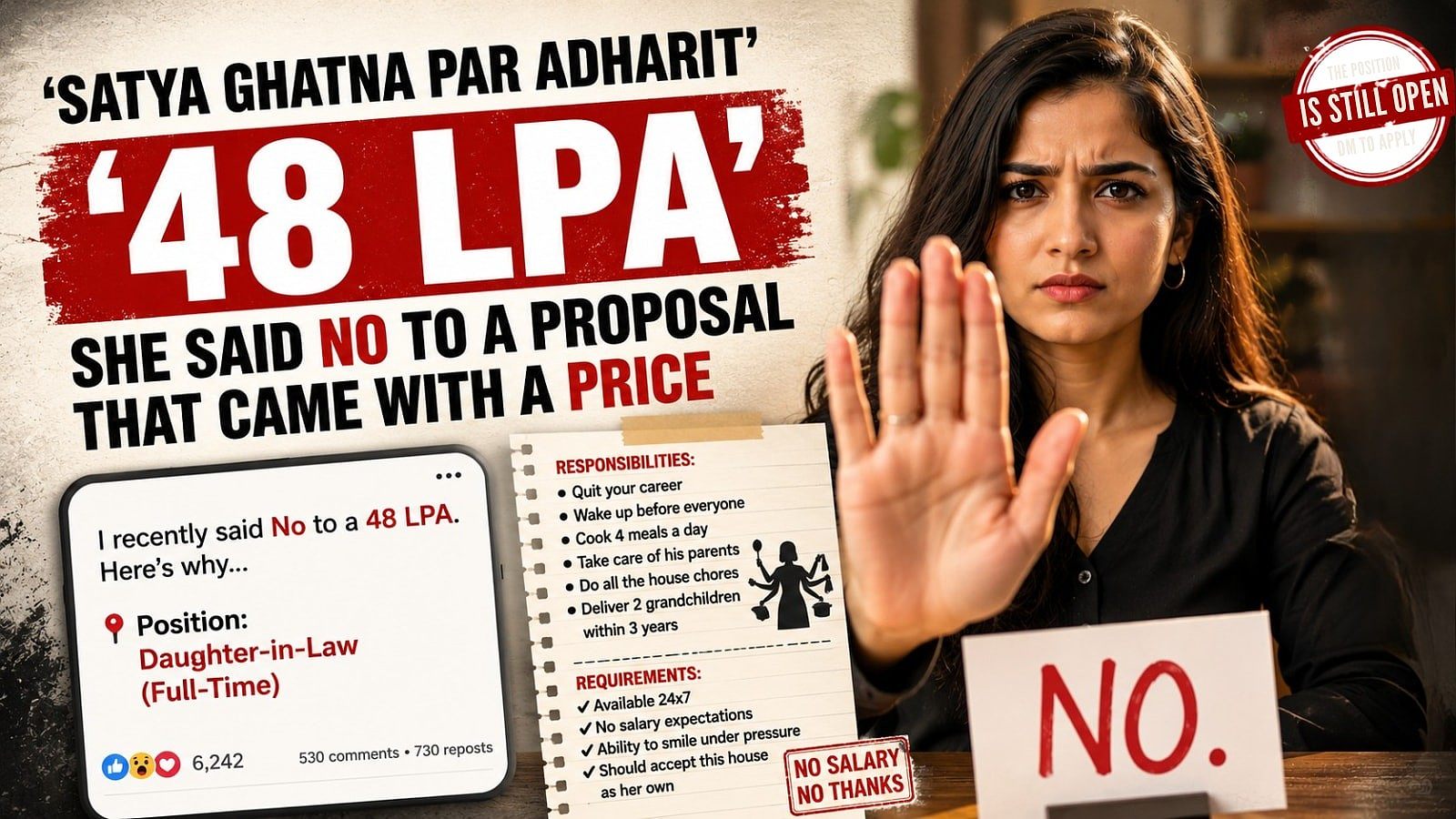
Sharing the experience in a satirical job-description format, Bansal wrote that she had recently declined a “48 LPA” opportunity before revealing the real nature of the offer.
The mock listing described the role as “Daughter-in-Law (Full-Time)” and outlined an extensive list of responsibilities.
These allegedly included quitting her career and personal aspirations, waking up before everyone else in the house, sleeping only after everyone had retired for the day, managing household chores, cleaning the house twice daily, washing dishes without the help of domestic staff, caring for her in-laws, cooking four meals a day along with evening snacks, preparing tea three times daily, handling laundry, decorating the house, distancing herself from her own family, and having two children within three years.
The “requirements” further stated that the candidate should consider the house as her own, preferably hold a postgraduate degree, be available 24×7, possess strong multitasking skills, smile under pressure, and, despite being well-qualified, expect no salary.
“I declined,” she wrote before adding that the incident was “100% real.” Ending the post on a humorous note, she remarked that the “position is still open” and invited interested applicants to send her a direct message.
She also clarified that the post was inspired by her personal experience as a woman while acknowledging that men, too, have their own challenges and expectations in the marriage process.
To continue the discussion, Bansal later asked people in the comments, “Whether you’re a man or a woman, have you ever received a proposal with unrealistic expectations? What’s the most surprising one?” She also added, “Respectful opinions are always welcome. Different experiences make the discussion more meaningful.”
The post quickly gained traction on LinkedIn, with users sharing personal experiences and debating whether such expectations still persist in modern Indian marriages.
“If I were in your place, I would do the same. It’s better to remain single than to do gadhee mazdoori in someone else’s home,” said one user.
Another user urged people not to stereotype families based on one experience, writing, “Men are also progressive nowadays, and even the families. Zaroori nahi hai ke sabka mentality aisa hi ho… It’s a request not to generalize.”
A third commenter praised her choice, saying, “Shaifali Bansal , I genuinely appreciate your decision. No one should have to surrender their dreams for a marriage that isn’t built on mutual respect. Marriage is not just a social label. It’s a partnership based on understanding and shared responsibility.”
Some users also injected humour into the conversation. “Who’s paying 48 LPA for this? I mean reverse annual dowry start hogayi kya?” joked one commenter.
Another user emphasised the importance of equality in relationships, writing, “You did it right. Respect and efforts should be mutual… And in any relationship this is most important thing, if someone is expecting anything from you then you have the same power… Mutual respect and mutual understanding, very important.”