Mumbai Airport T2’s Touchless Washrooms Draw Attention: How Do The Smart Taps And Doors Work? | WATCH
Mumbai News: From check-in counters to boarding gates, airports see thousands of passengers move through shared spaces every day. At Mumbai’s Chhatrapati Shivaji Maharaj International Airport (CSMIA), Terminal 2, touchle
بقلم Parishmita Saikia··64K قراءة
Mumbai Airport T2’s Touchless Washrooms Draw Attention: How Do The Smart Taps And Doors Work? | WATCH
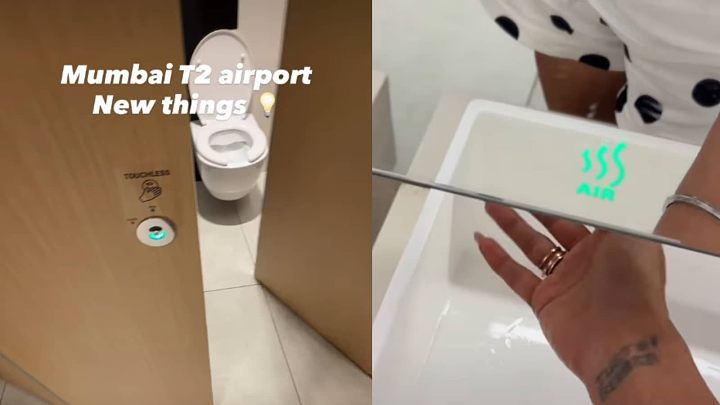
Mumbai News: From check-in counters to boarding gates, airports see thousands of passengers move through shared spaces every day. At Mumbai’s Chhatrapati Shivaji Maharaj International Airport (CSMIA), Terminal 2, touchless washroom features are drawing attention for their potential to make everyday facilities more convenient and reduce contact with commonly used surfaces.
The features include sensor-operated taps and touch-free door systems. While the technology may seem like a small addition, it can make a difference in busy washrooms where passengers are constantly coming and going.
However, the conversation goes beyond the technology itself. Reactions to the initiative have also raised questions about whether modern fittings alone can keep public washrooms clean, or whether their success depends just as much on how people use them.
How Do Mumbai Airport’s Touchless Washroom Features Work?
The idea behind a touchless washroom is simple: reduce the number of surfaces passengers need to handle.
Sensor-operated taps: These taps use sensors to detect a person’s hands beneath the spout. Water starts flowing automatically when the hands enter the sensor’s detection area and stops when they are moved away. Unlike conventional taps, users do not need to turn a handle or press a knob to start or stop the flow. Apart from reducing contact with a shared fixture, the system can help prevent water from running unnecessarily when someone walks away without closing a tap.
Touch-free doors: Depending on the design, these systems may use motion sensors to open automatically or allow entry and exit without requiring users to grasp a shared handle. The exact mechanism can vary, but the purpose is to reduce direct contact with frequently handled surfaces. These features can be particularly useful in high-footfall locations such as airports, where washrooms are used throughout the day by passengers arriving from different cities and countries.
However, touchless does not mean completely contact-free. Passengers may still need to touch other fixtures, and sensor-based systems themselves require regular maintenance and cleaning.
Why Are The Washrooms Being Upgraded?
The touchless features form part of a wider washroom refurbishment programme at Terminal 2.
In an April 2025 submission to the Airports Economic Regulatory Authority of India (AERA), Mumbai International Airport Limited proposed renovating 41 passenger washroom blocks at Terminal 2. The airport operator said the facilities had experienced deterioration of fittings and fixtures because of heavy usage, while plumbing wear and concealed leakages had also complicated maintenance.
The proposal included upgraded fittings and technology associated with smart washrooms, such as touchless systems and smart mirrors.
View this post on Instagram
A post shared by SIMRAN KAUR (@the.kaur_)
AERA’s assessment recommended a phased approach, prioritising high-footfall arrival areas. The airport operator subsequently reported placing an order for the refurbishment of 41 sets of passenger washrooms.
The wider project is intended to improve the condition and functionality of facilities used by large numbers of travellers. Touchless technology is one element of that effort, rather than a replacement for routine cleaning and maintenance.
Water Conservation Is Also Part Of The Picture
The airport’s sustainability measures include several technologies designed to reduce water consumption.
CSMIA has reported using waterless urinals across its terminals, tap aerators in washbasins and flow reducers in jet sprays. Sensor taps are another way of limiting unnecessary water flow by dispensing water only when required.
The airport operator has also reported recycling treated wastewater for uses such as flushing, cooling and landscaping.
These initiatives aim to ensure washrooms can serve large numbers of passengers efficiently while conserving fresh water. However, their success depends on proper installation, regular maintenance and responsible use.
What Are People Saying About The Initiative?
The touchless washroom concept has prompted a mix of positive reactions and practical concerns in online discussions. Some users have welcomed the initiative, describing it as a useful step towards more modern public facilities. But not everyone is convinced that technology alone will solve the problem of dirty public washrooms. Some have raised concerns about civic sense, with social media users questioning whether people will keep the facilities clean even when modern fittings are available.
Others have pointed to a more immediate challenge: passengers who have never used sensor-operated taps or automatic doors may not know how they work. Clear instructions and signage could help prevent confusion, particularly for first-time users.
Some comments also express concern that people may continue to misuse or dirty the facilities despite the upgrades.
Can Touchless Technology Keep Public Washrooms Clean?
Touchless fittings can reduce contact with certain shared surfaces and may help limit unnecessary water use. But they are not a substitute for cleaning, maintenance or responsible behaviour. Washrooms still need regular disinfection, functional plumbing, prompt repairs and adequate supplies. Sensor taps and automatic doors also need to be maintained so that they work reliably and do not become a source of inconvenience.
Passengers, meanwhile, can help by using the facilities responsibly, disposing of waste properly and leaving washrooms in a condition that others can use comfortably.
Ultimately, the success of Mumbai Airport T2’s washroom upgrades will depend on more than the technology installed. Better design can improve the experience, but cleanliness also relies on consistent maintenance and the people who use the space.