Entrepreneur Who Had Overseas Study Offers Shares Why He Chose To Stay In India: ‘Country Is More Than…’
As more Indians weigh the benefits of working abroad against the challenges of visa rules and life away from home, entrepreneur R Subash has shared why he chose to build his career in India. Despite having chances to stu
بقلم Buzz Staff··53K قراءة
Entrepreneur Who Had Overseas Study Offers Shares Why He Chose To Stay In India: ‘Country Is More Than…’
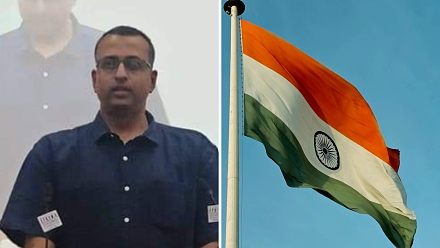
As more Indians weigh the benefits of working abroad against the challenges of visa rules and life away from home, entrepreneur R Subash has shared why he chose to build his career in India. Despite having chances to study overseas, he stayed and started a business, facing several hurdles along the way.
Looking back on his 17 years as an entrepreneur, Subash said his choice was about more than money or career growth. His connection to India, its culture and the feeling of belonging all played a part in his decision.
Subash Chose To Study And Build His Career In India
Subash said he first thought about moving abroad when he was in middle school. After taking the SAT in 2003, he received admission offers from universities including the National University of Singapore (NUS) and Nanyang Technological University (NTU).
However, he chose to study mechanical engineering at the College of Engineering, Guindy, in Tamil Nadu. The decision reportedly upset his father.
After completing his degree, he had another choice: take the GRE to pursue studies abroad or sit for the CAT. He chose to stay in India and later started a business in a highly regulated industry.
Business Challenges Made Him Question His Choice
Building a business in India was not easy. Subash said changes in rules, the closure of MSE, lower commissions and higher net-worth requirements put his venture under pressure.
At times, he wondered whether staying in India had been the right decision, but he continued with his work. He also spoke about what makes India feel like home to him.
The quiet of the countryside, the spiritual comfort he finds in temples and his ties to places such as Malnad and Travancore all matter to him.
I was fascinated by the idea of migrating abroad when I was in middle school. I had heard so many “wow” stories about the sons and daughters of my father’s colleagues who had gone overseas.
I wrote the SAT way back in 2003. Got multiple admits, including NUS and NTU. Everything was ready for me to migrate.
But I also got admission to CEG, then among the best engineering colleges in Tamil Nadu. And I did the unthinkable. I chose Mechanical Engineering at CEG over NUS/NTU.
Dad went wild!
At the end of my undergraduate years, I had two choices: GRE or CAT. Dad wanted me to take the GRE and leave India at the earliest. I chose CAT. I stayed back.
I eventually started a venture in one of India’s most heavily regulated industries.
And the regulators nearly killed my venture thrice. Closing down MSE. Slashing commissions at their whims and fancies. Arbitrarily increasing net-worth requirements and questioning the very viability of my business.
There were moments when I wondered whether staying back had been a mistake. The system certainly gave me enough reasons to feel that way.
Yet, by God’s grace, I survived. Seventeen years of running a company in India.
And despite everything, I still love this country. I don’t entirely know why.
Perhaps it is the mananimmathi I experience when I travel through her countryside. Perhaps it is the atma tripti her temples give me. Perhaps it is the inexplicable happiness I feel in Malnad, in my Pandya desam, or in my beloved Travancore whenever I set foot on that soil and walk its paths.
Priceless. Absolutely priceless.
Look at where India was in the 1960s and 1970s and where she is today. She has come a long way.
From confiscatory 97% marginal income-tax rates to a much lower peak rate today. From a hopelessly Fabian socialist model to a mixed economy. From waiting endlessly for a Bajaj Chetak to being able to buy a Toyota in minutes. From waiting years for a telephone connection to becoming one of the world’s cheapest mobile-data markets. From mud roads to expressways. From extreme poverty — remember Kamal Haasan eating an apple that had fallen into a gutter in Varumayin Niram Sivappu — to Shimla apples being available even in village markets.
India has travelled an extraordinary distance.
Of course, she could have done much better. She could have become another Singapore in terms of civic infrastructure, public services and urban planning. We have squandered decades and opportunities. There is no denying that.
But she remains India.
I take comfort in how far she has travelled despite decades of socialist policies and political mismanagement, rather than spending every waking moment complaining about everything that is wrong with her.
I can criticise India. I can demand better governance, better infrastructure and better public services. I can be frustrated with her bureaucracy and regulations.
But my affection for her runs deeper than my frustrations.
And perhaps that is what people who constantly compare India with the West fail to understand. A country is not merely the quality of its roads, the efficiency of its bureaucracy or the size of its paycheques. There is also a sense of belonging, a civilisational connection and a peace of mind that cannot be measured on a spreadsheet.
I would rather be a small soul in a country I love than spend my life as an indentured servant in a soulless system.
I had my opportunities to leave. I chose to stay.
Seventeen years later, with all the scars, setbacks and struggles, I still feel it was worth it.
She is far from perfect. But she is mine. She will never ditch me. She will not ask for a VISA to accommodate me as she has soul and I am her son.
And that makes all the difference.
— Subash R (@subashr232) October 9, 2026
Subash Says India Has Changed Over The Years
Subash pointed to changes in daily life over the decades, including better phone services, roads, mobile data and access to consumer goods. He recalled a time when people had to wait for telephone connections and scooters, contrasting it with the wider choices available today.
At the same time, he said India still needs better civic facilities, city planning and public services. He also criticised red tape and poor political decisions, while arguing that the country’s progress should not be ignored.
Subash said comparisons with Western countries often focus on pay and infrastructure while missing culture, history and the comfort of belonging. With visa rules creating uncertainty for Indians abroad, he said these factors matter when choosing where to live.
“She is far from perfect. But she is mine,” he wrote, summing up why he still believes staying in India was worth it.
Disclaimer: This article is based on user-generated content. The claims made in the original post have not been independently verified by News18.