Bikes Skidding On Kolkata’s Rainbow Roads? The Science Behind It And Safer Ways To Beautify Streets
Kolkata’s decision to paint roads and flyovers in vibrant colours ahead of Durga Puja has come under scrutiny over road safety. The debate intensified after a purported dashcam video circulated online, apparently showing
بقلم Parishmita Saikia··19K قراءة
Bikes Skidding On Kolkata’s Rainbow Roads? The Science Behind It And Safer Ways To Beautify Streets
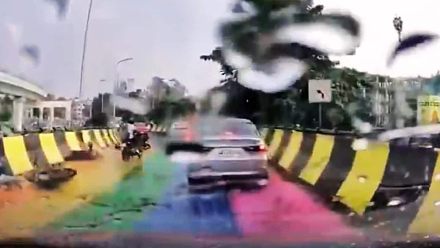
Kolkata’s decision to paint roads and flyovers in vibrant colours ahead of Durga Puja has come under scrutiny over road safety. The debate intensified after a purported dashcam video circulated online, apparently showing several bikers skidding on a freshly painted flyover in wet conditions.
The footage, which went viral on social media, has raised questions about whether decorative coatings can reduce tyre grip and turn a routine journey into a potential accident.
Dear Bikers plz avoid these painted roads in #Kolkata. Such a colossal waste of money. This is not AI generated – this is proof of absolute stupidity. How can we paint motorable roads? One rain – bikers are skidding like this https://t.co/Jdl9oLQteh
— Tamal Saha (@Tamal0401) October 14, 2026
According to a report in The Indian Express, West Bengal Urban Development and Municipal Affairs Minister Agnimitra Paul has ordered an investigation into the incident, with officials asked to inspect the stretch and establish what caused the riders to fall. Paul has maintained that the beautification drive used anti-skid paint, while adding that officials would consider alternative arrangements if the colours were found to reduce visibility or inconvenience motorists.
The controversy highlights a fundamental question: can roads be made more attractive without making them less safe?
The Science Behind Painted Roads And Skidding
A vehicle moves safely when its tyres maintain sufficient grip on the road. This grip comes from friction between the tyre rubber and the road surface. It allows a rider to accelerate, brake, steer and maintain balance, particularly while negotiating bends.
When a road is painted, the coating can change the surface’s texture. Depending on the paint type, ingredients, finish, and the condition of the underlying road, the new surface may offer less grip than the original asphalt.
The danger can increase when the road becomes wet. Water can reduce the contact and friction available between tyres and the road, while a smooth or poorly textured coating may provide less mechanical grip. If the available traction becomes insufficient for the rider’s braking, steering or cornering demands, the tyres can slide.
However, not all road coatings pose the same risks. Painting a road does not necessarily make it slippery. Specialised road-marking materials and high-friction surface treatments are designed to maintain adequate tyre grip, provided they meet the required safety standards and are applied correctly.
The concern arises when a coating is unsuitable for a trafficked road, is applied incorrectly, or fails to deliver the required grip in wet conditions.
Why Are Motorcycles Particularly Vulnerable?
Motorcycles rely on two relatively narrow tyre contact patches to remain balanced. When a bike turns, brakes or accelerates, the tyres must generate enough grip to manage those forces. If a tyre loses traction, even momentarily, the rider may find it difficult to recover control.
A rider travelling across a painted stretch may be particularly vulnerable while leaning into a bend, braking suddenly or changing direction. Wet conditions, excessive speed, worn tyres, incorrect tyre pressure and abrupt manoeuvres can further increase the risk.
Painted lines and decorative bands can also create changes in surface texture across a road. If the coating offers less grip than the surrounding asphalt, a tyre crossing the boundary while turning or braking may experience a sudden change in available traction.
Cars can also lose traction on a slippery surface, particularly during braking or cornering. However, motorcycles may be more difficult to recover once a tyre begins to slide because maintaining balance is essential to their stability.
Is Hydroplaning The Same As Skidding On Painted Roads?
Not exactly. Hydroplaning, also known as aquaplaning, occurs when a layer of water builds up between a tyre and the road, preventing the tyre from maintaining adequate contact with the surface. The vehicle may then lose some ability to steer or brake effectively.
A wet painted surface does not automatically cause hydroplaning. The risk depends on factors such as water depth, speed, tyre tread, drainage and road texture. Nevertheless, a surface that already provides limited grip can make it harder for a rider or driver to respond safely when traction deteriorates.
In other words, reduced friction and hydroplaning are related to wet-road safety, but they are not interchangeable explanations for every skid.
Why Ordinary Paint May Not Be Suitable For A Road
Roads are designed to withstand repeated contact with vehicle tyres, braking forces, weather and temperature changes. Decorative coatings must therefore meet different requirements from paint used on walls or other surfaces.
Road-marking materials, including appropriately specified thermoplastic systems, are formulated for use on traffic surfaces. Depending on the product and application, they may incorporate reflective glass beads or aggregates to improve visibility or texture. Specialised high-friction coatings can also be used where additional grip is required.
Environmental campaigner and green technologist Somendra Mohan Ghosh reportedly raised concerns about the type of coating used in Kolkata, suggesting that ordinary paint rather than a suitable road-surface treatment appeared to have been applied.
Congress leader Ashutosh Chatterjee also wrote to the state minister and Kolkata Municipal Corporation authorities, arguing that glossy paint across areas used by vehicle tyres could create a safety risk, particularly when wet.
The crucial issue is not simply whether a road is painted, but whether the selected material has been independently tested and shown to meet the necessary wet-skid-resistance requirements for that location.
What Happened On Kolkata’s Rainbow Flyover?
The controversy followed the circulation of a purported dashcam video showing multiple bikers skidding on a brightly coloured, rain-soaked stretch of a flyover in Kolkata. Reports published on October 14 said the footage showed riders losing control in quick succession. The circumstances surrounding the falls, including whether anyone was injured, were not immediately clear in all reports. The footage’s authenticity and the precise cause of the skidding also require verification.
The flyover was among the public structures receiving a colourful makeover ahead of Durga Puja. Several roads, flyovers and public spaces across Kolkata were decorated with bright shades, while traditional alpona designs were used at selected locations as part of the festive beautification drive.
Paul said officials had been directed to inspect the incident and determine the cause. She maintained that anti-skid paint had been used and said the administration would consider changes if the coating affected road users. The investigation is expected to establish whether the paint, the wet road conditions or other factors contributed to the reported skidding.
What Are People Saying On Social Media?
The incident has triggered sharp reactions online, with some users questioning the wisdom of painting surfaces used by moving traffic, while others argue that rain itself can make roads dangerous.
One comment directed at riders said: “Dear Bikers plz avoid these painted roads in Kolkata. Such a colossal waste of money.”
Another user invoked basic physics to question the choice of material, arguing that wet roads and reduced friction could put both two-wheelers and cars at risk. The comment also questioned the decision to paint a flyover rather than prioritise repairs.
A sarcastic post mocked the idea of a painted flyover, suggesting the makeover was an attempt to appear different from the previous government. Another comment questioned why road painting had been prioritised when potholes on several roads still needed to be repaired.
Not everyone agreed that the paint was responsible. One contrasting comment argued that skidding on a rainy day could not automatically be blamed on road paint, pointing instead to the broader problem of slippery roads and poor road conditions.
These reactions reflect the public debate, not a technical finding. The official investigation will be important in determining whether the coating contributed to the falls.
Minister Says Beautification Was Funded Through CSR
The road-painting drive has also triggered a political dispute over public spending and priorities. Opposition leaders have criticised the project, arguing that road safety and repairs should take precedence over decorative work. The Trinamool Congress described the painted flyover as a potential ‘death trap’ and called for accountability over the reported skidding incidents. These statements are political allegations, rather than findings from the ongoing investigation.
Paul rejected claims that government money had been spent on the initiative, saying the work was funded through corporate social responsibility (CSR) contributions. She said companies had been approached to help make the city look attractive for the festival.
Under India’s Companies Act, certain qualifying companies are required to spend a prescribed proportion of their average net profits on CSR activities. These can include areas such as education, healthcare, skills development and environmental initiatives. However, the fact that a project is funded through CSR does not remove the need to meet road safety standards or establish whether a particular intervention is appropriate for public infrastructure.
How Can Cities Beautify Roads Without Increasing Accident Risks?
Urban beautification does not have to mean covering the entire road surface with decorative paint. Cities can preserve local culture and festive character by placing artwork where it does not compromise the grip needed by vehicles.
Put Decorative Art Outside Tyre Paths: Traditional designs such as Kolkata’s alpona can be painted on footpaths, pedestrian plazas, roadside walls, traffic-island surfaces and other areas away from the main vehicle carriageway. This allows cities to celebrate local culture without introducing an untested coating under moving traffic.
Use Tested, High-Friction Road Coatings: Where coloured surfaces are genuinely necessary, authorities should use products specifically designed and tested for vehicular roads. Their wet-skid resistance, durability, visibility and compatibility with the existing road surface should be checked before wider application.
Choose Textured, Anti-Skid Surface Treatments: Specialised high-friction surfacing can combine a suitable binder with durable aggregate to create a textured surface. Such systems must be selected and installed according to engineering specifications, particularly on bends, approaches to junctions and other locations where braking or steering demands are high.
Use Colour Through Road Design, Not Just Paint: Cities can introduce colour through textured paving blocks, suitably designed kerbs, raised pedestrian areas and patterned surfaces in low-speed zones. These options still require accessibility, drainage and slip-resistance checks, but they can offer a more durable alternative to coating an entire high-speed carriageway.
Make Flyovers And Underpasses The Canvas: Murals on retaining walls, colourful pillars, artistic lighting, decorative railings and public-art installations can transform flyovers without altering the surface on which vehicles travel. Festive banners and removable decorations placed outside the traffic path can also provide seasonal visual appeal.
Repair Potholes And Improve Road Markings First: A road-safety-first approach should prioritise pothole repairs, drainage, reflective lane markings, clear signs, adequate lighting and regular maintenance. Decorative work should not conceal road defects or distract drivers from traffic signals and lane boundaries.
Test A Small Section Before Expanding A Project: Before a painted road is opened to regular traffic, authorities should obtain independent assessments of its wet and dry skid resistance, surface texture, drainage, visibility and durability. A pilot section can be monitored under real traffic and weather conditions before the treatment is extended elsewhere.
Road Safety Must Come Before Aesthetic Appeal
Kolkata’s rainbow-road controversy is a reminder that public infrastructure must be judged not only by how it looks, but also by how safely it performs. Decorative designs can celebrate a city’s identity, support local artists and add character to public spaces. But on a busy flyover, even a small reduction in grip can have serious consequences if it leaves riders unable to brake or steer safely.
The next step is to establish what caused the reported skidding and whether the coating meets the required safety standards. Until the investigation clarifies the risks, motorists should exercise caution on wet roads, avoid sudden braking or sharp turns, and maintain a safe speed and following distance.
The wider lesson is straightforward: beautification and road safety need not compete, but any design placed in the path of moving traffic must first pass the test of safety.