UPI MDR Rollout May Be Deferred To January 2027? NPCI Receives Industry Request Ahead Of October 15 Deadline
The implementation of merchant discount rate (MDR) on certain Unified Payments Interface (UPI) transactions could be pushed to January 2027, with merchant organisations, fintech companies and payments firms seeking more
بقلم Business Desk··46K قراءة
UPI MDR Rollout May Be Deferred To January 2027? NPCI Receives Industry Request Ahead Of October 15 Deadline
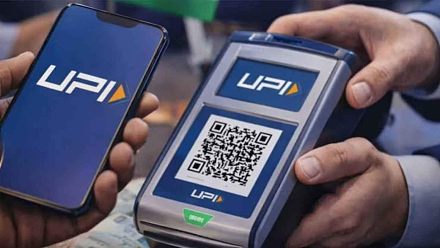
The implementation of merchant discount rate (MDR) on certain Unified Payments Interface (UPI) transactions could be pushed to January 2027, with merchant organisations, fintech companies and payments firms seeking more time to prepare for the new regime, according to a Moneycontrol report citing sources.
The National Payments Corporation of India (NPCI), which operates the UPI network, is expected to take a call on the request in the next couple of days, the report said, citing people familiar with the matter. Discussions are reportedly underway with the Finance Ministry.
The industry has sought the deferment citing confusion over the applicable MDR rates, transaction categories and the policies governing different types of UPI payments. The proposed MDR changes are currently scheduled to take effect from October 15, 2026.
Why Is The UPI MDR Rollout Facing Resistance?
The UPI Steering Committee had last month fixed MDR at 0.4 per cent, or 40 basis points, for transactions above Rs 2,000. At that rate, a merchant would pay Rs 8 on a Rs 2,000 transaction and Rs 40 on a payment of Rs 10,000.
MDR is the fee paid by a merchant to banks and other payment ecosystem participants for processing a digital payment.
According to Moneycontrol, several industry bodies and merchants have approached NPCI seeking a postponement until after the festive season. The report said the government is also concerned that the new charges could add to the cost of doing business during the festive sales period.
The proposed MDR structure has also created questions around how different categories of UPI transactions should be classified.
Different UPI Transactions, Different MDR Rates
Unlike cards, where merchant discount rates are relatively uniform across categories, UPI has a differentiated structure for certain transactions, including utility payments, loan repayments and capital market-related payments.
This has led to concerns among banks, payment aggregators, fintech companies and merchants over how individual transactions should be classified.
Capital market participants, for instance, have reportedly raised concerns with the market regulator over MDR on payments made by customers to add money to their broking accounts.
Their argument, according to the Moneycontrol report, is that such transactions are similar to person-to-person transfers and that broking companies should not have to bear MDR since they do not earn revenue from the transfer itself.
Loan Repayments Add To The Confusion
Loan repayments are another area where banks and payment aggregators are seeking greater clarity.
Under NPCI’s MDR directive, loan payments made through certain auto-debit mandates attract a flat fee of Rs 5. However, problems can arise when an automated debit fails because a customer’s account does not have sufficient funds and the borrower subsequently makes a manual repayment.
Such a transaction could be classified as a financial institution payment and attract the 0.4 per cent MDR.
Moneycontrol reported that although NPCI has clarified that such loan repayments should attract the Rs 5 flat fee, there is still uncertainty in the ecosystem over how loan repayments to banks and NBFCs should be distinguished from other financial-services transactions.
Why The January 2027 Proposal Matters
The proposed deferment would give banks, payment companies, merchants and fintech firms additional time to resolve classification issues and establish the systems required to implement the new MDR framework.
The request comes less than a week before the October 15 implementation date, making the timing particularly significant for businesses preparing for the festive shopping season.
NPCI had not immediately responded to Moneycontrol‘s request for comment, according to the report.
For now, the October 15 deadline remains the scheduled implementation date, while the industry awaits NPCI’s decision on the request for more time.