Sebi Revises Closing Auction Framework: Check New Timings, Derivatives Settlement Rules From December 7
The Securities and Exchange Board of India (Sebi) has revised the framework for the Closing Auction Session (CAS), changing trading timings, order-entry rules and the methodology for calculating settlement prices of expi
بقلم Business Desk··46K قراءة
Sebi Revises Closing Auction Framework: Check New Timings, Derivatives Settlement Rules From December 7
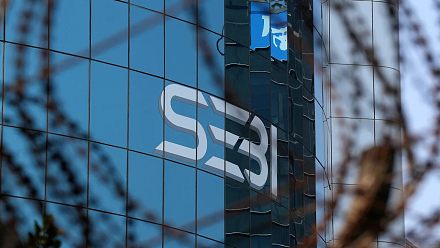
The Securities and Exchange Board of India (Sebi) has revised the framework for the Closing Auction Session (CAS), changing trading timings, order-entry rules and the methodology for calculating settlement prices of expiring stock and index derivatives contracts.
Under the revised framework, the 10-minute closing auction session in the equity cash segment will run from 3:30 pm to 3:40 pm on all trading days. Trading in stock and index derivatives will continue until 3:45 pm, subject to certain exceptions for index derivatives contracts expiring on the same day.
A key change relates to the settlement of expiring derivatives contracts. Sebi has specified that settlement prices will be calculated using the volume-weighted average price (VWAP) of the underlying index or stock during the last 30 minutes of continuous trading, instead of relying on the closing auction price.
The revised provisions, except those relating to the transition of unexecuted limit and iceberg orders from continuous trading to the closing auction session, will come into effect from December 7, 2026. The provisions governing the transition of these orders will be implemented from February 8, 2027.
The changes follow a review of the existing framework, public consultation, recommendations from Sebi’s Secondary Market Advisory Committee (SMAC) and discussions with stock exchanges. The regulator aims to improve transparency and price discovery while ensuring a more orderly market close.
How Will the New Closing Auction Session Work?
Under the revised schedule, the closing auction session will begin at 3:30 pm with the calculation of the reference price and the transition of eligible orders from the continuous trading session.
Order entry for both limit and market orders will be permitted from 3:31 pm to 3:36 pm. Thereafter, only limit orders will be allowed until the session closes randomly between 3:38 pm and 3:40 pm.
The post-close session in the equity cash segment will run from 3:50 pm to 4 pm, with trades executed at the closing prices of securities.
Sebi has also specified the types of orders permitted during the closing auction session and prescribed rules for the transition of unexecuted limit and iceberg orders.
How Will the Closing Reference Price Be Calculated?
For determining the reference price used in the closing auction session, Sebi has specified that the price of a security will be based on the VWAP of trades executed during the last 15 minutes of the continuous trading session in the equity cash segment.
If no trades take place during this period, the last traded price of the day will be used. If a security has not traded during the day, its closing price from the previous trading session will serve as the reference price, adjusted for corporate actions wherever applicable.
New Settlement Methodology for Expiring Derivatives
Sebi has also revised the methodology for determining settlement prices of expiring index and stock derivatives contracts.
For index derivatives, the settlement price on expiry day will be based on the value of the underlying index, calculated using the VWAP of its constituent securities during the last 30 minutes of the continuous trading session in the equity cash segment.
For stock derivatives, the settlement price of expiring contracts will be determined using the VWAP of the underlying stock during the last 30 minutes of continuous trading across all stock exchanges.
Stock exchanges will calculate and disseminate indicative values of the underlying indices and indicative VWAPs of underlying securities in real time during the relevant period to facilitate transparency and provide market participants with updated price information.
Changes to Stock Futures Price Bands
The regulator has also revised the price-band framework for stock futures between 3:30 pm and 3:45 pm.
During this period, stock futures price bands will be aligned with those applicable during the closing auction session. The existing framework for dynamically flexing price bands will not apply to stock futures during this window.
Why Has Sebi Revised the Framework?
Sebi introduced the closing auction framework in the equity cash segment from August 3, 2026, to determine the closing prices of securities. Under the existing framework, the closing price determined through the closing auction session also serves as the basis for calculating settlement prices of derivatives contracts on expiry days.
The methodology drew concerns over the use of closing auction prices for derivatives settlement. In September, Sebi proposed changes and issued a consultation paper seeking public comments on alternative approaches.
The revised framework separates the methodology for determining cash-market closing prices from the calculation of settlement prices for expiring derivatives contracts. By using the VWAP of underlying securities during the final 30 minutes of continuous trading for derivatives settlement, the regulator seeks to improve transparency and price discovery in the derivatives market while maintaining an orderly closing process.