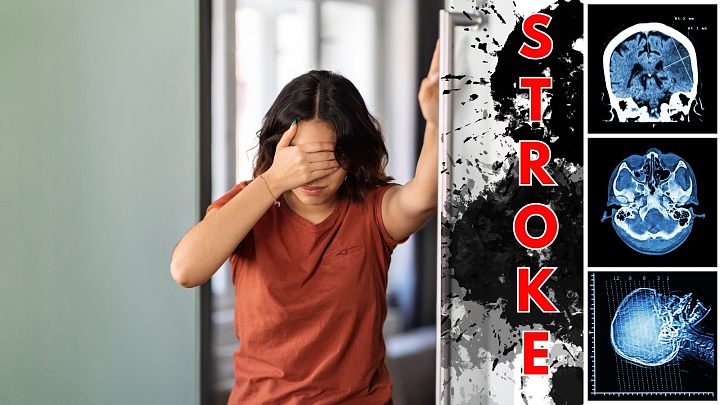
World Stroke Day 2026: What Is A Wake-Up Stroke? How Weakness, Dizziness And Double Vision Could Signal Trouble
Waking up with a numb hand after sleeping in an awkward position or a headache after a restless night may not seem unusual. But what if the sudden weakness speech that comes out slurred, or a sudden inability to stand st
بقلم Tanya Dutt··26K قراءة
World Stroke Day 2026: What Is A Wake-Up Stroke? How Weakness, Dizziness And Double Vision Could Signal Trouble
Waking up with a numb hand after sleeping in an awkward position or a headache after a restless night may not seem unusual. But what if the sudden weakness speech that comes out slurred, or a sudden inability to stand steadily after waking up in the morning are not simply the result of poor sleep?
Some warning signs of a stroke can appear similar to everyday discomfort, making them easy to dismiss. Studies estimate these signs account for roughly one in five acute ischemic strokes.
Image: Canva
What Is A Wake-Up Stroke?
A wake-up stroke occurs when a person goes to sleep without apparent stroke symptoms but discovers them upon waking. Like other strokes, it can happen when a blood vessel supplying the brain is blocked by a clot (ischaemic stroke) or when a blood vessel ruptures and causes bleeding (haemorrhagic stroke).
“One of the challenges with wake-up strokes is that the event often goes unnoticed. A person may go to bed feeling perfectly normal, but wake up unable to move one arm properly, struggling to speak or finding it difficult to stand. In many cases, the first person to recognise that something is wrong is a family member,” says Dr Vishal Chafale, Consultant, Interventional Neurologist, Apollo Hospitals Navi Mumbai.
Because the symptoms develop during sleep, there may be no witness to their onset. This makes it especially important to pay attention to sudden changes in movement, speech, vision or balance after waking.
Warning Signs Of A Wake-Up Stroke
Stroke symptoms can vary depending on the area of the brain affected. Warning signs may include:
Sudden weakness or numbness in the face, arm or leg, particularly on one side of the body
Facial drooping or difficulty smiling evenly
Slurred speech, difficulty speaking or trouble understanding others
Sudden loss or blurring of vision, including double vision
Unexpected difficulty walking, dizziness or loss of balance
Sudden confusion or difficulty coordinating movements
A sudden, severe headache, particularly if accompanied by other neurological symptoms.
Image: Canva
Dr Chafale cautions against dismissing these symptoms as ordinary morning discomfort. “What makes this particularly concerning is that these symptoms can easily be mistaken for something less serious, especially in older adults. Weakness may be attributed to arthritis or age-related stiffness, numbness to existing diabetic neuropathy, and dizziness to fluctuations in blood pressure. However, a sudden change in how a person moves, speaks, sees or maintains their balance should never be dismissed as a routine morning complaint.”
Can A Stroke Happen Without Facial Drooping Or One-Sided Weakness?
Not every stroke presents with the familiar signs of facial drooping or weakness on one side. Strokes affecting the back of the brain, including the brainstem or cerebellum, can cause sudden vertigo, double vision, severe imbalance, difficulty coordinating movements or trouble swallowing.
“These symptoms warrant the same urgency as more recognisable stroke signs,” says Dr Chafale. Sudden dizziness or vertigo can have several causes, but when it appears alongside difficulty walking, double vision or other new neurological symptoms, emergency assessment is essential.
Image: Canva
The Critical Concept of ‘last known well’
In conventional strokes, treatment windows are measured from the moment symptoms start. With wake-up strokes, that clock cannot be started accurately. Doctors therefore rely on the “last-known-well” time — the last moment the person was confirmed to be neurologically normal, usually when they went to bed or were last seen by a family member.
“Even if symptoms are discovered several hours after waking, patients should reach a stroke-capable emergency department immediately,” Dr. Chafale emphasises. “Advanced imaging can help identify patients who may still benefit from treatments like IV thrombolysis and mechanical thrombectomy.”
Modern imaging, including CT perfusion and rapid MRI, allows doctors to assess how much brain tissue remains salvageable. This information can extend treatment options beyond the traditional 4.5-hour window for clot-busting medication and up to 24 hours for mechanical thrombectomy in carefully selected patients.
What Should You Do If You Notice Stroke Symptoms On Waking?
Call emergency services immediately. Do not wait to see if the symptoms improve or attempt to drive yourself to hospital. Note the time the symptoms were discovered and, if possible, when the person was last known to be well. Tell emergency responders about any medicines the person takes, especially blood thinners, and their relevant medical history.
Do not give food, drinks or oral medicines, as a stroke can affect swallowing. Do not give aspirin unless a clinician advises it, because the stroke could involve bleeding rather than a blocked blood vessel. Even if symptoms disappear after a few minutes, seek urgent medical assessment, as this could be a transient ischaemic attack (TIA), which also requires emergency evaluation.