Watching Ramayana Today? The Lesser-Known Story Of How Ravana Earned His Name From Mahadev
With Ramayana: Part One releasing in theatres today, audiences are set to revisit one of Hindu mythology’s most enduring stories. While Ranbir Kapoor steps into the role of Lord Ram and Yash portrays Ravana, the epic off
بقلم Tanya Dutt··27K قراءة
Watching Ramayana Today? The Lesser-Known Story Of How Ravana Earned His Name From Mahadev
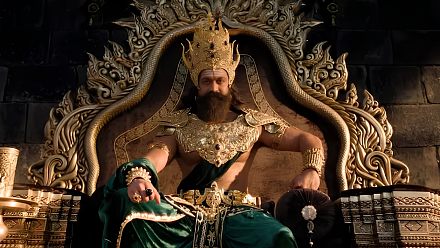
With Ramayana: Part One releasing in theatres today, audiences are set to revisit one of Hindu mythology’s most enduring stories. While Ranbir Kapoor steps into the role of Lord Ram and Yash portrays Ravana, the epic offers several lesser-known accounts that add layers to its central characters.
One such story explores how Ravana, the mighty king of Lanka, received his name from Lord Shiva himself.
Ravana was not always known by this name. As per the Uttara Kanda of the Ramayana, he was originally called Dashagriva or Dashanana, referring to his ten heads. His name changed following an encounter with Mahadev at Mount Kailash, where his immense strength met the power of Shiva.
The formidable scholar and warrior, once attempted to uproot Mount Kailash itself while returning in his chariot. Shiva responded by pressing the mountain down with a toe, trapping Dashagriva’s arms beneath it.
The Ramayana has over 300 interpretations, each offering different perspectives on Ravana. (Image credits: Instagram/@World Of Ramayana)
How Ravana Tried To Lift Mount Kailash
According to the Uttara Kanda of the Ramayana, Ravana was once travelling in his flying chariot, Pushpaka Vimana, when he reached Mount Kailash, the abode of Lord Shiva.
There, he encountered Nandi, and said to have mocked his appearance. When Nandi warned him against proceeding further, Ravana became furious. In an attempt to demonstrate his strength, he decided to lift the entire mountain.
However, Mount Kailash was no ordinary mountain. Lord Shiva, who was seated there, simply pressed it down with his toe. The immense weight trapped Ravana’s arms beneath the mountain, leaving him unable to free himself.
Ravana is portrayed as both a learned devotee and a ruthless rakshasa. (Image credits: Instagram/@World Of Ramayana)
Why Lord Shiva Named Him Ravana
Pinned beneath Mount Kailash, Ravana let out a tremendous cry of pain. His roar was believed to have reverberated across the three worlds.
Derived from that roar ‘rava’ in Sanskrit, meaning a great cry or roar — comes the name Ravana, linking it to the sound he made when trapped beneath the mountain.
The story also marks a significant moment in his relationship with Mahadev. Rather than continuing to fight, Ravana began singing praises of Lord Shiva and seeking his forgiveness.
One popular version recounts that Ravana tore off a head, stringing it with his own tendons like a veena, and composed the Shiva Tandava Stotram in praise of the god who holds him. Pleased with his devotion, Shiva eventually released Ravana and is said to have gifted him the divine sword Chandrahasa.
Ravana: More Than The Antagonist Of Ramayana
Beyond his role as the central antagonist in the Ramayana, Ravana is remembered in several stories as a learned scholar, accomplished musician and ardent devotee of Shiva. His ten heads are also interpreted symbolically in some traditions, representing the knowledge of the four Vedas and six Shastras.
The story of his encounter with Mahadev offers another interpretation of his character: a powerful king whose pride brought him to his knees, but whose devotion eventually earned Shiva’s grace.
As audiences watch the latest cinematic retelling of the Ramayana, this lesser-known account offers a glimpse into the many layers of Ravana’s character, beyond the familiar image of the ten-headed king.
Note: The naming episode appears in the Uttara Kanda, the final section of the Ramayana, which some scholars consider a later addition to the epic. Different regional and religious traditions also narrate aspects of Ravana’s story differently.