Shilpa Shetty's Hidden Lotus Pose Is Not For Beginners: Here's What Makes It Challenging
For Shilpa Shetty, yoga is clearly more than just another fitness routine. The actor regularly shares glimpses of her practice, experimenting with postures that challenge her flexibility, balance and body control. Her la
بقلم Swati Chaturvedi··28K قراءة
Shilpa Shetty's Hidden Lotus Pose Is Not For Beginners: Here's What Makes It Challenging
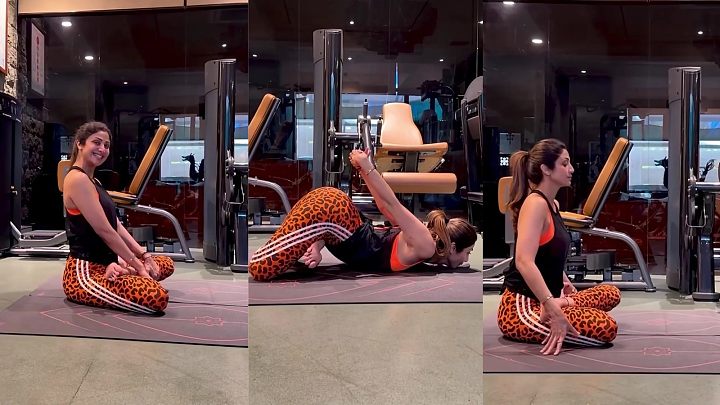
For Shilpa Shetty, yoga is clearly more than just another fitness routine. The actor regularly shares glimpses of her practice, experimenting with postures that challenge her flexibility, balance and body control. Her latest Instagram video is no exception. This time, she demonstrated Gupta Padmasana, popularly known as the Hidden Lotus Pose, an advanced variation of the traditional Lotus Pose.
While the posture looks deceptively graceful, getting into it requires considerable flexibility, particularly around the hips, knees and shoulders. It also calls for body awareness and the ability to move between positions without putting unnecessary pressure on the joints.
What exactly is Gupta Padmasana?
The word ‘Gupta’ translates to hidden, while ‘Padmasana’ refers to the Lotus Pose. In this asana, the practitioner begins by sitting in full Lotus Pose, with each foot placed on the opposite thigh.
The position then becomes considerably more challenging. Using the hands for support, the practitioner lifts the hips, comes onto the knees and gradually lowers the front of the body towards the floor. The arms are subsequently brought behind the back, with the palms joined together.
In Shilpa’s demonstration, she maintains the crossed-leg position while lowering her torso and lifting her clasped hands behind her. The result is a posture that combines deep lower-body positioning with an opening across the chest and shoulders.
According to traditional yoga instructions, normal, unrestricted breathing should be maintained while holding the final position. The posture should be released slowly rather than by suddenly shifting the body weight.
What are the benefits of the Hidden Lotus Pose?
Shilpa highlighted several benefits of Gupta Padmasana in her Instagram caption, including improved mobility in the hips, pelvis, knees and ankles, greater shoulder engagement and an opening across the chest.
Here is a closer look at what the posture involves:
1. Works on hip and pelvic mobility
The Lotus position requires considerable external rotation of the hips. Maintaining the crossed-leg position therefore places mobility demands on the hip joints and surrounding muscles. However, the movement should come from the hips rather than forcing the knees into rotation.
2. Involves the shoulders and wrists
Bringing the arms behind the back and joining the palms requires shoulder mobility and wrist flexibility. The movement also engages the muscles around the upper back and shoulders.
3. Encourages chest opening
The position of the arms creates an opening across the front of the shoulders and chest. This can provide a stretch for people who experience tightness in these areas, although the extent of the stretch depends on individual mobility.
4. Challenges postural awareness
Gupta Padmasana involves coordinating the legs, torso and arms while maintaining a controlled position. Traditional yoga texts also describe the posture as useful for addressing postural defects of the spine. However, it should not be considered a treatment for spinal conditions or a guaranteed way to correct posture.
View this post on Instagram
A post shared by Shilpa Shetty Kundra (@theshilpashetty)
Who should avoid attempting this yoga pose?
Despite its visual appeal, Gupta Padmasana is not a beginner-friendly asana. The full Lotus position can place considerable demands on the knees and ankles, while the arm movement requires adequate shoulder mobility.
Shilpa herself cautioned against forcing the body into the posture and advised avoiding it in the presence of pain or injury involving the hips, knees, shoulders or cervical spine.
The Ministry of AYUSH’s Morarji Desai National Institute of Yoga also lists recent or chronic knee and hip injuries or inflammation among the contraindications for Padmasana.
Anyone new to yoga should first develop the required hip mobility under the guidance of a qualified yoga instructor rather than attempting the complete posture independently. Pain, particularly around the knees, is a signal to stop rather than push through.
Is there an easier alternative?
If full Lotus Pose feels uncomfortable or places too much pressure on the knees, Ardha Padmasana, or Half Lotus Pose, can be a gentler starting point.
In this seated variation, one foot rests on the opposite thigh while the other leg remains folded underneath. The spine stays upright, and the hands can rest comfortably on the knees.
Another option is Sukhasana, or Easy Pose, in which the legs are crossed naturally without placing either foot on the opposite thigh.
Neither variation reproduces the complete Hidden Lotus Pose, but both can help practitioners work on seated comfort and gradually develop their flexibility without forcing their joints into a demanding position.
Shilpa’s latest yoga demonstration is a reminder that flexibility is not simply about how far the body can stretch. It is also about control, mobility and knowing when not to push beyond one’s limits.