Govardhan Puja 2026: From Kheer To Makhan Mishri, 56 Bhog Items To Offer Lord Krishna
The festive celebrations may be winding down after Diwali, but there’s another significant occasion on the Hindu calendar that brings devotion, food and age-old traditions together: Govardhan Puja. Dedicated to Lord Kris
بقلم Lifestyle Desk··23K قراءة
Govardhan Puja 2026: From Kheer To Makhan Mishri, 56 Bhog Items To Offer Lord Krishna
The festive celebrations may be winding down after Diwali, but there’s another significant occasion on the Hindu calendar that brings devotion, food and age-old traditions together: Govardhan Puja. Dedicated to Lord Krishna, the festival commemorates the time he lifted Govardhan Hill on his little finger to protect the people of Braj from torrential rainfall.
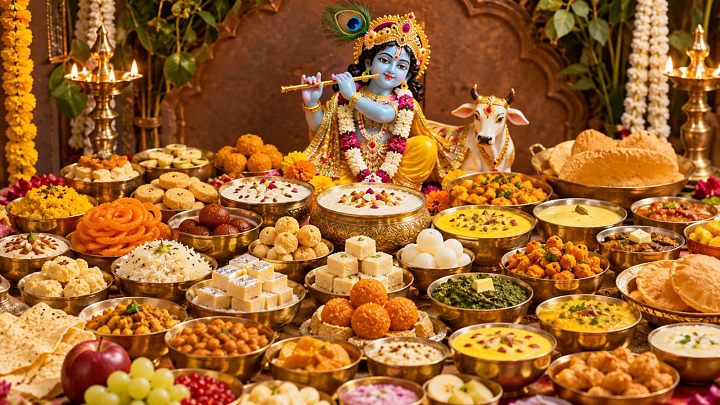
One of the most cherished traditions associated with the day is preparing Chhappan Bhog, an elaborate offering of 56 food items that includes everything from creamy kheer and makhan mishri to traditional sweets, savoury snacks and seasonal delicacies.
Also known as Annakut Puja, Govardhan Puja celebrates abundance, gratitude and the importance of nature in sustaining life. Devotees prepare a grand spread of vegetarian dishes and offer them to Lord Krishna before distributing the food as prasad.
But why are precisely 56 dishes offered, what goes into this traditional spread, and which items can you prepare at home? Here’s a closer look at the significance of Chhappan Bhog and the 56 offerings associated with Govardhan Puja 2026.
Govardhan Puja 2026: Date And Shubh Muhurat
Govardhan Puja will be observed on Tuesday, November 10, 2026, in India. It falls on Kartik Shukla Pratipada, the first day of the bright fortnight of the Hindu month of Kartik. This year, the festival falls two days after Diwali, owing to the timing of the lunar tithi.
According to the New Delhi Panchang, the Pratipada Tithi begins at 12:31 PM on November 9 and ends at 2:00 PM on November 10. The morning puja muhurat is from 6:40 AM to 8:50 AM. Timings may vary across locations, so devotees should check their local Panchang before performing the rituals.
Why Is Chhappan Bhog Offered To Lord Krishna?
The tradition of offering 56 dishes is associated with a popular story from Lord Krishna’s childhood. According to Hindu belief, young Krishna was accustomed to having eight meals throughout the day. When Lord Indra unleashed torrential rainfall upon Braj after the villagers stopped worshipping him, Krishna lifted Govardhan Hill on his little finger to provide shelter to the people and their cattle.
He is believed to have held the hill aloft for seven days, during which he remained occupied protecting the villagers and did not have his usual meals. Once the rain stopped and everyone was safe, the people of Braj wanted to express their gratitude. They prepared 56 different food offerings to make up for the eight meals Krishna had missed each day over seven days. The calculation is simple: eight meals multiplied by seven days equals 56.
This is believed to be the origin of Chhappan Bhog, which remains an important part of Govardhan Puja celebrations. The elaborate spread is also known as Annakut, which translates to ‘mountain of food’. The offerings represent abundance, devotion and gratitude for the food and natural resources that sustain life.
Govardhan Puja 2026: Complete List Of 56 Bhog Items To Offer Lord Krishna
Chhappan Bhog brings together an assortment of sweets, dairy preparations, savoury dishes, grains, fruits and other traditional offerings. While the exact menu differs across temples and regional traditions, the following is a selection of 56 items associated with Krishna worship and Annakut celebrations.
Milk-Based Offerings And Traditional Sweets
Makhan Mishri
Kheer
Rabri
Peda
Malpua
Rasgulla
Gulab Jamun
Besan Ladoo
Motichoor Ladoo
Mohanbhog (Sooji Halwa)
Shrikhand
Kalakand
Barfi
Jalebi
Panchamrit
Milk and dairy preparations hold special significance in Krishna worship because of his childhood association with cows, butter and milk in Gokul and Vrindavan. Makhan Mishri, made with fresh butter and crystallised sugar, is particularly popular as an offering to Krishna, who is lovingly known as Makhan Chor. Kheer, rabri and peda are other familiar favourites in traditional offerings.
Grains, Breads And Rice Preparations
Poori
Roti
Kachori
Khichdi
Plain Rice (Bhaat)
Meetha Chawal
Jeera Rice
Moong Dal
Chana Dal
Kadhi
Grain-based preparations form an important part of Annakut. From simple rice and dal to khichdi, poori and kachori, these dishes represent nourishment and abundance. The selection can also include preparations made with different grains, depending on regional customs.
Traditional Vegetable And Savoury Preparations
Annakut Ki Sabzi
Aloo Sabzi
Kaddu Ki Sabzi
Baingan Sabzi
Bhindi Sabzi
Gobhi Sabzi
Saag
Chole
Arbi Sabzi
Methi Aloo
Mathri
Namak Pare
Pakode
Papad
Dhokla
Vegetable preparations are particularly significant during Govardhan Puja because the festival celebrates nature and the resources that support life. Annakut Ki Sabzi, usually made with an assortment of seasonal vegetables, is one of the distinctive dishes associated with the occasion. Savoury snacks and accompaniments add further variety to the spread.
Dairy, Fruits And Other Offerings
Fresh Curd (Dahi)
Fresh Butter (Makhan)
Ghee
Malai
Lassi
Chaas
Banana
Apple
Pomegranate
Grapes
Coconut
Dates
Almonds
Cashews
Raisins
Paan With Elaichi
Fruits, nuts and dairy products complete the traditional spread. Seasonal fruits and dry fruits are commonly included in religious offerings, while curd, butter, ghee and malai reflect the importance of dairy in Krishna’s stories and worship.
This is an illustrative North Indian-style selection of 56 offerings, not a universally fixed or compulsory menu. Families and temples may substitute dishes according to their regional customs and traditions.
How Is Chhappan Bhog Prepared And Offered?
Preparing Chhappan Bhog is as much about devotion as it is about food. Families and temples prepare a variety of vegetarian dishes, often using seasonal ingredients and traditional recipes. The offerings are arranged together in an elaborate spread or in a mountain-like formation, representing Annakut.
Devotees first offer the food to Lord Krishna during the puja, accompanied by prayers and bhajans. In many traditions, the offerings are subsequently distributed among devotees as prasad. Some temples prepare particularly elaborate Annakut arrangements, with hundreds of dishes forming part of the celebration.
The preparations are often sattvik, with many households avoiding onion and garlic. However, the exact ingredients and dishes depend on individual family and temple traditions.
The Significance Of Govardhan Puja
Beyond the elaborate food offerings, Govardhan Puja carries a deeper message about respecting nature and recognising the resources that sustain life. The story of Krishna lifting Govardhan Hill is a reminder of the importance of land, rainfall, agriculture and cattle in the lives of the people of Braj.
The festival is also marked by the worship of cows, known as Gau Puja, in several regions. Devotees bathe and decorate cows, offer them food and seek blessings. In some households, a symbolic Govardhan Hill is created using cow dung, decorated with flowers and worshipped as part of the rituals.
From the story of Krishna protecting the people of Braj to the tradition of preparing 56 food offerings, Govardhan Puja brings together faith, gratitude and the joy of sharing. And whether the offering is an elaborate spread of 56 dishes or a simple plate of makhan mishri, the spirit of the occasion lies in devotion.