Govardhan Puja 2026: Date, Puja Vidhi, Shubh Muhurat And Chandra Darshan Time
One of the most beloved episodes in Hindu mythology, the story of Govardhan Hill is at the heart of Govardhan Puja, a festival that celebrates faith, divine protection and our deep connection with nature. From worshippin
بقلم Labani Mahanandy··23K قراءة
Govardhan Puja 2026: Date, Puja Vidhi, Shubh Muhurat And Chandra Darshan Time
One of the most beloved episodes in Hindu mythology, the story of Govardhan Hill is at the heart of Govardhan Puja, a festival that celebrates faith, divine protection and our deep connection with nature. From worshipping Lord Krishna and offering prayers to cattle to preparing an elaborate mountain of food, the occasion brings together some beautiful traditions that have been passed down through generations.
Also known as Annakut Puja, Govardhan Puja falls on the Pratipada Tithi of Shukla Paksha in the Hindu month of Kartik, following Diwali. This year, the festival will be celebrated on Tuesday, November 10, 2026. Devotees mark the occasion by creating symbolic Govardhan Hills, preparing Chappan Bhog and performing Gau Puja. If you’re planning to observe the festival, here’s a look at the date, shubh muhurat, puja vidhi, religious significance and the Chandra Darshan timings around the occasion.
Govardhan Puja 2026: Date And Shubh Muhurat
Govardhan Puja will be observed on Tuesday, November 10, 2026. The festival falls on Kartik Shukla Pratipada, the first day of the bright fortnight of the lunar month. Since Pratipada prevails at sunrise on November 10, devotees will perform the main puja on this day.
According to the New Delhi Panchang, the important timings are:
Govardhan Puja Date: Tuesday, November 10, 2026
Pratipada Tithi Begins: November 9, 12:31 PM
Pratipada Tithi Ends: November 10, 2:00 PM
Pratahkal Govardhan Puja Muhurat: 6:40 AM to 8:50 AM
Sayankal Puja Muhurat: 3:20 PM to 5:30 PM
Sunrise: 6:40 AM
Sunset: 5:30 PM
These timings are for New Delhi. Puja muhurats can differ across cities depending on local sunrise and Panchang calculations, so devotees should check the timings applicable to their location.
Govardhan Puja 2026: Chandra Darshan Time
Chandra Darshan refers to sighting the first crescent moon after Amavasya. The occasion holds significance in Hindu traditions, with devotees welcoming the new lunar phase and offering prayers.
However, there is an important distinction this year. Amavasya ends on November 9, and the very young crescent may not be visible on the evening of November 10. Astronomical calculations for New Delhi indicate that the first crescent is expected to become visible on Wednesday, November 11, after sunset.
Chandra Darshan Date: Wednesday, November 11, 2026
Sunset: Approximately 5:30 PM
Moonset: Approximately 6:43 PM
Potential Viewing Window: 5:30 PM to 6:43 PM
The crescent should be sought low in the western sky after sunset. Actual visibility will depend on weather, atmospheric conditions and the local horizon.
It is also worth noting that some traditional Panchang guidelines specifically advise against Chandra Darshan on Annakut or Govardhan Puja. Devotees following these customs should observe the guidance of their family tradition or local priest rather than treating the astronomical viewing window as a prescribed puja ritual.
Govardhan Puja 2026: Puja Vidhi And Rituals
Govardhan Puja is much more than a ritual offering. It is a celebration of the land, cattle and natural resources that sustain life. At the centre of the observance is Lord Krishna, worshipped as Govardhandhari, the divine protector who lifted the sacred hill to shield the people of Braj from Lord Indra’s fury.
Here is how devotees traditionally perform Govardhan Puja at home.
1. Create A Symbolic Govardhan Hill
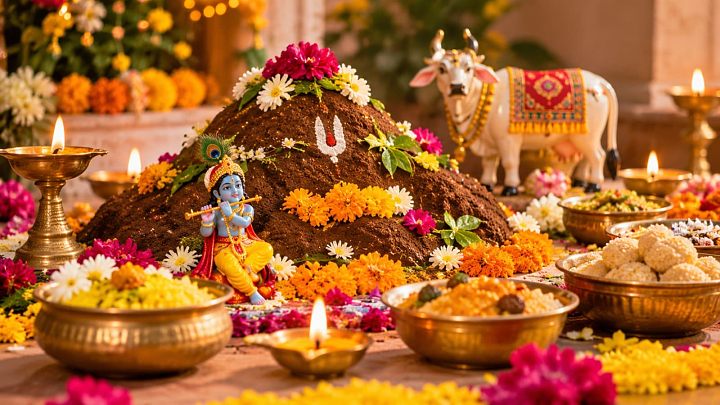
The preparations begin with creating a symbolic representation of Govardhan Hill, traditionally using cow dung. Devotees shape it like a small hill and decorate it with flowers, leaves, miniature trees and other natural elements. Some families also make small figures of Lord Krishna, cows and other animals around it.
The representation is placed in the courtyard or a clean area of the home, where devotees offer prayers to Govardhan Maharaj.
2. Offer Prayers To Lord Krishna
Place an idol or picture of Lord Krishna near the Govardhan representation. Light diyas and incense sticks, apply tilak and offer flowers, fruits, sweets and other traditional puja samagri. Devotees chant prayers and mantras in praise of Lord Krishna, seeking his blessings for protection, happiness and prosperity.
3. Prepare Annakut And Chappan Bhog
No Govardhan Puja celebration is quite complete without the elaborate food offerings. Known as Annakut, meaning a mountain of food, this tradition involves preparing a variety of vegetarian dishes, sweets, savouries and seasonal delicacies for Lord Krishna.
Many devotees also prepare Chappan Bhog, an offering of 56 different food items. According to popular belief, this tradition is linked to Lord Krishna’s seven-day stay beneath Govardhan Hill. The offerings are later distributed among devotees as prasad.
4. Perform Gau Puja
Cows hold a special place in the story of Lord Krishna, who spent much of his childhood among the cowherds of Gokul and Vrindavan. On Govardhan Puja, devotees honour cows as symbols of nourishment, abundance and compassion.
Cows are traditionally bathed, decorated with flowers and adorned with tilak. Families offer them food and perform aarti as an expression of gratitude and reverence.
5. Perform Govardhan Parikrama
Parikrama, or circumambulation, is another important part of the festival. Devotees walk around the symbolic Govardhan Hill at home while offering prayers. Those visiting the sacred Govardhan Hill in Uttar Pradesh undertake the traditional Govardhan Parikrama, a pilgrimage route of approximately 21 kilometres around the hill.
The practice is considered an expression of devotion to Lord Krishna and reverence for Govardhan Hill.
6. Perform Aarti And Distribute Prasad
The puja concludes with aarti, devotional songs and prayers to Lord Krishna and Govardhan Maharaj. The Annakut offerings are presented to the deity before being distributed among family members and devotees as prasad. Sharing the food is an important part of the celebration, reflecting the spirit of community and gratitude associated with the festival.
Why Is Govardhan Puja Celebrated? The Story Of Lord Krishna And Govardhan Hill
The story of Govardhan Puja goes back to the childhood of Lord Krishna in Braj. According to Hindu mythology, the people of the region traditionally worshipped Lord Indra, the god of rain, to seek his blessings for good rainfall and a prosperous harvest.
Krishna, however, encouraged the villagers to honour Govardhan Hill instead. He explained that the hill, the forests, the cattle and the surrounding land played a vital role in sustaining their lives and livelihoods. The people followed his advice and offered their prayers to Govardhan Hill.
This angered Lord Indra, who unleashed torrential rain upon Braj to punish the villagers. As floodwaters threatened their homes, families and cattle, Krishna came to their rescue. He lifted Govardhan Hill on his little finger, turning it into a giant shelter beneath which the people of Braj could take refuge.
For seven days, Krishna held the hill aloft until Lord Indra finally recognised his divine power and withdrew the storm. The episode came to symbolise Krishna’s compassion and protection, as well as the importance of respecting nature rather than taking its gifts for granted.
Govardhan Puja commemorates this legend and reminds devotees of the importance of gratitude towards the earth, animals and the natural world. Through Annakut, Gau Puja and Govardhan Parikrama, the festival brings these beliefs into everyday practice.
As families gather for the celebrations, the message of Govardhan Puja remains as relevant as ever: nature sustains us, gratitude nourishes devotion, and faith can offer shelter even in the fiercest of storms.