Ever Wondered Why Rangoli Was Made With Rice Flour? The Ancient Practice Has A Deeper Meaning
Diwali is almost here, and you know what that means: homes are getting a festive makeover, diyas are coming out of storage, mithai boxes are piling up, and doorsteps are getting dressed in colourful rangoli designs. But
بقلم Lifestyle Desk··23K قراءة
Ever Wondered Why Rangoli Was Made With Rice Flour? The Ancient Practice Has A Deeper Meaning
Diwali is almost here, and you know what that means: homes are getting a festive makeover, diyas are coming out of storage, mithai boxes are piling up, and doorsteps are getting dressed in colourful rangoli designs. But while we spend hours perfecting those swirls, flowers and geometric patterns, have you ever stopped to wonder why rangoli was traditionally made with rice flour?
No, it wasn’t just because it was easily available in the kitchen. This age-old practice has a thoughtful story behind it, one that brings together Indian traditions, spirituality and a little kindness towards the tiniest creatures around us.
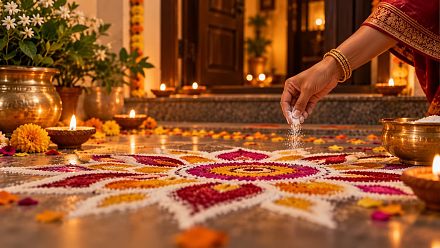
Before colourful powders, glitter and ready-made rangoli kits entered the picture, many traditional floor designs were created using rice flour or rice paste. And the idea was surprisingly simple: the flour could serve as food for ants and other tiny creatures. So, while a beautifully decorated doorstep welcomed guests and marked an auspicious occasion, it could also offer a little nourishment to the creatures sharing our surroundings. Talk about making your festive decorations count!
Rangoli Was More Than Just A Pretty Pattern
If you’ve ever watched someone create a traditional kolam in Tamil Nadu, you might have noticed that the designs are often drawn early in the morning using rice flour. These intricate patterns, made with dots, curves and continuous lines, are not simply about making the entrance look pretty. The use of rice flour is also linked to the idea of sharing food with other living beings.
Of course, not every rangoli tradition uses rice flour for this purpose, and practices vary across regions and households. But in several traditional forms of floor art, the choice of material carries meaning beyond decoration.
Why Is Rangoli Associated With Goddess Lakshmi?
There’s another reason rangoli holds such a special place during Diwali. In Hindu tradition, decorating the entrance of a home with auspicious patterns is associated with welcoming Goddess Lakshmi, who represents wealth, prosperity and good fortune.
The idea is simple: as families clean their homes, light diyas and prepare for the festivities, a rangoli at the entrance becomes a colourful welcome for the goddess. It marks the home as a place ready to receive blessings and celebrate new beginnings.
This is also why rangoli designs often get an extra dose of attention during Diwali. From delicate lotus motifs to elaborate geometric patterns, every design adds to the festive atmosphere. And when the diyas are lit around it, even a simple arrangement of lines and dots can make the entrance feel special.
Rangoli Has Different Names Across India
Here’s something interesting: the floor art we commonly call rangoli goes by different names across India, with each region bringing its own style and traditions to the practice.
In Tamil Nadu, it is known as kolam, while Andhra Pradesh and Telangana have muggu. Bengal has alpana, often created using rice paste, while mandana is a traditional form of floor and wall art associated with Rajasthan and parts of neighbouring regions. The designs, materials and techniques differ, but the idea of decorating spaces for auspicious occasions connects many of these practices.
And that’s the beauty of Indian traditions: one simple idea can take on so many forms, each with its own cultural identity and charm.
From Rice Flour To Glitter, Rangoli Has Come A Long Way
Let’s be honest: modern-day rangoli has plenty of takers for a little extra sparkle. Walk into a market before Diwali and you’ll find colourful powders, stencils, decorative stickers and glitter that promise to make your design look festive in minutes. Flower petals, especially marigolds and roses, are also popular for creating vibrant patterns.
While these newer materials have made rangoli more versatile, traditional rice flour designs continue to hold their own. In traditional practices such as kolam, this daily act of drawing and redrawing is part of the ritual.
So, the next time you’re making rangoli this Diwali, remember that the tradition can be about much more than giving your doorstep a festive makeover.
From simple kolam patterns to colourful festive creations, rangoli continues to bring families together and keep cultural traditions alive. And perhaps that’s what makes it so special: a handful of flour, a little creativity and a few thoughtful lines can turn an ordinary doorstep into something meaningful.
This Diwali, as you reach for your rangoli colours, take a moment to appreciate the story behind the tradition.