Diwali 2026: When To Worship Goddess Lakshmi? Check Shubh Muhurat In Delhi, Mumbai And Other Cities
Diwali is one of the most eagerly awaited festivals in the Hindu calendar, bringing with it the familiar sight of illuminated homes, colourful rangolis, fresh flowers and rows of flickering diyas. At the heart of these c
بقلم Lifestyle Desk··19K قراءة
Diwali 2026: When To Worship Goddess Lakshmi? Check Shubh Muhurat In Delhi, Mumbai And Other Cities
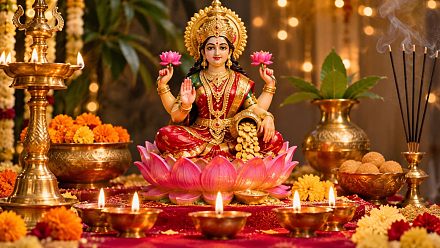
Diwali is one of the most eagerly awaited festivals in the Hindu calendar, bringing with it the familiar sight of illuminated homes, colourful rangolis, fresh flowers and rows of flickering diyas. At the heart of these celebrations is Lakshmi Puja, when families come together to worship Goddess Lakshmi and Lord Ganesha, seeking blessings for prosperity, happiness and good fortune. As prayers fill the home and lamps light up every corner, the evening becomes a moment to welcome abundance and new beginnings.
While the rituals and traditions may differ from one household to another, the timing of Lakshmi Puja holds particular importance. Devotees traditionally perform the worship during Pradosh Kaal, the period after sunset considered auspicious for the evening rituals. However, the precise muhurat varies across cities, making it important to check the local timings before beginning the puja.
In 2026, Diwali, also known as Deepavali, falls on Sunday, November 8. So, when is the most auspicious time to worship Goddess Lakshmi this year? What are the puja timings in Delhi, Mumbai, Bengaluru, Kolkata and other cities? Here’s your city-wise guide to Lakshmi Puja muhurat, along with the significance of the evening worship.
Diwali 2026: Date And Lakshmi Puja Muhurat
Diwali falls on Kartik Amavasya, the new Moon day in the Hindu lunar calendar. The Amavasya Tithi begins at 11:27 AM on November 8 and ends at 12:31 PM on November 9, 2026.
The main Lakshmi Puja is traditionally performed during Pradosh Kaal, the period that begins around sunset and extends into the evening. The overlap of Pradosh Kaal with Vrishabha Kaal, or Vrishabha Lagna, is considered particularly auspicious for the worship. For New Delhi, the Lakshmi Puja Muhurat will be from 5:54 PM to 7:50 PM, lasting approximately one hour and 56 minutes.
The auspicious time for Lakshmi Puja differs across cities because sunset and the corresponding astrological periods vary according to geographical location. Here are the city-specific timings for Sunday, November 8, 2026. All timings are in Indian Standard Time and refer to the local city.
Delhi: Devotees in New Delhi can perform Lakshmi Puja between 5:54 PM and 7:50 PM. In Noida, the auspicious window will be from 5:54 PM to 7:49 PM, while residents of Gurugram can perform the puja between 5:55 PM and 7:51 PM.
Mumbai: In the financial capital, the Lakshmi Puja Muhurat will begin at 6:27 PM and continue until 8:27 PM. Devotees can plan their evening prayers within this window.
Kolkata: Residents of Kolkata will have an earlier puja window, from 5:20 PM to 7:18 PM.
Bengaluru: In Bengaluru, the auspicious time for Lakshmi Puja will be from 6:17 PM to 8:20 PM.
Chennai: Devotees in Chennai can perform the rituals between 6:07 PM and 8:09 PM.
Hyderabad: The Lakshmi Puja Muhurat in Hyderabad will be from 6:07 PM to 8:08 PM.
Pune: In Pune, the auspicious window will begin at 6:24 PM and end at 8:24 PM.
Ahmedabad: Devotees in Ahmedabad can worship Goddess Lakshmi between 6:22 PM and 8:20 PM.
Jaipur: The Lakshmi Puja Muhurat in Jaipur will be from 6:03 PM to 7:59 PM.
Chandigarh: Residents of Chandigarh can perform the evening puja between 5:52 PM and 7:46 PM.
These timings are based on city-specific Panchang calculations. If your city is not listed, it is advisable to consult a local Panchang for the precise muhurat rather than follow the timings of another city.
Why Is Lakshmi Puja Performed During Pradosh Kaal?
Pradosh Kaal is the period immediately after sunset and is considered an auspicious time for several Hindu rituals. On Diwali, it holds particular importance because devotees traditionally worship Goddess Lakshmi during this evening window, when homes are illuminated with diyas and decorated for the festival.
The overlap with Vrishabha Lagna is also considered significant. Vrishabha is a fixed zodiac sign, and a fixed ascendant is traditionally regarded as favourable for Lakshmi Puja. The exact duration of this period changes from city to city, which is why the muhurat in Mumbai, for instance, differs from that in Delhi or Kolkata.
How To Prepare For Lakshmi Puja On Diwali
The preparations for Lakshmi Puja often begin well before sunset. Families clean their homes, decorate entrances with rangoli and flowers, and light diyas to welcome Goddess Lakshmi. Many households also draw small footprints near the entrance, symbolising the arrival of the goddess and inviting prosperity into their homes.
Before the muhurat begins, devotees usually arrange the idols or pictures of Goddess Lakshmi and Lord Ganesha in the puja area. Common offerings include fresh flowers, fruits, sweets, kumkum, rice grains, incense sticks, a diya and a vessel of water. Some families also keep coins, jewellery or account books for worship, following their customary traditions.
Once the auspicious window begins, devotees offer prayers to Goddess Lakshmi and Lord Ganesha, perform the rituals according to their family traditions and conclude with aarti. The evening is often followed by lighting diyas around the house, sharing sweets and spending time with family.
Why Do We Worship Goddess Lakshmi On Diwali?
Goddess Lakshmi is revered as the deity of wealth, prosperity, abundance and good fortune. Worshipping her on Diwali is rooted in the belief that her blessings bring not only material well-being but also peace, happiness and harmony into the household.
The festival is also associated with Lord Rama’s return to Ayodhya after 14 years of exile and his victory over Ravana. According to the popular tradition, people welcomed him by lighting rows of oil lamps, giving the festival its enduring association with light triumphing over darkness. Over time, the worship of Goddess Lakshmi became an integral part of Diwali celebrations, with devotees praying for prosperity and a fresh beginning.
As families gather for the evening puja, light their homes and exchange festive greetings, the rituals serve as a reminder that Diwali is as much about hope, gratitude and togetherness as it is about prosperity.