Chhath Puja 2026: Date, Rituals, Puja Vidhi, Samagri And Religious Significance
As the evening sky slowly turns golden and the Sun begins its descent, riverbanks across Bihar, Jharkhand and eastern Uttar Pradesh take on a beautiful spiritual energy during Chhath. Devotees step into the water with ba
بقلم Lifestyle Desk··18K قراءة
Chhath Puja 2026: Date, Rituals, Puja Vidhi, Samagri And Religious Significance
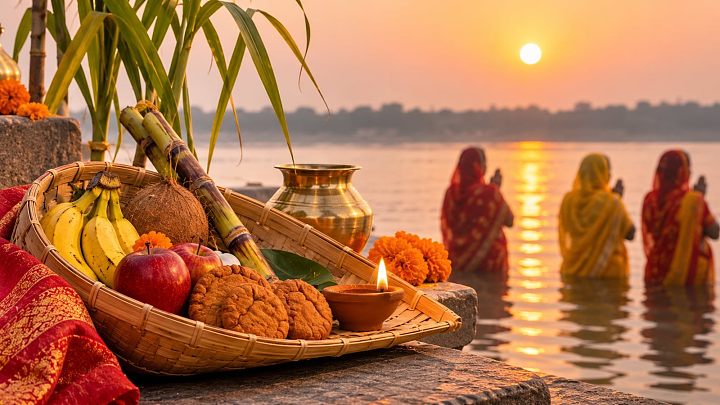
As the evening sky slowly turns golden and the Sun begins its descent, riverbanks across Bihar, Jharkhand and eastern Uttar Pradesh take on a beautiful spiritual energy during Chhath. Devotees step into the water with bamboo baskets filled with fruits, thekua and other offerings, fold their hands and pray to the setting Sun. The following morning, they return before sunrise to offer prayers to the first rays of a new day. It is a sight that captures the extraordinary devotion at the heart of Chhath Mahaparv.
Dedicated to Lord Surya and Chhathi Maiya, Chhath Puja is among the most significant festivals in eastern India. It is observed with immense devotion, particularly in Bihar, Jharkhand, eastern Uttar Pradesh and parts of Nepal.
The celebrations unfold over four days, with each ritual carrying its own spiritual significance. From Nahay Khay and Kharna to Sandhya Arghya and Usha Arghya, here’s everything you need to know about Chhath Puja 2026, including its dates, traditional rituals, puja samagri and religious significance.
Chhath Puja 2026: Date And Important Days
Chhath Puja is observed on the sixth day, or Shashthi Tithi, of the Shukla Paksha in the Hindu month of Kartik. The festival begins two days before the main observance and concludes with prayers to the rising Sun on the fourth day.
In 2026, Chhath Puja will be celebrated from November 13 to November 16. The main evening offering, Sandhya Arghya, will take place on Sunday, November 15, followed by Usha Arghya on Monday, November 16.
The four days of the festival are observed as follows:
November 13, Friday – Nahay Khay: Devotees take a ritual bath and prepare a simple, sattvik meal.
November 14, Saturday – Lohanda and Kharna: Devotees observe a day-long fast and prepare traditional prasad in the evening.
November 15, Sunday – Sandhya Arghya: Offerings are made to the setting Sun at rivers, ponds and other water bodies.
November 16, Monday – Usha Arghya and Parana: Devotees offer prayers to the rising Sun and conclude the fast.
Chhath Puja 2026: Sandhya Arghya And Usha Arghya Timings
The two most important moments of Chhath are the evening prayers offered to the setting Sun and the morning prayers offered to the rising Sun. These rituals are performed around local sunset and sunrise, so the timings differ from one city to another.
For New Delhi, the indicative timings are:
Sandhya Arghya: November 15, 2026, at approximately 5:28 PM.
Usha Arghya: November 16, 2026, at approximately 6:44 AM.
Devotees should check their local Panchang for the precise timings before visiting their designated ghats.
Why Is Chhath Puja Celebrated? The Religious Significance
At the heart of Chhath Puja lies a simple yet profound expression of gratitude towards the Sun, without which life on Earth would not be possible. Lord Surya is worshipped as the source of energy, light, vitality and nourishment. Devotees seek his blessings for good health, prosperity and the well-being of their families.
The festival is also dedicated to Chhathi Maiya, who is traditionally worshipped for the protection and long life of children and the happiness of the family. Devotees offer prayers to the goddess with deep faith, seeking her blessings for their loved ones.
One of the most beautiful aspects of Chhath is that devotees offer arghya to both the setting and the rising Sun. While the rising Sun is often associated with new beginnings, Chhath also honours the setting Sun with equal reverence. It is a reminder that gratitude should not be reserved only for moments of growth and success; every phase of life deserves acknowledgement.
The festival also reflects a deep connection with nature. Rivers, ponds, sunlight, seasonal fruits and natural offerings form an integral part of the observance. The use of bamboo baskets, earthen lamps and homemade prasad further reflects the simplicity and traditional values associated with Chhath.
Chhath Puja 2026: Four Days Of Rituals And Puja Vidhi
Chhath is not a one-day celebration. Its four-day observance follows a carefully maintained routine of purification, fasting, prayer and offerings. Each stage prepares devotees for the central ritual of worshipping the Sun.
Nahay Khay: November 13, 2026
The first day of Chhath is known as Nahay Khay, which marks the beginning of the festival. Devotees, particularly those observing the fast, begin the day with a ritual bath. Traditionally, many take a dip in the Ganga or another sacred water body, although customs vary depending on the region and family tradition.
Cleanliness is given special importance during this stage. Homes and kitchens are thoroughly cleaned, and food is prepared with care. The traditional meal often includes bottle gourd, chana dal and rice, cooked without onion or garlic. The food is prepared using clean utensils and is kept simple and sattvik.
The vrati usually eats only one meal on this day. Nahay Khay is considered a period of purification, preparing the body and mind for the discipline of the days ahead.
Lohanda And Kharna: November 14, 2026
The second day is known as Lohanda and Kharna. Devotees observe a fast throughout the day and prepare a special meal after sunset.
One of the most significant offerings prepared for Kharna is rasiya kheer, a traditional rice pudding made with jaggery and milk. It is commonly served with roti and offered as prasad before the vrati consumes the meal.
After the Kharna prasad, the rigorous nirjala vrat begins. Traditionally, devotees abstain from both food and water for approximately 36 hours, continuing the fast until the morning rituals on the final day. This is considered one of the most demanding aspects of Chhath and reflects the discipline and devotion associated with the festival.
Sandhya Arghya: November 15, 2026
The third day is the main day of Chhath Puja, when devotees gather at riverbanks, ponds and other water bodies to offer Sandhya Arghya to Lord Surya.
Families prepare bamboo baskets, known as soop and daura, and arrange them with traditional offerings such as thekua, fruits, sugarcane, coconuts and seasonal produce. As evening approaches, the vrati enters the water, faces the setting Sun and offers arghya with water and milk while praying to Lord Surya and Chhathi Maiya.
The atmosphere at the ghats is particularly moving during this ritual. Devotional Chhath songs fill the air, earthen diyas illuminate the surroundings and families gather to participate in the prayers. For many devotees, the evening offering is an emotional moment that brings together faith, family traditions and a sense of community.
In several households, the ritual of Kosi is also performed during the evening or night. A bamboo structure is decorated with sugarcane, earthen lamps and offerings as a mark of devotion to Chhathi Maiya. The exact customs can differ across regions and families.
Usha Arghya And Parana: November 16, 2026
The final day begins in the early hours of the morning, when devotees return to the ghats to welcome the rising Sun. After the night-long fast, the vrati enters the water and offers Usha Arghya to Lord Surya, praying for good health, prosperity and the well-being of the family.
The first rays of sunlight hold special significance during this ritual. Devotees offer water and prayers to the Sun God, bringing the four-day observance to its conclusion.
After Usha Arghya, the vrati performs Parana, the ritual of breaking the fast. The prasad is shared with family members, relatives and neighbours, marking the end of Chhath Puja.
Chhath Puja 2026: Complete List Of Puja Samagri
Preparing the offerings is an important part of Chhath. Families begin collecting the ingredients and puja essentials ahead of the festival, ensuring that everything is ready for the rituals. The offerings are traditionally arranged in bamboo baskets and include seasonal produce, homemade sweets and other sacred items.
Some of the commonly used Chhath Puja samagri includes:
Traditional prasad: Thekua, rice laddoos and jaggery-based sweets.
Fruits: Bananas, coconuts, apples and other seasonal fruits.
Seasonal produce: Sugarcane, sweet potatoes, radish, ginger and turmeric.
For preparing prasad: Wheat flour, rice, jaggery, ghee and milk.
For arghya: A lota or vessel containing water and milk.
Other offerings: Betel leaves, betel nuts and clean cloth for arranging the puja items.
The exact samagri may vary according to regional and family traditions, but homemade prasad, bamboo baskets and seasonal fruits remain central to the celebrations.
Why Is Thekua An Important Offering During Chhath Puja?
Ask anyone familiar with Chhath, and thekua is likely to be among the first things they mention. This traditional sweet is much more than a festive treat; it is one of the most important offerings prepared for the festival.
Made using wheat flour, jaggery and ghee, thekua is shaped into small discs or decorative patterns using traditional wooden moulds before being fried until golden and crisp. Its rich flavour and distinctive texture make it a much-loved part of the celebrations.
Chhath Puja Fasting Rules And Traditions To Keep In Mind
Chhath is known for its strict fasting practices and emphasis on purity, discipline and devotion. While customs can differ between households, cleanliness and careful preparation are considered essential throughout the observance.
Devotees traditionally follow a sattvik diet, avoid onion and garlic in food prepared for the rituals, and maintain cleanliness while preparing prasad. The offerings are made using fresh ingredients, and the bamboo baskets and puja items are kept clean.
The most rigorous part of the festival is the nirjala fast observed after Kharna, which traditionally continues until Usha Arghya the following morning. Since this fast involves abstaining from both food and water for an extended period, it can be physically demanding.
From the first ritual bath on Nahay Khay to the final prayers offered at sunrise, every stage of Chhath carries a deeper meaning. The festival asks devotees to practise patience, discipline and gratitude while bringing families and communities together through shared traditions.