14 Years After Quitting Corporate Life, He's Taking Travellers Into India's Villages And Showing Them A Different India
What if the most memorable part of a holiday wasn’t the hotel you checked into or the landmark you photographed, but the people you met along the way? It is a question that has shaped Chirag Munjani’s professional journe
بقلم Swati Chaturvedi··16K قراءة
14 Years After Quitting Corporate Life, He's Taking Travellers Into India's Villages And Showing Them A Different India
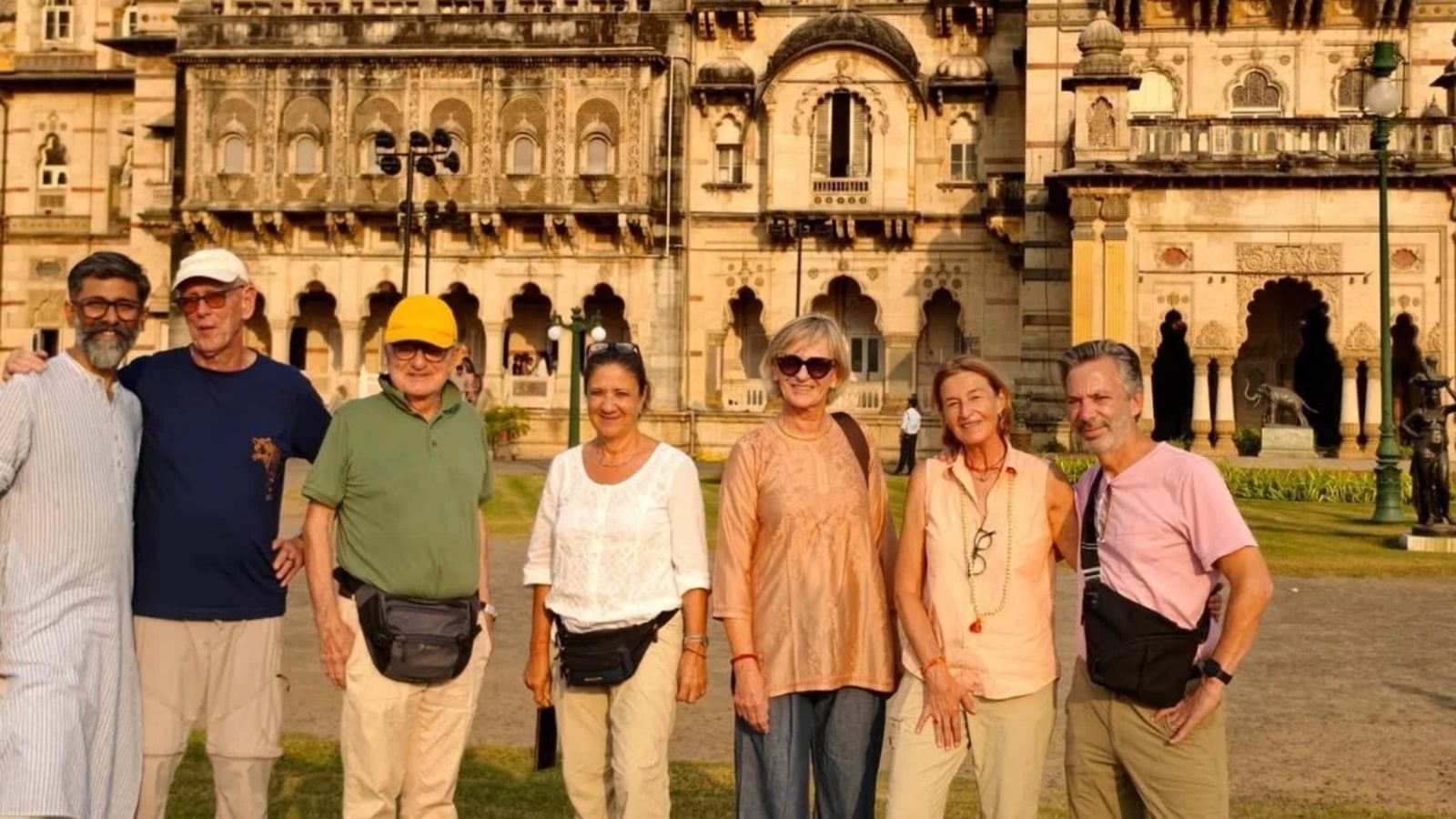
What if the most memorable part of a holiday wasn’t the hotel you checked into or the landmark you photographed, but the people you met along the way? It is a question that has shaped Chirag Munjani’s professional journey. An engineer from Vadodara, Gujarat, Munjani walked away from a corporate career in 2012 to build a travel venture that would take people beyond conventional tourist circuits and into the everyday lives of rural communities.
Fourteen years later, his venture, Rural Pleasure Journeys, organises approximately 70 to 80 trips annually across 16 to 17 destinations. Its itineraries take travellers through villages, forests, artisan communities and rural landscapes, offering experiences that are less about ticking off sightseeing spots and more about understanding how a place lives, works and preserves its traditions.
The idea was not born in a boardroom. Munjani’s earlier career had taken him into rural markets across Gujarat, where he worked with Bajaj Auto and Bajaj Auto Finance. A mechanical engineering graduate from Gujarat University, he also holds an MBA from the Symbiosis Institute of Business Management, Pune. After spending around seven and a half years in the corporate sector, he decided to turn his familiarity with rural India into a different kind of business.
In 2012, he established Rural Pleasure Journeys, a Vadodara-based venture built around rural and experiential tourism. At a time when travel aspirations were increasingly associated with premium hotels, popular attractions and packaged holidays, his approach was to introduce visitors to the people and livelihoods that give destinations their character.
From salt pans to artisan villages, a different way to travel
One of the most distinctive aspects of Rural Pleasure Journeys is the way its itineraries connect travellers with local livelihoods. Instead of simply taking visitors to a destination, the experiences encourage them to understand the work, skills and traditions that sustain it.
Take the Little Rann of Kutch, for instance. The region is known for its vast salt flats, but there is an entire livelihood behind the salt that eventually reaches our kitchen shelves. Through the venture’s experiences, visitors can learn about salt production and the labour involved in extracting this everyday essential.
In Nirona, a village in Kutch, the focus shifts to traditional craftsmanship. Travellers get opportunities to interact with local artisans, including weavers, painters and metalworkers, and understand the skills behind their work. These encounters offer something that a conventional sightseeing itinerary rarely can: an opportunity to learn directly from the people who have kept these crafts alive.
The idea is to make local communities an integral part of the travel experience rather than treating them as a backdrop for photographs.
View this post on Instagram
A post shared by Rural Pleasure Journeys (@ruralpleasurejourneys)
When tourism becomes a source of livelihood
The venture’s work in Dang, a predominantly tribal district in Gujarat, illustrates another dimension of its approach. Introducing tourism in the region has involved navigating forest regulations and building trust with communities that were initially hesitant about receiving visitors.
The objective extends beyond bringing tourists into rural areas. Local participation creates opportunities through accommodation, food, guiding, cultural experiences and traditional crafts.
An interesting example is the revival of Warli art in the region. Rural Pleasure’s community-based work has helped create renewed opportunities for the practice, including the decoration of village homes with traditional artwork and the involvement of younger members of the community.
The initiative received recognition at the 2017 India Responsible Tourism Awards, where Rural Pleasure was named a silver winner in the Best for Cultural Immersion category. The award documentation highlighted its work in Dang, including seven houses decorated with Warli art, more than 750 travellers participating in cultural experiences and earnings generated for tribal communities through these activities.
It is an important reminder that tourism can have a role beyond attracting visitors. When planned with local participation, it can also create economic opportunities and encourage communities to value their cultural heritage.
Taking travellers closer to wildlife conservation
The experiences around Gir National Park offer another example of how the venture connects tourism with conservation.
Open agricultural wells in areas around Gir can pose a danger to wildlife, particularly lions that may fall into them while pursuing prey. Rural Pleasure Journeys has developed conservation-linked activities through which visitors can learn about the issue and participate in the fabrication of protective grills for these wells.
It is a rather different way of experiencing a wildlife destination. Instead of limiting the visit to spotting animals, travellers get an opportunity to understand the challenges involved in protecting them and the role surrounding communities can play in conservation.
Such experiences also highlight how closely rural livelihoods, local environments and wildlife are connected.
From Gujarat to Madhya Pradesh and Rajasthan
What began as a Gujarat-focused initiative has gradually expanded its geographical footprint. Rural Pleasure Journeys entered Madhya Pradesh in 2023 and Rajasthan in 2024, adding new landscapes and community experiences to its itineraries.
Today, it offers both fixed departures and customised journeys across approximately 16 to 17 destinations, organising around 70 to 80 trips annually. Its travellers include people from metropolitan cities as well as international visitors, with families and children forming an important audience for experiences that introduce them to ways of life beyond urban environments.
Building a customer base for this kind of travel, however, has required patience. Rural tourism does not necessarily attract the same volumes as conventional mass-market holidays. Its appeal lies in smaller, more immersive experiences, and the business has grown substantially through repeat interest, recommendations and word of mouth.
For urban families in particular, these journeys can also become an opportunity for children to understand where everyday products come from, how traditional occupations work and why local cultures and ecosystems deserve attention.
The idea of a holiday is changing
Fourteen years after leaving his corporate career, Munjani’s venture has grown into a business that brings together travel, cultural immersion and community participation. Its expansion across multiple destinations suggests that there is an audience for holidays that offer more than comfortable accommodation and familiar tourist attractions.
And perhaps that is the most interesting part of the story. A visit to a salt-producing region can change the way someone looks at an everyday kitchen ingredient. An interaction with an artisan can introduce travellers to a craft they might otherwise never encounter. A journey around Gir can make wildlife conservation feel less distant and more connected to everyday village life.
Travel does not always have to be about going somewhere new. Sometimes, it is about seeing a familiar country differently. For Munjani, that journey began in rural Gujarat, and today, through Rural Pleasure Journeys, he is inviting more travellers to experience the India that exists beyond the usual tourist map.